
Graduate Profile: Daniel Arias
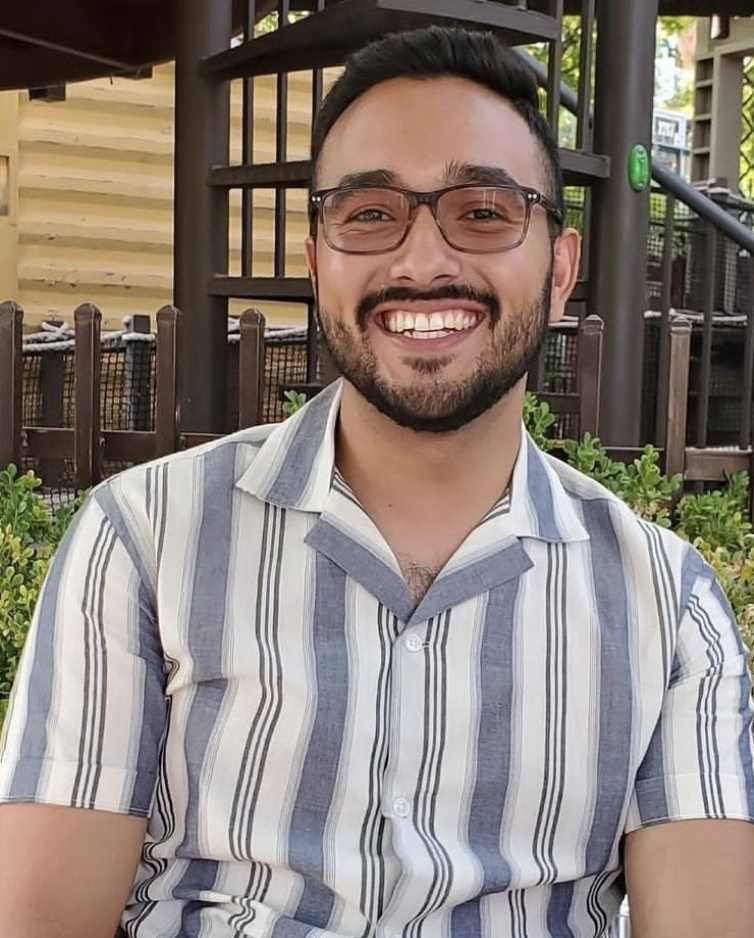
Daniel Arias is a fifth-year Ph.D. Candidate in Literature and was a 2025 THI Summer Public Fellow and 2021-2023 THI Graduate Student Success (GSS) Fellow. Arias’ dissertation, titled “Poetic Innovations: Exploring Experimental Forms and Publishing Activism in Twenty-First Century Latiné/x Poetry,” explores how Latiné/x poets seek and forge more meaningful representation in a restrictive U.S. publishing industry. As a THI Public Fellow, Arias worked with EASTSIDE Magazine, a quarterly and bilingual (English and Spanish) magazine that publishes narrative journalism, art, poetry, photography, community resources, and historical accounts of the Eastside of San José, a historically marginalized and under-resourced neighborhood in San José, California. We recently caught up with Daniel about his time working with EASTSIDE Magazine and how his public fellowship experience has since informed his research.
Hi Daniel! Thanks for chatting with us. To start off, can you give us a general overview of your current research interests?
Thank you! I appreciate THI for offering me this interview opportunity. I study contemporary Latiné/x poetry of the twenty-first century, with a specific focus on “experimental” and “innovative” poetic forms that incorporate visual, performance, and digital elements. In addition, my dissertation explores how Latiné/x poets seek and forge more meaningful representation in a restrictive U.S. publishing industry. Overall, my research asks how Latiné/x poets are finding ways in the twenty-first century to publish and innovate their poetry despite the pushback from hostile social and political factors in the U.S., because I believe in a more equitable sense of literary representation for Latiné/x communities.
This past summer, you worked with EASTSIDE Magazine as a 2025 THI Summer Public Fellow. Tell us a little bit about the magazine and the kinds of projects you worked on over the summer.
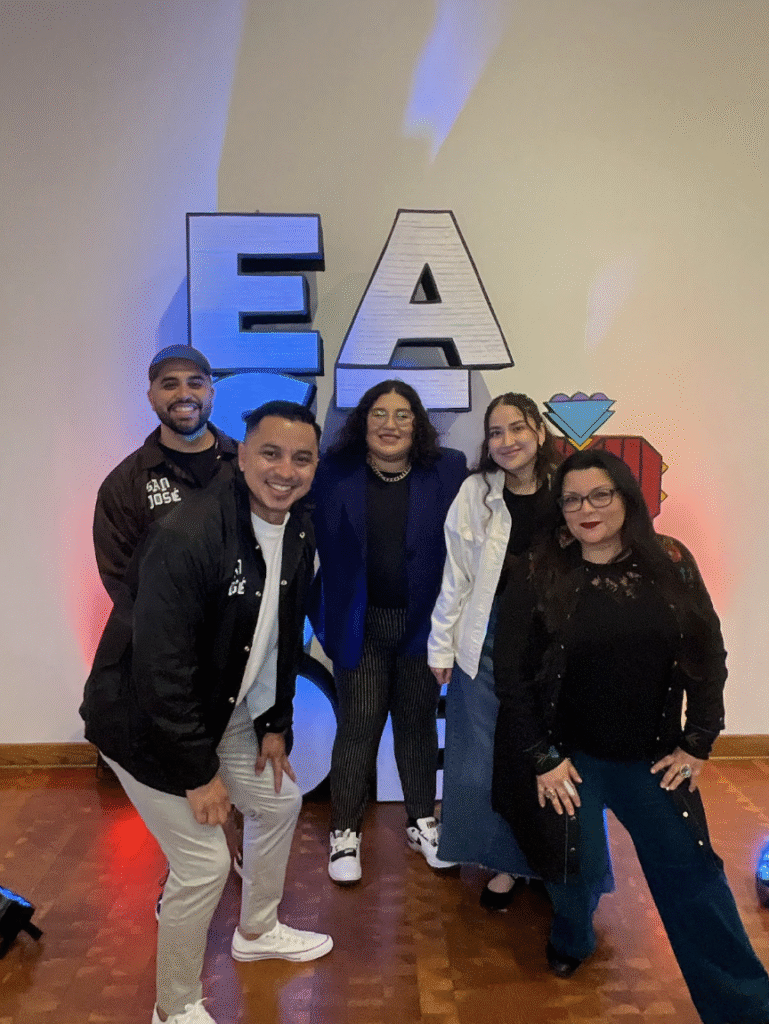
EASTSIDE Magazine publishes narrative journalism, art, poetry, photography, community resources, and historical accounts of the Eastside of San José in a quarterly bilingual (English and Spanish) digital and physical magazine. EASTSIDE Magazine thrives on uplifting the neighborhood’s overlooked histories, contributions, and stories through its unique model. What is truly innovative and impactful about the magazine is that the voices it highlights in its pages are directly from the East San José community, as contributions for each issue are open to any community member who wishes to submit their story in whatever format they choose. East San José has historically been a marginalized and under-resourced neighborhood in San José, leading to many misconceptions and mischaracterizations of its place in the city’s broader history, politics, and contributions. In the 1950s, the Eastside was referred to as “sal si puedes” (“get out if you can”) because it lacked paved roads and sidewalks, and the story goes that many cars would get stuck in the mud during heavy rain. What this story also reflects is the social and economic underdevelopment that communities in this neighborhood had to navigate because the city and county ignored their needs. It wasn’t until local organizing put pressure on city and county officials to invest in the neighborhood’s development that these necessary infrastructural improvements were made. Yet, despite these barriers, East San José is now home to diverse Vietnamese, Filipino, Central and South American, and predominantly Mexican communities, which have their separate and interlinked histories of migration, activism, and community building that have significantly contributed to the success and resilience of this city in the heart of Silicon Valley.
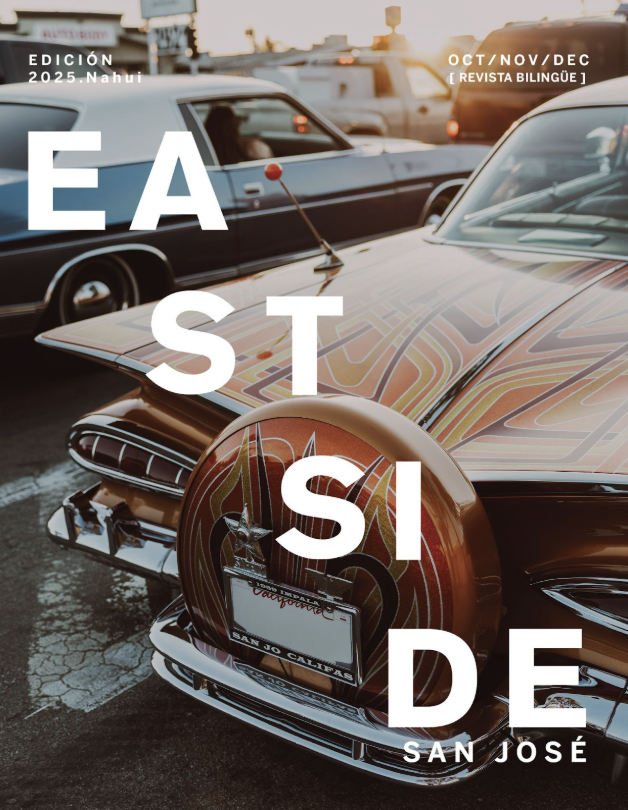
This work is special to me because I was born and raised in this neighborhood, and it has shaped who I am today. As a public fellow, I was honored to work closely with Rosanna Alvarez (co-founder of the magazine) to establish an editorial board of directors that would support the magazine’s editorial process and expand its community-centered approach. The magazine’s team is mighty but relatively small, so Rosanna and I strategized on how an editorial board of directors can lend additional support to the editorial team and ensure the magazine’s mission and future remain grounded and reflective of the community it serves. Through this main project, I met with many community members in East San José to recruit potential board members and receive direct feedback on how the magazine can improve its impact and reach. I also directly supported the editorial process through the guidance and mentorship of Sendy Tapia, the magazine’s managing editor, for the most recent and final issue of the year by reviewing poetry, art, and photography submissions featured in its 2025 “Nahui” issue.
Having worked closely with community members in East San Jose, can you share with us some of their visions for the magazine?
I have never met a person from the Eastside who isn’t ambitious, and meeting with all of these community members was no exception. I met with K-12 teachers, community college professors, librarians, poets, school district administrators, and business owners. They shared ideas for new funding models, creative writing workshops, East San José historical tours, strengthening activist networks, coalition-building with other underrepresented communities, distributing more magazine issues, and recruiting more elderly and youth voices to contribute to the magazine. Overall, they all want the magazine to succeed and grow, and that was inspiring and reaffirming to witness in every interview or conversation I had. The challenge is ensuring that every aspiration and vision projected onto the magazine is met, and I am confident that the magazine’s team will continue to evolve and achieve those ambitious goals.
How has your Public Fellowship with Eastside Magazine built upon, extended, or perhaps even complicated your research interests/questions? What key insights, if any, did it offer you?
Considering that a crucial part of my research is how Latiné/x communities find and create spaces to publish their poetry and other forms of art, working with EASTSIDE Magazine as a public fellow both reaffirmed and extended my research interests and questions. Learning about how this magazine was created from conversations and ideas shared between the co-founders (Omar Rodriguez and Rosanna Alvarez) back in 2019, and seeing how much it has grown as a crucial publication for this underrepresented San José community in 2025, has urged me to rethink how I consider scale and impact for my own research. While it is crucial to examine how larger publishing houses and ventures can support the work of Latiné/x writers and artists, I now understand the vital importance of studying how grassroots, community-based, and local publications can offer models for more equitable representation across broader media landscapes. If this East San José community can establish its own impactful publication and platform, it gives me hope for the Latiné/x poets, writers, and artists across the country who are breaking down the barriers they face in mainstream publishing and forming their own small and independent publishing houses, collectives, and initiatives, which will leave a blueprint for future communities, as EASTSIDE Magazine has done in my home.
When you first started at UC Santa Cruz you were a part of The Humanities Institute’s Graduate Student Success (GSS) program. How is your journey as a PhD student going? We’d love to hear about what you’re working on now in your research and teaching.
I was in my first and second years of graduate school then, and now I am in my fifth year, so a lot has changed since I was in the GSS program. It has honestly been a challenging and non-linear journey for me, but I am proud of what I’ve accomplished along the way. I am also grateful for the support network (of friends, family, my partner, and my faculty advisors/mentors) that has helped me along the way. I passed my qualifying exam and advanced to candidacy this past academic year, which means I am now transitioning to writing my dissertation. In terms of my teaching, this year I began a remote Faculty Diversity Internship Program with the College of the Siskiyous, a community college in Northern California, which will offer me professional development, online course design, and pedagogical training to prepare me to apply to teach at a California community college. I am very excited and grateful for this opportunity because I want to begin my teaching career post-graduate school at a community college.
Thanks so much for chatting with us, Daniel. To wrap up, was there a particular issue in the magazine archives that stood out to you and why?
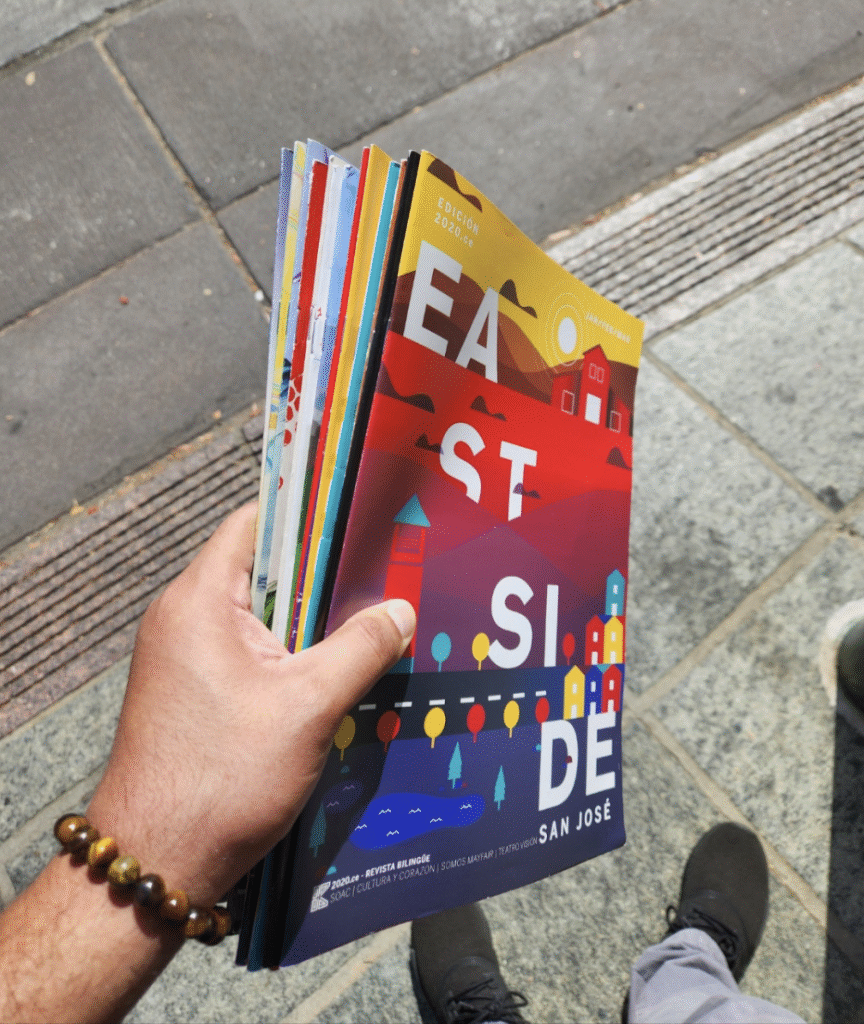
Yes, finding a physical copy of the inaugural 2020 issue was my favorite part of digging through the magazine’s archives. Thankfully, there were multiple copies, and the team let me keep one for my personal library, along with several other copies of past issues that I never had a chance to collect when they were circulating, which was very generous of them. Having a physical copy of the very first issue of the magazine, the one that started it all, feels like having a piece of my hometown’s history that I can cherish for years to come. That issue focuses on setting the magazine’s intentions, showcasing the necessity of these stories, and highlighting the work already being done by various collectives/organizations in the Eastside. I think Omar Rodriguez’s introductory article (“En Movimiento y con Causas”) and Ana Lilia Soto’s interview of Rosanna Alvarez (“Cultura y Corazón”) really solidified the magazine’s mission and foundation.
One of my personal goals during the fellowship was to read every issue the magazine had published over the past six years of its existence (now twenty-four issues in total!). I mainly read the digital archive online because it allowed me to annotate and take notes on my laptop. Still, I also read and carried physical copies when I traveled to and from the office because I wanted to carry them as part of my work. I urge anyone who lives in or visits San José to find a physical copy of the magazine (at Nirvana Soul Coffee, Con Azucar Cafe, or the Mexican Heritage Plaza) because there is something special about holding these stories. The magazine is glossy and light, but its pages are heavy with stories from the past, present, and imagining the future, reminding us of what makes East San José the heart and soul of a city.
Thank you so much for offering me a space to share all of this!
Banner image: Mural by @artesluna_ outside of the EASTSIDE Magazine’s Office. Photograph taken by Daniel Arias.