
Graduate Profile: Yağmur Kiper
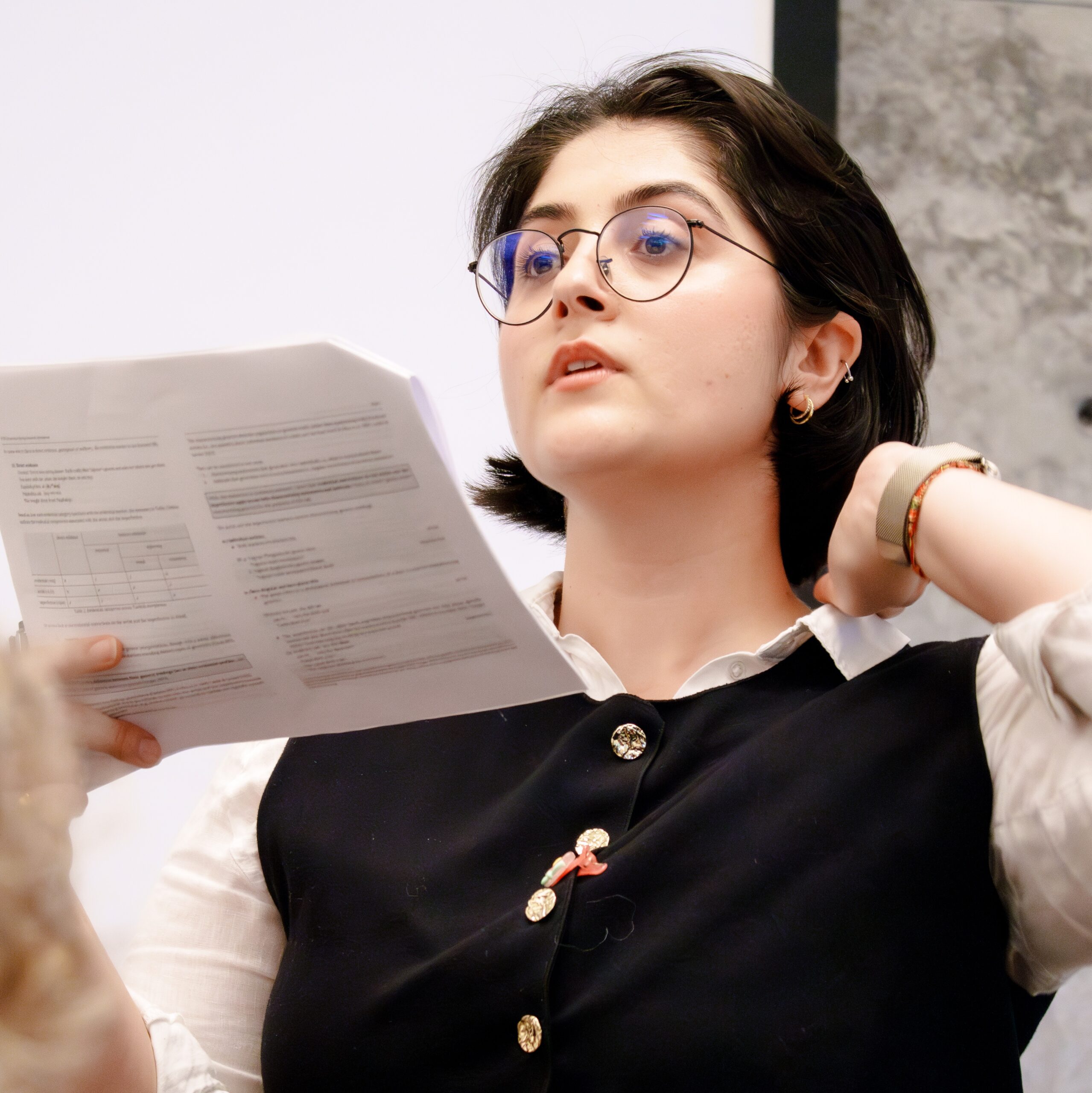
Yağmur Kiper is a fourth-year Ph.D. candidate in the Linguistics department and was a 2025–26 THI Summer Research Fellow. She was also a THI Graduate Student Success Fellow in 2022-2023. One part of Yağmur’s dissertation project, “Case in Altaic,” focuses on a linguistic phenomenon known as “ellipsis” – the omission of one or more words from a sentence whose meaning can be recovered through context – and examines how its usage varies across Turkish, Khalkha Mongolian, and Korean. We recently caught up with Yağmur about her experience as a graduate student at UC Santa Cruz and the linguistics fieldwork she conducted this past summer.
Hello Yağmur! Thanks for chatting with us about your research. Let’s begin with an overview of your research interests in linguistics. Your current research project is titled “Ellipsis Investigations in Altaic.” For those that might be unfamiliar, what is an ellipsis?
Of course! Language allows us to leave things unsaid while still being fully understood. For example, if someone says “Sammy wore a banana slug T-shirt” and another person responds “Oh, Vincent did, too!”, listeners have no trouble figuring out what information is missing: “Oh, Vincent did wear a banana slug T-shirt, too!” Even though some part of the sentence is unpronounced, we naturally infer its meaning based on context. There are many different kinds of ellipsis across languages, which I find particularly interesting in the so-called Altaic languages.
Linguists refer to this phenomenon as ellipsis: a situation where certain words or phrases are omitted, but their meaning is still recovered by the listener. My research examines how this works under the surface–what kind of structure is still present in the grammar when words are left unspoken, how that structure helps speakers recover meaning so effortlessly, and how it varies across languages. Ellipsis isn’t just about leaving words out; it reveals what information must be present even when it’s silent.
That’s really interesting! Can you tell us a little about how you decided to pursue linguistics research?
Different languages allow different things to be left unsaid, and they do so in systematic ways. That variation makes ellipsis an ideal lens for understanding both what languages share and where they diverge, which continues to motivate my research.
Until college, I was very much a math geek. I loved patterns, logic, and especially algebraic thinking. At the same time, I was always drawn to languages, which is why I ended up studying English Language Teaching. I enjoyed it but I also found myself missing the kind of structured, rigorous analytical thinking that had always excited me. That changed when I took an elective syntax class. I remember having this moment of realization; wait, these are the two things I love, and they’re actually combined here. Syntax brought together abstract structure, formal rules, and language in a way I didn’t even know was possible.
My college didn’t have a linguistics department, but it did offer several linguistics electives, and I quickly became deeply interested. The more classes I took, the more I felt that my interest was growing beyond what I could pursue there. I wanted to go deeper and ask bigger questions about language, which ultimately led me to pursue a PhD in Linguistics.
What motivated your interest in this topic?
Ellipsis creates situations where certain material can only be explained if we assume that unspoken parts of a sentence were present in the grammar at some point. I was drawn to this idea because it forces us to think carefully about the relationship between form, structure, and interpretation especially when these forms show cross-linguistic variation. Different languages allow different things to be left unsaid, and they do so in systematic ways. That variation makes ellipsis an ideal lens for understanding both what languages share and where they diverge, which continues to motivate my research. When material is left unspoken, we can no longer rely on surface words alone; instead, we must appeal to the abstract organization of sentences to recover meaning. This makes ellipsis a particularly powerful tool for testing theories about how language is structured in our mental grammar.
As someone unfamiliar with linguistics research, I’m curious as to what linguistic fieldwork entails. In your proposal for the 2025 THI Summer Research Fellowship, you explained that you will conduct “elicitation sessions.” Can you define this for us and describe what a typical elicitation session with native language speakers entails?
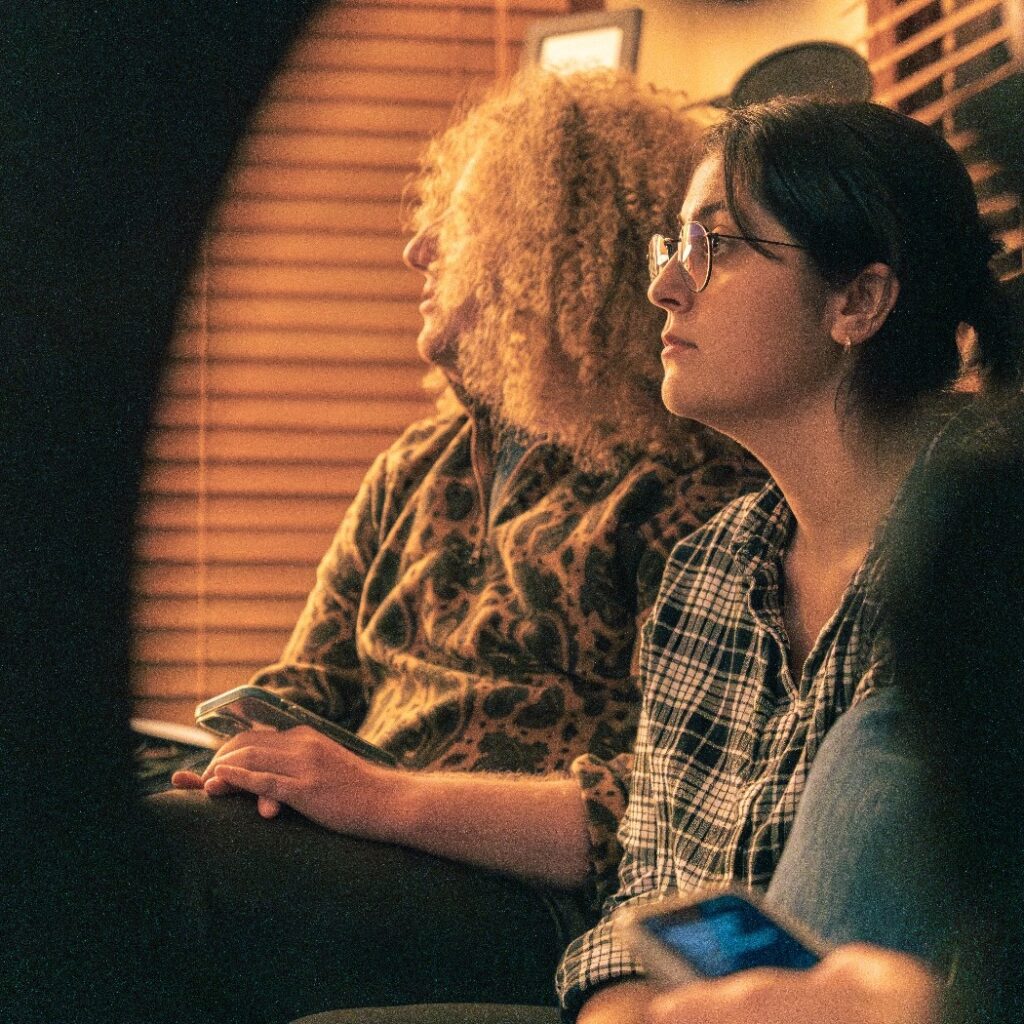
Linguistic fieldwork involves working directly with native speakers to better understand how their language works, and one common method for this is called elicitation. Elicitation sessions are structured conversations in which a researcher presents speakers with carefully designed examples and asks them to judge, interpret, or rephrase sentences. The goal is to access speakers’ intuitions about their language; things they know implicitly, even if they have never thought about them explicitly. A typical elicitation session involves going through a set of example sentences together and discussing whether they sound natural, what they mean in different contexts, or how they might change under certain conditions. These sessions are highly interactive and collaborative; speakers often reflect on subtle differences in meaning or suggest alternative forms that the researcher hadn’t considered. I should also add that I don’t think of myself primarily as a fieldworker in the traditional sense. Full-time linguistic fieldwork requires an enormous amount of expertise, commitment, and long-term engagement with communities, and I have a great deal of respect for colleagues whose work is centered on that kind of research. My own work draws on fieldwork methods, particularly elicitation techniques, as tools to address theoretical questions. I see this as a way of building on and learning from fieldwork practices while applying them to questions about grammatical structure.
Was there a particular moment from the elicitation sessions over the summer that stuck out to you?
There isn’t a single moment from the summer that stands out to me, because elicitations are consistently engaging and exciting. However, one experience that was especially meaningful was how this work intersected with my role as a mentor in the Science Internship Program (SIP), where I worked with four high school students. When applying for both THI Summer Research Fellowship and SIP, I had hoped to combine the two by using the fellowship to support the research financially while involving interns in some parts of the elicitation process. The outcome exceeded my expectations. Seeing how it was just as engaging for students, many of whom had never encountered theoretical syntax before, was incredibly rewarding. Their curiosity and excitement reinforced for me how accessible and stimulating linguistic research can be, even to those who are new to the field.
As a 2025 THI Summer Research Fellow, you spent the past summer conducting elicitation sessions with native speakers of Khalkha Mongolian and Korean building on your previous research on ellipsis in Turkish. What motivated you to expand your research to include Khalkha Mongolian and Korean? In what ways are they similar or different from Turkish, as well as each other?
Although my earlier work on ellipsis focused on Turkish, I wanted to understand whether the patterns I was observing reflected something specific to Turkish or something more general about how language works. Expanding the project to include Khalkha Mongolian and Korean allowed me to test these questions in a broader, comparative context. These languages are particularly interesting to study together because they share certain typological properties with Turkish, such as rich morphology and relatively flexible word order. At the same time, all these languages are quite distinct from one another, each imposing its own grammatical constraints on how these shared properties are realized. The similarities make comparison possible, while the differences allow us to see how small changes in grammatical structure can lead to different outcomes. Comparing these languages helps clarify which aspects of ellipsis are robust across languages and which depend on language-specific grammatical systems. That balance between similarity and difference is what motivated me to broaden the scope of the project.
We’d love to hear more about your experience in the THI Graduate Student Success (GSS) program when you first started at UC Santa Cruz. What kind of support and mentorship did you receive through that program, and did it have an impact on your experience as a graduate student here?
Recently, I’ve found a lot of joy in working on a manuscript that builds on parts of this project. Turning data and ideas that have been developing over time into a cohesive written piece has been especially rewarding.
I participated in the THI GSS program during my first year at UC Santa Cruz, alongside other graduate students, and it was a very helpful part of my transition into PhD. The program offered workshops on practical topics such as time management, planning, and strategies for dealing with procrastination. We also discussed concrete aspects of graduate coursework, including how to approach assigned readings or participate in class discussions. As an international student who was new not only to UC Santa Cruz but also to the U.S. education system, this support was especially valuable since it helped me understand what was expected of me as a graduate student better. It was also reassuring to hear from other GSS fellows and realize that many of us were navigating similar challenges.
Do you have any advice for new graduate students?
Genuinely listen when people share their experiences and strategies around work habits, discipline, and consistency. It’s easy to think, I already know these, but hearing something and truly engaging with it are not the same thing. What matters most in graduate school is not having a perfect way of working, but developing consistency in a way that fits you. There is no single correct academic persona; what makes long-term work possible is showing up regularly and sustainably over time; something I am still learning and working toward myself.
Lastly, what’s something that’s brought you joy in your work recently? What are you most excited about right now?
Recently, I’ve found a lot of joy in working on a manuscript that builds on parts of this project. Turning data and ideas that have been developing over time into a cohesive written piece has been especially rewarding. Right now, I’m most excited about seeing this work take shape as an article. The process of refining the analysis and thinking about how it will speak to a certain audience has been both challenging and motivating, and it’s something I’m really looking forward to in the coming weeks.