
Undergraduate Profile: Jamie Penilla
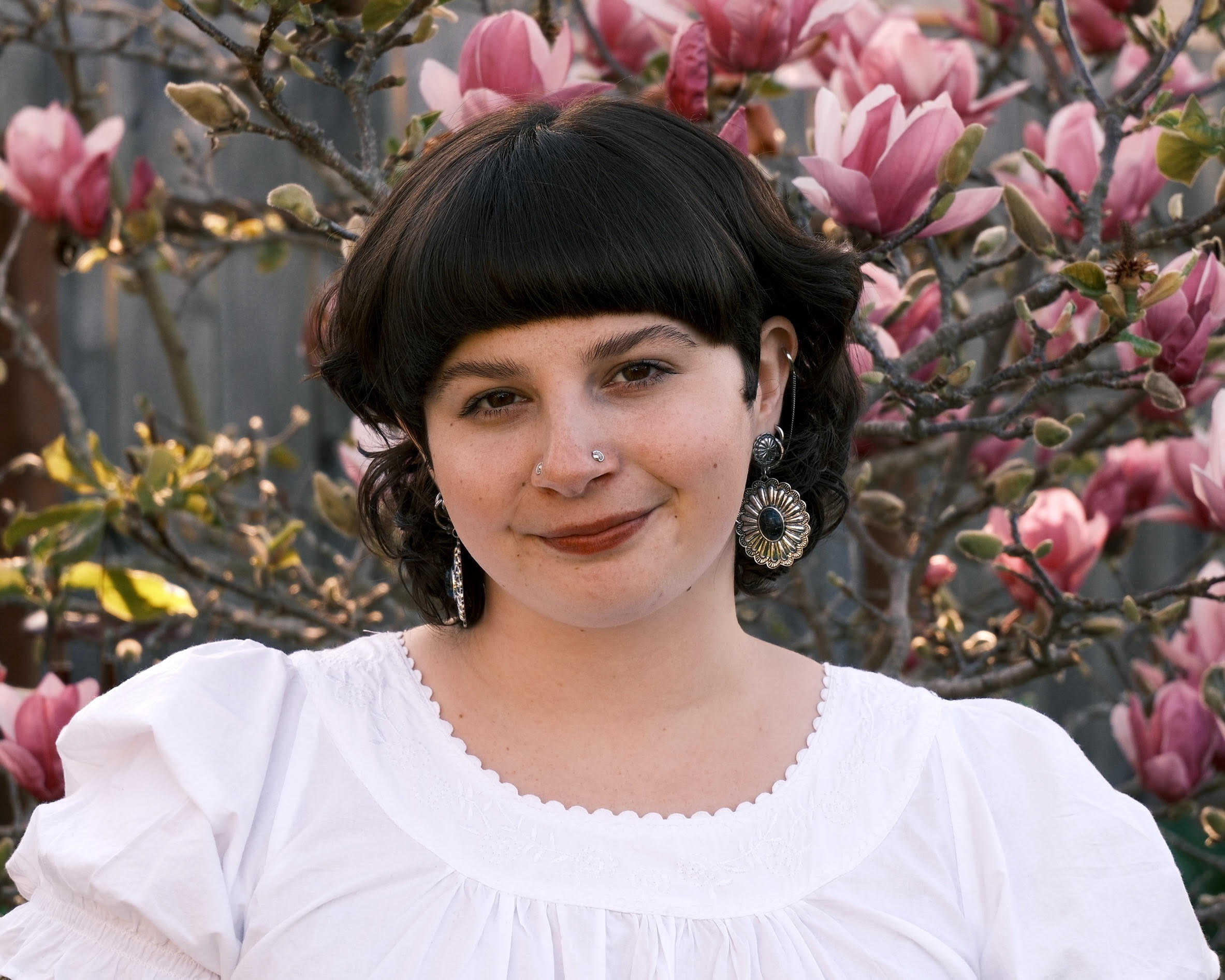
Jamie Penilla is a fourth-year History and Spanish Studies double major at UC Santa Cruz. She currently is a 2025-26 THI Undergraduate Research Fellow and previously was a 2024-25 Humanities EXCEL Fellow with Women in Leadership for Diverse Representation (WILDR) Santa Cruz. This year, Jamie is leading a research project on “Gentrification and Aesthetics in Mexico City,” to examine the cultural dimensions of gentrification in Mexico City (CDMX), with a particular focus on sociolinguistic change, urban aesthetics, and the distribution of green space. We recently caught up with her to learn more about the project and her experience conducting fieldwork in Mexico City.
Hi Jamie! Thanks for chatting with us. To get started, could you please tell us a little bit about yourself and the research project you are working on for the THI Undergraduate Research Fellowship?
My name is Jamie Penilla, and I am a senior double major in History and Spanish Studies at UC Santa Cruz and a citizen of both Mexico and the United States. For my THI Undergraduate Research Fellowship, I’m researching gentrification in Mexico City with a focus on visual and architectural change, sociolinguistic shifts, and the unequal distribution of green space in neighborhoods such as Roma, Condesa, and Coyoacán. My project emphasizes how gentrification in Mexico City is distinct from earlier histories of the process, such as in London, because it is strongly shaped by foreign influence, particularly U.S. expat communities and digital nomadism. This topic is especially urgent following the first major anti-gentrification protests in July 2025 and their continuation, which have brought these issues into public focus.
You spent a semester abroad in Mexico City studying Spanish literature at the National Autonomous University of Mexico (UNAM), during which you also conducted fieldwork for your project. Talk to us about how your time abroad has shaped your project. What did the fieldwork entail?
I’ll start by saying that I was already aware of the issue of gentrification in CDMX before studying at UNAM, but my awareness deepened significantly once I was there, especially during the first protests in July and through ongoing discourse with my classmates. Being in the Facultad de Filosofía y Letras, I met many people involved in activist communities and was able to hear perspectives from across a very diverse student body.

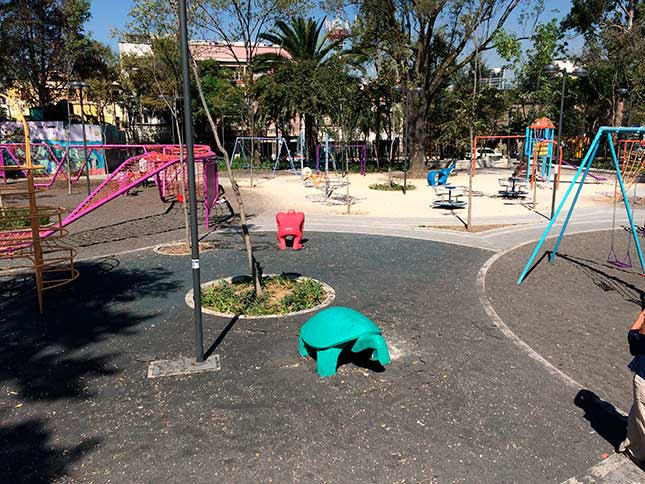
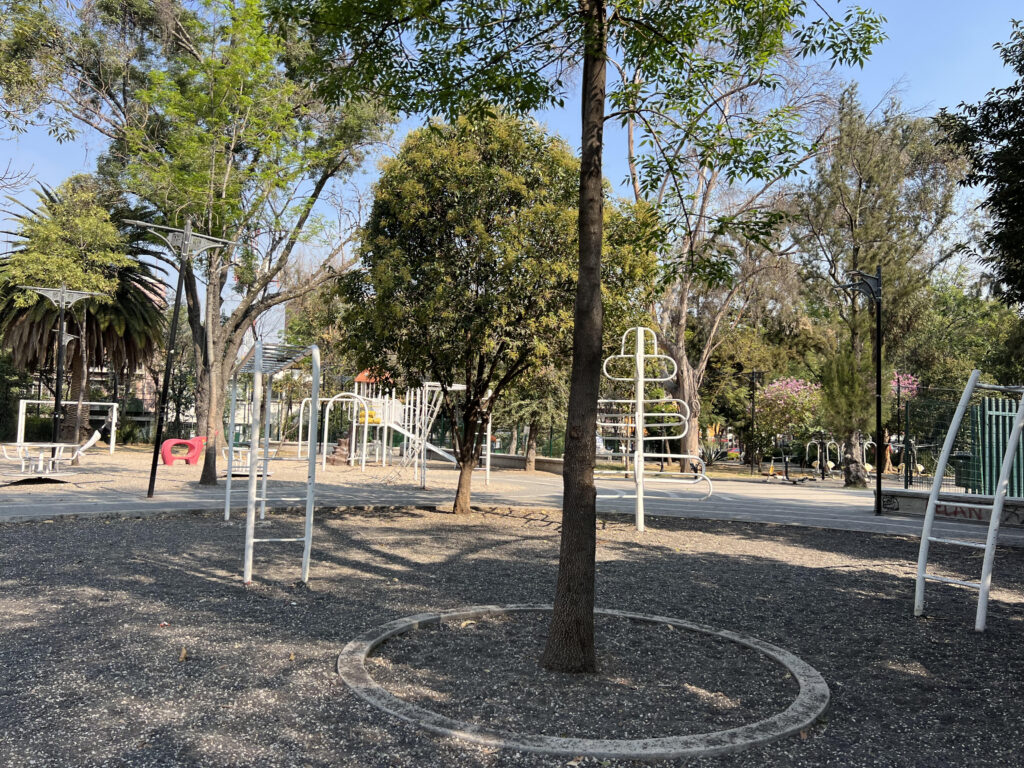
I became especially conscious of the problem through spending some time in the Roma and Condesa neighborhoods. One anecdote I shared, going back to my original project proposal, stands out to me in particular. One day, while walking through Pushkin Garden, a park in Condesa, I noticed that the playground had been painted entirely white. A friend I was with explained that it had previously been colorful, but the new mayor of the zone, Sandra Cuevas, had decided to repaint it white as part of an urban revitalization project. This took place in June of 2023, and many residents were upset by the decision, viewing it as an effort to strip color and character from the neighborhood.
To me, this serves as a clear example of gentrification, especially within a culture that places deep importance on color in cultural, social, and religious practices. Witnessing this change led me to focus my paper on aesthetic transformation and how visual shifts can reflect broader processes of gentrification. Looking further into the distribution of green spaces also helped me understand how interconnected these issues truly are.
We would love to hear about some of your initial findings. Has anything surprised you or stood out to you in particular?
Something that stood out to me while conducting field research in Roma and Condesa was the presence of signs advertising apartments for rent written entirely in English. These signs did not appear to target local residents at all, which clearly demonstrates the severity of the issue.

Another observation that I did not initially think much about emerged while I was examining Airbnb listings to better understand pricing in gentrified areas. At first, it seemed like a minor detail, but after bringing it into conversation with my faculty sponsor, I began to recognize its significance. This exchange reinforced how important it is to have consistent academic support throughout the research process, as it encourages me to consider perspectives I might otherwise overlook.
In my initial search, I conducted the investigation in Spanish, and the listings that appeared were generally less luxurious and less expensive. When I switched my settings to English and USD, however, the options that appeared were completely different. It is possible that English-language listings are prioritized, or that the platform promotes more expensive properties when searches are conducted in English. Regardless of the explanation, I found it extremely telling that these upscale, high-priced spaces are being marketed primarily toward foreigners rather than Mexican nationals.
To wrap up, can you say a few words on what it’s been like conducting independent research? How has your fellowship with THI supported your work? What advice do you have for fellow undergraduate students hoping to do the same?
It has been a rewarding experience so far. I feel grateful to be given the space and opportunity to conduct my own research. Developing my own topic, one that I would not have otherwise had the chance to explore, has been especially meaningful. Knowing that I am sharing knowledge about an issue as urgent as this one with a community that may not be fully aware of it is also very important to me. I hope this research encourages others to reflect on this phenomenon and to recognize similar processes occurring in other parts of the world.
This grant from THI has given me the opportunity to do work that I would not have had the time or space to pursue otherwise. For other undergraduates hoping to do something similar, I would say not to be afraid to apply or to invest time in topics you truly care about. There are many opportunities like this one, as well as others offered by THI, that are not available at many universities. Take a chance and submit your application. Opportunities like this are rare, and I feel very lucky to attend a university that actively supports undergraduate research and is open to sharing stories that may be controversial, like this one.
Banner image: Universidad Nacional Autónoma de México. Photograph by Daniel Uribarren.