
± AI Initiative
The Humanities Institute’s ± AI Initiative at UC Santa Cruz is leading research and training on humanistic approaches to AI use, AI system design, and critical AI studies. We support research in these areas, work with scholars to develop innovative pedagogy, and convene crucial conversations on campus and in our community.
Affiliated scholars conduct research on a range of topics, including: the ethics of AI systems, the sociopolitics of data, cyborg translation systems, simulative design, and AI agency.
Opportunities (click here)
± AI Initiative Group: UC Santa Cruz faculty, students, and staff can request to join our ± AI Initiative email listserv here or contact thi@ucsc.edu.
Calls for Applications: Coming Soon
Co-sponsorship: Please submit a co-sponsorship request here and contact thi@ucsc.edu if you are interested in collaborating.
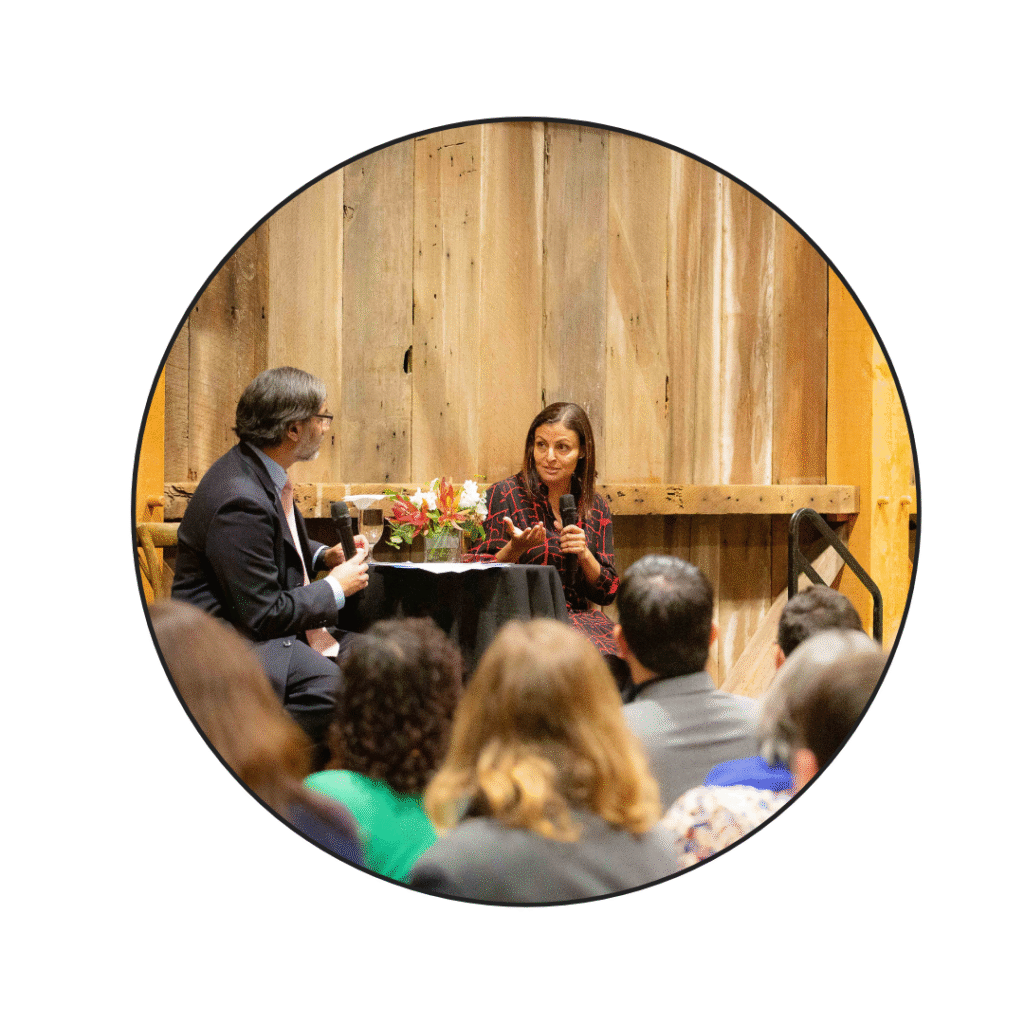
Crucial Conversations
We host leading thinkers to share their insights on how artificial intelligence is changing society and the role that humans play in shaping the future of new technologies. Our events have included “Humans in the Loop: Wikipedia’s Future in the Age of AI” with Maryana Iskander, Chief Executive Officer of the Wikimedia Foundation and “How the Internet Failed and How to Recreate It” with computer scientist, composer, artist, and author Jaron Lanier.

Research Support
We foster research on key issues around artificial intelligence and create opportunities for public scholarship. THI’s Speculatively Scientific Fictions of the Future project explores the outcome of particular technological/scientific findings and their social, ethical, and philosophical implications while our Humanities in the Age of AI Research Cluster has served as a space for humanist experimentation, and a chance to design distinctive visions and methodologies for AI. Our 2023-24 Technology series explored the relationship between humanity and technology and its transformations, threats, and opportunities.

Innovative Pedagogy
Through our PhD+ series we host workshops on new technologies such as “Using Generative AI for Research in the Humanities.” Our THI Public Fellowships also create opportunities for trained humanists to work at tech companies like Reality Labs at Meta, offering insights on the development of new technologies. We support the Humanities Division’s certificate program, Humanizing Technology, which brings humanistic methods and thinking to contemporary issues in technology and engineering, particularly around ethics, language, race, and representation.
Humanizing Technology (National Endowment for the Humanities)
National Humanities Center Responsible AI Curriculum Design Project (PI: Zac Zimmer, Literature)
THINK at UCSC: Technology + Humanities Integrated Knowledge (National Endowment for the Humanities, PI: Ben Breen, History)
Chris Gray – The Fantasies Shaping Today’s AI
April 7th @ 12pm
How to Co-Create an AI Policy in Your Classroom
March 10 @ 12pm
Armen Khatchatourov – Artificial Intelligence and its “contexts”: between ethics and politics
December 3 @ 3pm
When Human-Centered AI Encountered Digital Humanities: A Dialogue between Magy Seif El-Nasr and Minghui Hu
October 30 @ 12:00 pm
± AI Initiative Meeting
October 28 @ 12:00 pm
The future of Wikipedia in an era of AI
DIVERSE SPECULATIVE FUTURES: 2024 Top 10 Reading List
When humanists met technologists
Zimmer To Develop Responsible AI Course
Visionary tech pioneer Jaron Lanier to deliver Peggy Downes Baskin Ethics Lecture
Technology Series: Jon Ellis and Emily Robertson
Pranav Anand, Professor of Linguistics and THI Faculty Director
Jody Biehl, Humanities Divisional Professor
Adrian Brasoveanu, Professor of Linguistics
Ben Breen, Assoc. Professor of History
Jon Ellis, Assoc. Professor of Philosophy
Filippo Gianferrari, Associate Professor of Literature
Minghui Hu, Professor of History
Rodrigo Lazo, Professor of Literature
Lauren Lyons, Assistant Professor of Philosophy
Greg O’Malley, Professor of History
Nico Orlandi, Professor of Philosophy
Dimitris Papadopoulos, Professor of History of Consciousness
Felicity Amaya Schaeffer, Professor of Critical Race and Ethnic Studies
Heather Shearer, Professor of Writing
Elaine Sullivan, Assoc. Professor of History
Max Tomba, Professor of History of Consciousness
Amy Vidali, Assoc. Professor of Writing
Matt Wagers, Professor of Linguistics
Zac Zimmer, Assoc. Professor of Literature