
Events

- This event has passed.
Islamophobia in a Global Perspective: A Panel Discussion
February 10 @ 2:00 pm - 5:00 pm | Humanities 1, Room 210
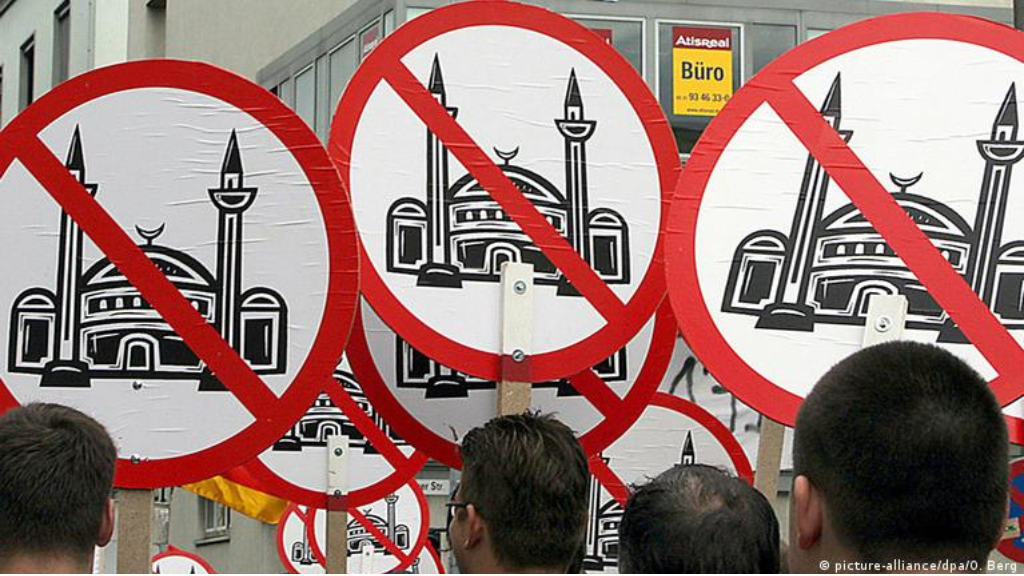
Join the Center for the Middle East and North Africa (CMENA) for a panel discussion that situates Islamophobia in a global context as a form of discrimination that shapes politics and culture in Europe, North Africa, and the United States. While it is largely acknowledged that the concept of Islamophobia refers to the racial discrimination or othering of Muslims, it has been institutionalized and experienced differently in various national and historical contexts. Instead of seeking a single definition of Islamophobia, this panel brings together researchers based in France, the United States, and Tunisia to grapple with how certain iterations of anti-Muslim sentiment, such as the Great Replacement Theory, have circulated across space, while accounting for the major differences between how Islamophobia operates in Muslim majority or formerly colonized countries and those regions that have historical been colonial powers that relied on orientalist or racist tropes to secure their imperial hegemony. It also looks at specific practices, from notions of literacy to carceral regimes, that demonstrate the functioning of Islamophobia as a form of racial governance.
Program:
2pm – 3:15 pm: Textual Transmission and Categories of Analysis
Presenters:
Adrien Thibault (IRMC), “An Alien Concept? Uses and Circulation of “Islamophobia” in Social Scientific Journals on the Maghreb”
Arshad Ali (UCSC), “Reading Islam Otherwise: Islamophobia, The Afterlives of Literacy, Anti-Blackness, and Muslim Ways of Knowing”
Discussant: Thomas Serres (UCSC)
3:30 – 5pm: Islamophobia in France: Discourses and Practices
Presenters:
Iman El Feki (University of Strasbourg), “Anti-Radicalization Politics in French Prisons: A Case Study of Racialized Institutional Islamophobia”
Dorian Bell (UCSC), “Of Nations and Nomads: Antisemitism, Islamophobia, and the Great Replacement Theory”
Discussant: Huzaifa Shahbaz (UCSC)
Participants:
Adrien Thibault
“An Alien Concept? Uses and Circulation of the Concept of Islamophobia in Social Science Journals on the Maghreb”
In order to contribute to the history of the international circulation of the concept of Islamophobia, this paper presents an exhaustive review and qualitative analysis of occurrences of the term (in French, English, and Arabic) in six leading social science journals specializing in the Maghreb: two French journals (L’Année du Maghreb, since 2004, and Maghreb-Machrek, since 2008), two Anglo-American journals (The Journal of North African Studies, since 1996, and The Maghreb Review, since 2009), and two Maghrebi journals (IBLA, Tunisia, since 2000, and Insaniyat, Algeria, since 1997). This review not only documents the relative scarcity of contemporary uses of the concept in relation to the Maghreb, but also situates it geographically and socially by systematically relating the diversity of its uses to the national and academic positions, as well as the social and migratory trajectories, of the authors who mobilize it.
 Dr. Adrien Thibault is a French sociologist and political scientist serving as a postdoctoral researcher at the Institut de Recherche sur le Maghreb Contemporain (IRMC) in Tunis. Dr. Thibault’s research focuses on migration, mobilities, and social stratification. He explores questions of circulation, borders, and marginality, conducting sociological analyses of how individuals navigate institutional categories and social hierarchies.
Arshad Ali
“Reading Islam Otherwise: Islamophobia, The Afterlives of Literacy, Anti-Blackness, and Muslim Ways of Knowing”
This paper examines global Islamophobia through the lens of literacy, arguing that contemporary suspicion toward Muslim texts, languages, and reading practices cannot be understood apart from longer histories of racial governance. Drawing on the afterlives of African Muslim literacies in the Atlantic world, the paper shows how Qur’anic pedagogies and manuscript traditions carried by enslaved Muslims disrupted racial regimes that required Black non-literacy, rendering Muslim textuality unintelligible or dangerous. These historical misreadings persist today in securitized responses to Arabic script, Qur’anic recitation, and Muslim study across schools, airports, courts, and digital platforms. Rather than treating these moments as isolated acts of bias, the paper situates them within literacy’s secular and racial architecture. It then turns to Muslim epistemologies as a methodological intervention, foregrounding embodied, ethical, and relational forms of knowing that unsettle dominant definitions of literacy. Reading Islam otherwise, the paper argues, is essential to confronting Islamophobia as an epistemic and racial project, not merely a cultural misunderstanding.
 Arshad Imtiaz Ali is an educator, community worker, and scholar who studies youth culture, race, identity, and politics. He is an Associate Professor of Ethnic Studies Education and Civic Education at UC Santa Cruz. He is concerned with questions of educational possibilities, liberatory moments/movements, and social research methodologies. He has written extensively on issues relating to the cultural geography of Muslim student surveillance, citizenship, governmentality, and other issues of coloniality and Muslims in Western spaces. His current project draws upon Muslim and non-Western storywork and ways of knowing to explore how students engage in a science curriculum that appreciates multiple, culturally sustained ways of understanding the world.
Dorian Bell
“Of Nations and Nomads: Antisemitism, Islamophobia, and the Great Replacement Theory”
In today’s far-right warnings about a “Great Replacement” of white populations by immigrants and their “globalist” protectors, the long-entwined histories of antisemitism and Islamophobia are converging again. What’s new, and what’s old, about the latest round of Western demographic anxiety? Drawing examples from France, where the Great Replacement Theory first took shape, this paper traces how elites and immigrants are being consolidated into an imagined race of “nomads”—rich and poor, cosmopolitan and migratory—against which the far right now defends the rights of “sedentary” white peoples. The results demonstrate how right-wing antisemitism and its legacies are shaping contemporary animus toward Muslims—and what this means for Jews themselves.
 Dorian Bell is Associate Professor of Literature at the University of California, Santa Cruz. His first book, Globalizing Race: Antisemitism and Empire in French and European Culture (2018), traces intersections between antisemitism and imperialism that shaped the emergence of European racial thought. He is at work on a second book exploring how shifting notions of whiteness are driving political change on both sides of the Atlantic.
Iman El Feki
“Public Policies Countering ‘Terrorism’ and ‘Radicalization’ in French Prisons: A Case Study of Racialized Institutional Islamophobia”
The goal of this presentation is to analyze French institutional Islamophobia by examining public policies for countering violent radicalization within the French prison system. To accomplish this, I have organized the presentation into three parts. First, I will analyze the detection devices used in prisons, with a specific focus on grid detection. Second, I will examine how the institutional understanding of radicalization spreads through the extension of suspicion to other prisoners, researchers, and the outside world. Lastly, based on my experience as an object of institutional suspicion, I will discuss the effects of Islamophobic suspicion on individuals.
 Iman El Feki is currently a Ph.D. student at the University of Strasbourg (France), and a member of the “Societies, stakeholders, governments in Europe” (SAGE) center. Since 2018, her research has focused on French public policies for countering radicalization and terrorism, especially their effects on targeted groups, such as French Muslims. She studies these policies within the prison administration and has conducted three years of ethnography (2019-2021) with a special unit dedicated to radicalization inside this French institution (public policies, critical security studies, prison sociology, sociology of Islamophobia).
Huzaifa Shahbaz
 Huzaifa Shahbaz is a Ph.D. candidate in the Department of Politics at UC Santa Cruz. His research examines the evolution of Muslim American organizing and the political strategies Muslim organizations have adopted in response to Islamophobia and the War on Terror. Prior to joining UCSC, Huzaifa held research roles at the Othering & Belonging Institute, the Institute for Policy Studies, and the Council on American-Islamic Relations (CAIR).
Thomas Serres
 Thomas Serres is Associate Professor of Politics at UC Santa Cruz. His research spans the field of Middle Eastern studies, critical security studies, and comparative politics, combining an ethnographic approach with a conceptual apparatus inspired by critical theory. He is particularly interested in the effects of protracted and entangled crises (popular uprisings, “war on terror,” refugee crisis, neoliberalization) in North Africa and beyond. His first book, The Suspended Disaster: Governance by Catastrophization in Bouteflika’s Algeria, was published in 2023 with Columbia University Press, expanding on a French edition initially released in 2019. He also co-edited the volume North Africa and the Making of Europe with Bloomsbury Publishing (2018).
Presented by the Center for the Middle East and North Africa and supported by the Villa Albertine