
Graduate Profile: Jacob Sirhan
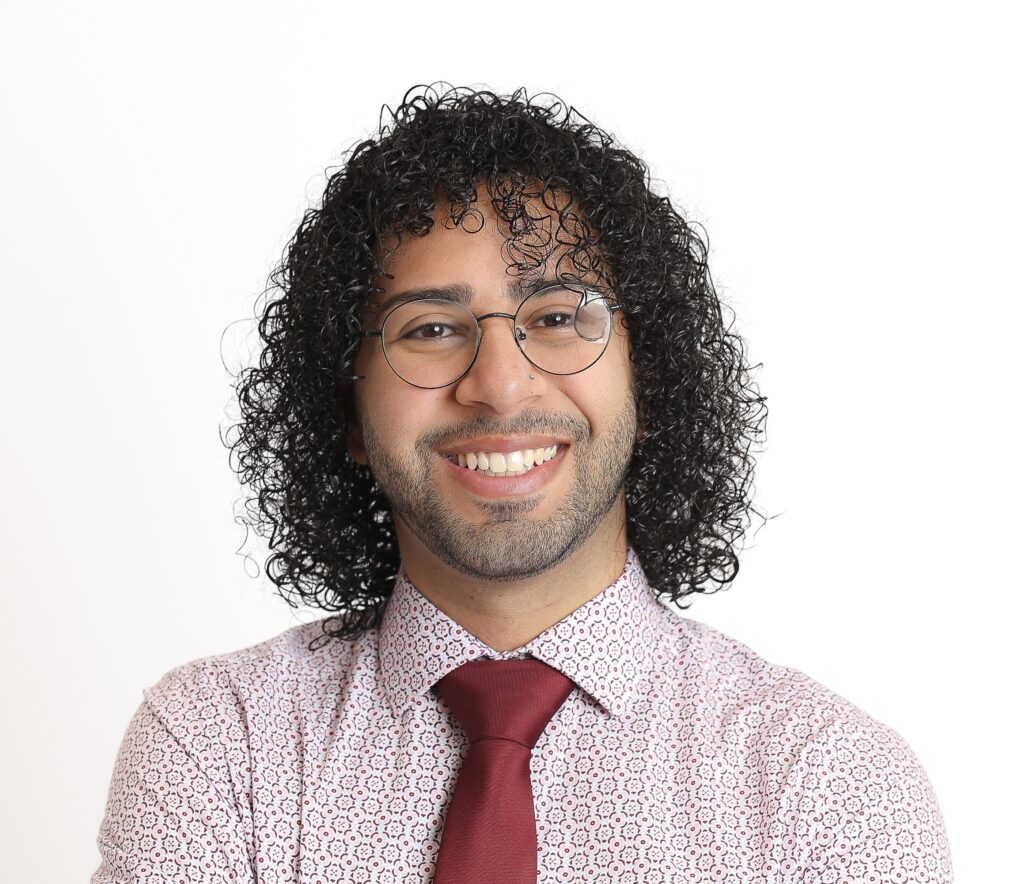
Jacob Sirhan is a second-year Ph.D. student in the History of Art and Visual Cultures department and a 2025–26 Center for the Middle East and North Africa (CMENA) Arabic Language Study Fellow. They are also active in THI’s Seeds of Resurgence Research cluster, exploring and celebrating the seed as an embodiment of the persistence of living in spite of colonial cultures that selectively administer life and death. Jacob’s research examines different themes and artistic forms within Palestinian cultural production, including science fiction, futurisms, and the question of futurity more broadly. We recently chatted with Jacob to learn more about their research, their involvement with CMENA, and their Arabic Language study plans.
Hi Jacob! Thanks for agreeing to speak with us. Let’s start off by hearing a little bit about your research and how you became interested in the subject.
My research is focused on contemporary Palestinian and SWANA art and visual culture. I am interested in exploring a variety of different themes and artistic forms within Palestinian cultural production, one of them being science fiction, futurisms, and questions of futurity broadly. Recently, I have been thinking about seeds and community meaning-making through seed-based artistic expression. I developed these interests in undergrad at the University of Michigan–Ann Arbor in a sort of unexpected way. One of my friends had told me about a professor in my program (the Residential College) whose research focus was contemporary Palestinian art. I was in an interdisciplinary social science program, still deciding which direction I wanted to take, and ended up enrolling in multiple art history classes with this professor, Dr. Sascha Crasnow, until I realized I wanted to continue this work and do further research. I was fortunate to be at UMich at the same time as her to take a Palestinian contemporary art class, without which I likely would not have found this path.
I’m curious, what drew you to new media forms like experimental film and mixed media artwork?
It is difficult to pinpoint exactly why I have been drawn to these forms; it was never anything intentional, but I have found that these are the forms of art that I have been most intrigued by and have written about the most. I think there is something to be said about the complexity of these forms and the way that Palestinian artists have used them in unique ways that intervene in certain political and cultural conversations. Representing Palestinian culture, identity, politics, and forms of being can be very complex, and I think I appreciate how some artists explore them in ways that take on deeper meaning beyond any static form, and also develop participatory meaning-making processes that are both part of the art practice itself and inform it. It certainly informs my approach to research and how I engage with the works and the larger conversations they are a part of.
You recently received the CMENA Arabic Language Study Graduate Fellowship. Congratulations! How did you first get involved with CMENA? And can you share with us how this fellowship supported your study of Arabic?
I learned about CMENA at some point during my first year from social media as well as through some of the professors that I work with. I participate in the Arabic Colloquium on campus and did the Graduate Summer Language Program here at UCSC in Summer 2024, which allowed me to meet many of the graduate students and faculty who are affiliated with CMENA. It is a great resource for those of us who do research related to the SWANA region. I am very grateful to CMENA for awarding this fellowship, as it allowed me to travel to Amman to do a 5-week intensive Arabic program at the Sijal Institute for Arabic Language and Culture. At Sijal, I took both advanced Fusha (Modern Standard Arabic) as well as an Arabic cooking class, which was very exciting to improve my written skills, speaking skills, as well as cooking-specific terminology and skills. Beyond my Arabic studies, the fellowship supported me in my research as I was able to spend time at the arts and culture institutions around Amman, visit their libraries and archives, and build relationships with staff/artists.
Can you share a bit with us on what you’re currently working on now?
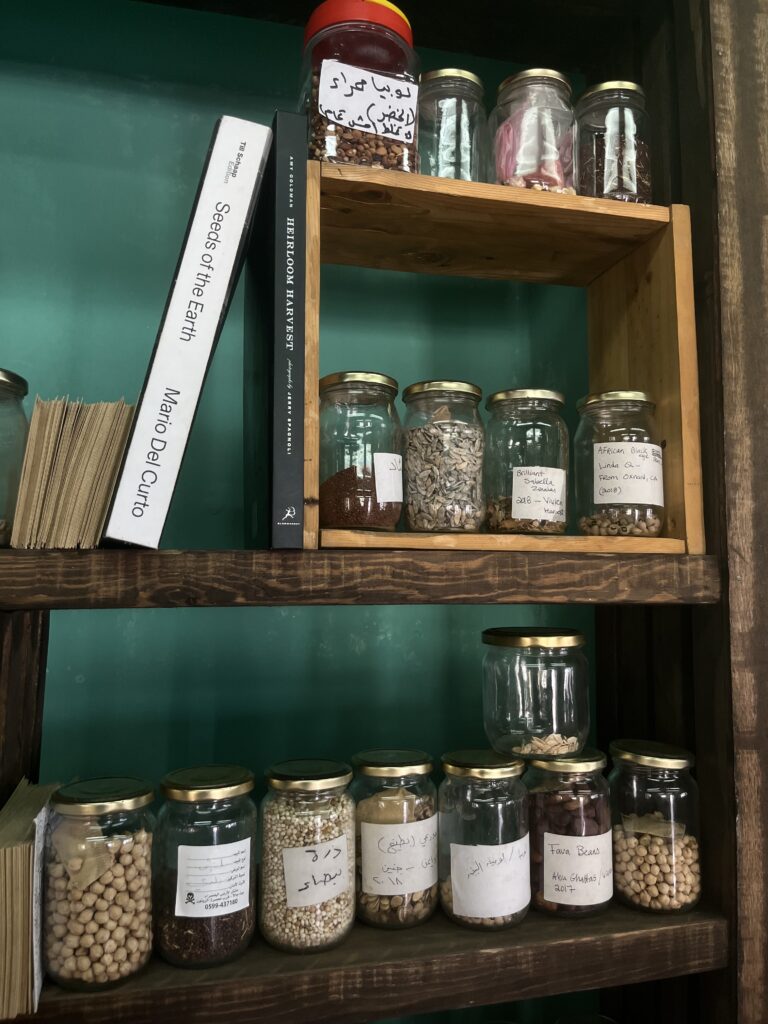
I recently presented some developing research at the American Studies Association conference in November 2025. The paper was titled “How to Take Refuge in a Seed: Metaphors of Survival and Becoming.” The project examines the aesthetics of the seed that Vivien Sansour evokes in her Palestine Heirloom Seed Library (PHSL), aiming to understand the various functions, and capaciousness, of the seed and how it serves as a model for an anticolonial archive, a form of media, and a place of refuge in its futurity. It engages with a short film of Sansour’s, postcards that I received at some PHSL-sponsored events in Santa Cruz, as well as the the meaning-making processes the project creates. I hope to continue working with the PHSL project as well as the questions that emerge from my engagement with it and alongside others in the Santa Cruz community who are engaging and thinking with the project and Palestinian seeds as well.
Thank you for sharing, Jacob. To wrap up, can you share with us one film or piece of artwork that has remained with you the most?
As mentioned above, one of the pieces I have been thinking alongside with most recently is Vivien Sansour’s Palestine Heirloom Seed Library, which is both an art project and an agricultural initiative that was founded in 2014. The main library is based in Battir, a Palestinian village outside Bethlehem, though the project also has a global reach through its events, seed sharing networks, and diasporic community-building. Last year, a coordinator of the PHSL visited Santa Cruz to host a few events at Indexical and Pie Ranch, and at one we watched a film Sansour made called “Ahl el Thara, People of the Soil (2024).” I have thought a lot about this film and the language that Sansour uses in it, particularly that which likens Palestinians to seeds, and the resonances that both people and seeds have with conditions of exile, refugeehood, and diaspora. The project at large has been a comfort for me and for maintaining hope when the daily reality for Palestinians and the brutality they face makes it tougher each day.
Banner image: Milkweed pods releasing fluffy seeds into the wind. Photograph by Gennady Zakharin.