
Graduate Student Profile: J. Ramos
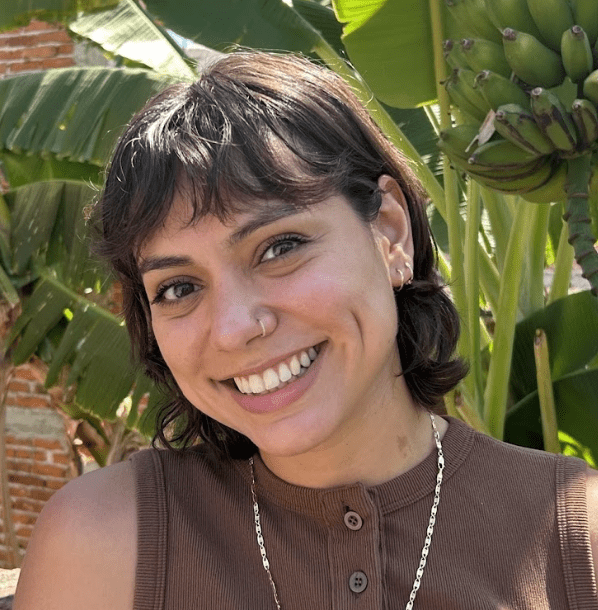
J. Ramos is a 3rd year PhD student in Literature and a 2025-26 THI Graduate Public Fellow. Through this fellowship, J. spent the past summer working with The Pollen Initiative to support incarcerated journalists at the San Quentin State Prison and the Central California Women’s Facility. Earlier this year, J. also received an Archival Fellowship with the Huerta Center Scholars Alternative Spring Break program at the Dolores Huerta Foundation, supported by THI. This fellowship offered archival training and the opportunity to process archival materials from the renowned American labor leader and civil rights feminist activist, Dolores Huerta. J.’s current research, titled “Territory Relationality and Political Imaginaries: Insights from Latinx Narratives,” examines how systemic forces shape the relationality of Latinx subjectivities. We recently caught up with J. about all the exciting work they’ve been up to this past year!
Thanks so much for chatting with us, J. To start off, can you talk to us about your research?
Broadly speaking, I am a scholar of Latinx literature and cultural studies. My research seeks to understand how Latinx identities are constructed in relation to land, animals, and other aspects of the natural world. Additionally, I like to consider how global politics and economics affect the process of identity formation for Latinx subjects in both fiction and nonfiction narratives.
That’s so interesting! What drew you to this work?
The lack of exposure to Latinx literature and global political histories in the K-12 system made the shock of exposure even more glaring when I arrived at college. I took a course in Chicano Literature during my undergraduate studies and fell deeply in love with stories that reflected a tradition outside of the canon with which I was familiar. I also decided to minor in Latin American Studies then, and I began learning about the political relationships between Latin America and the Global North, which provoked a lot of mixed feelings for me since, as a Mexican-American, I recognized myself as someone who was intimately tethered to both. This catalyzed my desire to explore that intersection through narratives and cultural political economy.
In Spring 2025, you received support to work with the UCSC Dolores Huerta Research Center for the Americas, the Center for Archival Research and Training (CART) at the UCSC Library, and the Dolores Huerta Foundation (DHF) in Bakersfield, California as an archival fellow. It sounds like it was an amazing opportunity to process archival materials from the renowned American labor leader and civil rights feminist activist, Dolores Huerta, and we’d love to hear more about your experience. What did archival research training teach you? Was there a particular moment in the archive that stood out to you or surprised you? And how does your participation in this fellowship connect back to your research?
I had a great time working with CART, the Huerta Center, and the DHF on this project. I feel very lucky and honored to have had this opportunity because it deepened my understanding of archival work and labor movement history, while simultaneously making my love for the Central Valley grow. From the archival research training, I learned how to process and appraise documents and other materials that are generally found in archives, but beyond this, the training taught me the seriousness that archivists must approach their work with. For instance, because archives are often the reference points for legitimizing historical happenings, the process of their creation and preservation cannot and should not be taken lightly. This became very apparent during conversations with the Archives Director at DHF, Lori de Leon, who also happens to be Dolores Huerta’s daughter. Being in dialogue with her was very impactful for me because she acted as a point of reference for contextualizing many of the archival materials, and she was also able to help me and my fellow interns make decisions on how to process the materials at hand. This fellowship echoed the importance of narratives and narrative construction, both which lie at the center of my research as a literary and cultural studies scholar.
Over the summer, you also worked with The Pollen Initiative as a THI Graduate Public Fellow. What interested you about The Pollen Initiative? What kind of projects did you work on with them, and what are some of your takeaways from the experience?
I was drawn to the Pollen Initiative because I found their work to be truly impactful. For some context, the organization establishes media centers inside prisons that support incarcerated-run newsrooms, which publish quarterly newspapers. Through their participation, inmates become part of a learning community where they develop skills to transform their lived experiences into narratives, and eventually, they can share their work within and outside of the prison system. When I learned about Pollen, I felt a deep respect for the work they were doing and was happy to know I’d be able to contribute to their mission.
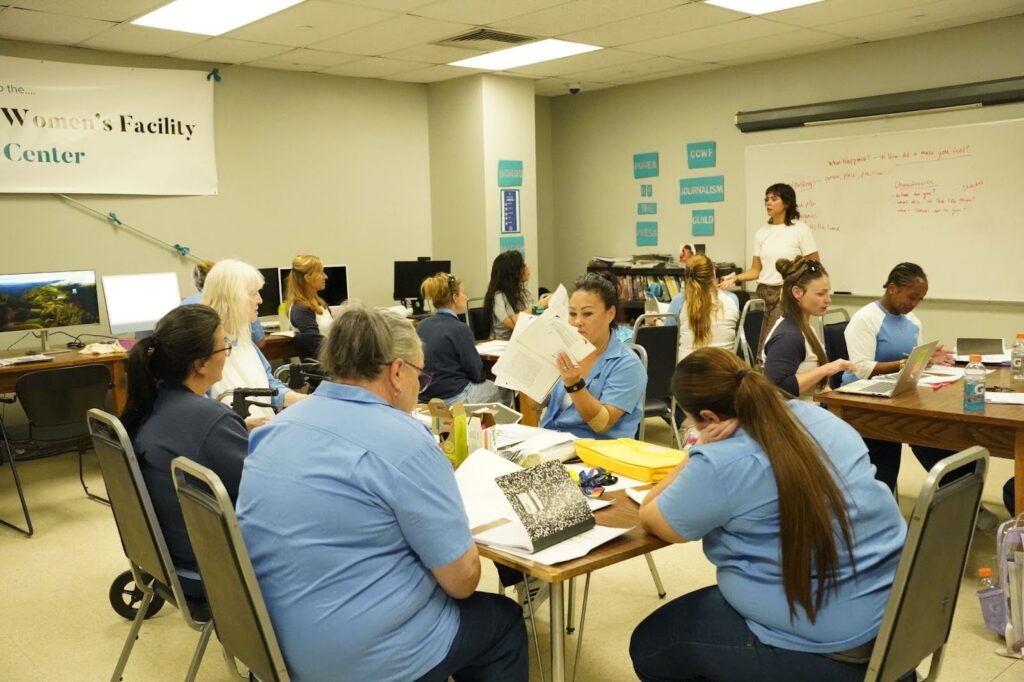
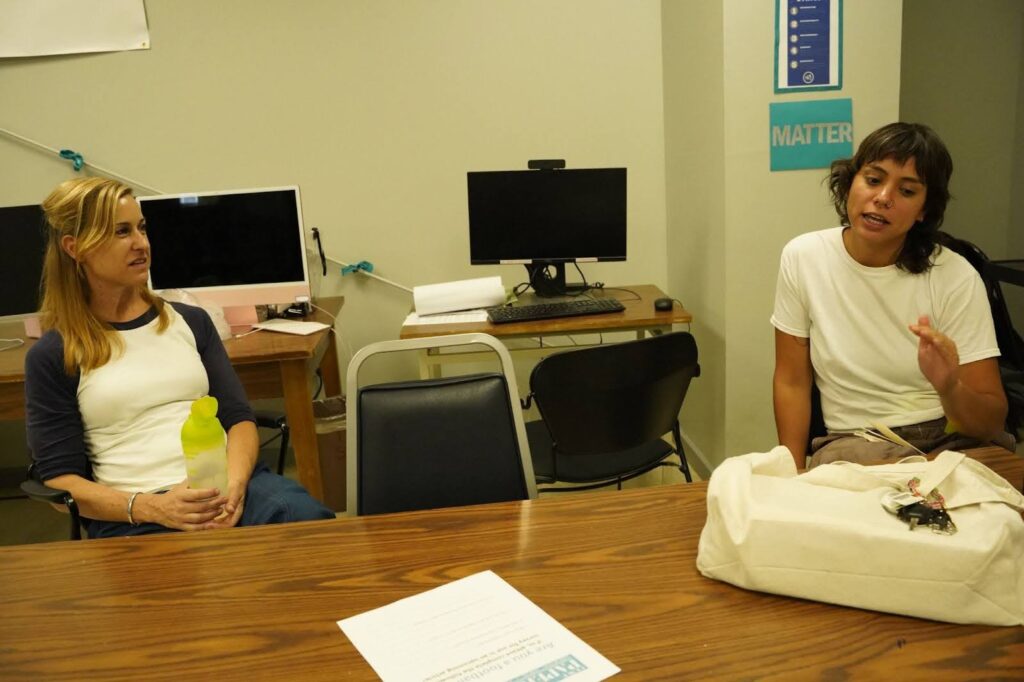
Over the summer, I worked with incarcerated journalists from both San Quentin State Prison and the Central California Women’s Facility. For most of the summer, I assisted them with edits on articles/stories that they were preparing to publish in prison journals, and then towards the end, I conducted 2 writing workshops at each prison, wherein we discussed the content of a total of 4 short stories and practiced applying their narrative strategies to their journalism writing so as to create depth to their reporting. All of this went well, and I am proud of the positive feedback I received from the inmates and the directors of the organization. It was rewarding to see how I contributed to the education of people who don’t readily have access to a classroom setting.
Through THI support, you’ve had the opportunity to cultivate a range of skills for both academic and non-academic purposes. How have these two experiences shaped your vision for the future in terms of future career opportunities?
Even though I do imagine myself as an academic in the long run, working with two non-profit organizations opened my eyes to the value of academic work outside of institutional higher education. I hadn’t previously considered working for a nonprofit, mainly because I didn’t really know what of value I could bring to the table, but seeing how transferable my academic skills were in this space has pushed me to think outside of the confines of my imagined career trajectory. In that same vein, I think these experiences have emphasized the importance of bridging the gap between the academic and the non-academic and that is a conversation that I will continue to be a part of regardless of where I go career-wise.
And lastly, to wrap up, what’s something you’re looking forward to in this upcoming academic year?
Honestly, I am looking forward to taking my Qualifying Exams by the end of the academic year. I have completed my coursework requirements, so I am now able to focus on my own research and preparing my materials for the QE and that’s really what I have been looking forward to for a while. I do enjoy taking coursework and I love the graduate seminar environment, but I’m excited to now be choosing the subject matter and material of the direction of my learning more directly.
Banner Image: The Dolores Huerta Center Research Center for the Americas at UCSC.