
Undergraduate Profile: Leo Colletta
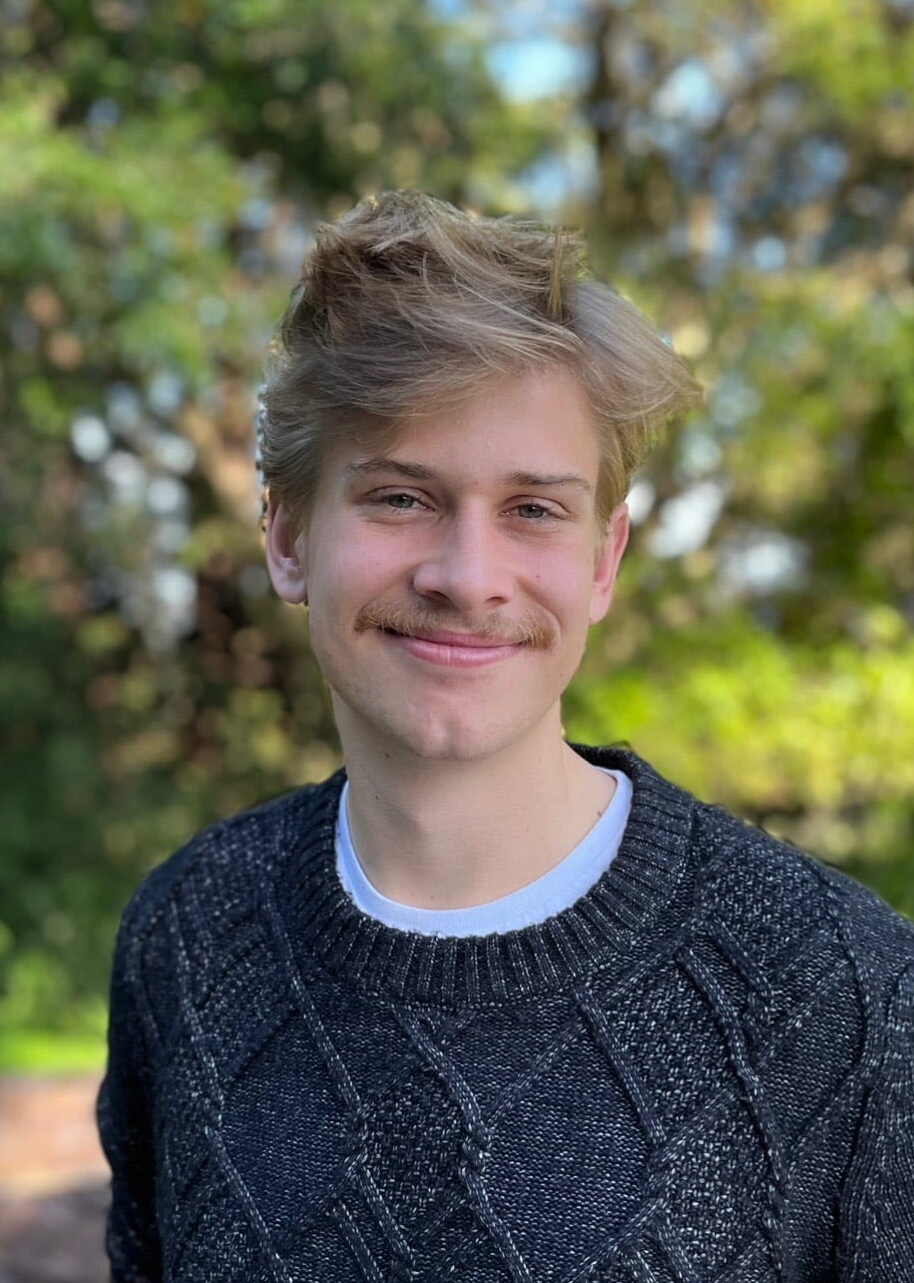
Leo Colletta is a fourth-year History and Politics major at UC Santa Cruz. He is a 2025-26 Earth Futures Institute Frontier Fellow conducting research on the impact of grassroots activism on global nuclear armament policy and historic non-proliferation agreements, under the mentorship of professors Alice Yang (History) and Dan Wills (Politics). Since 2024, Leo has also been working with the Santa Cruz Museum of Art and History as the Assistant Education Coordinator through the Humanities EXCEL program. We caught up with Leo to learn more about how the experiential learning opportunities offered by these fellowships have shaped his academic journey in the humanities.
Hi Leo! Thanks for taking the time to talk to us. To get us started, could you share a bit about yourself and your academic interests? How did you choose your majors?
I am a fourth-year student majoring in History and Politics. Although I have many interests, my primary research areas are the politics of peace-building and the history of nationalism. I began to be interested in these topics in my second year when I took a class on Modern Irish History with Dr. Bruce Thompson. In the class, I learned about many topics, but the ones that most interested me were the history of Irish Nationalism and the Northern Irish Peace Process. Throughout the class, I started to make connections between Irish and World History, and I became interested in the politics of peace-building and disarmament generally. I was a History major first, but I started to view Politics as a logical extension of my interest in History, and the combination of the two as the way to understand current events.
This year you were selected as a 2025-2026 Frontier Fellow at the Earth Futures Institute – congratulations! This is a very competitive competition across campus to conduct interdisciplinary research on topics relevant to planning Earth’s future. Can you tell us a bit about how you decided to apply for the fellowship and who your faculty research mentors are? What is your research about and how has the project progressed over the summer?
When I heard about the Frontier Fellowship, I was looking for professional opportunities in the summer, directly in my field. Although I knew it would be competitive, I decided to apply because I felt confident in my proposal, and I knew it would be a great experience. I reached out to Dr. Alice Yang and Dr. Dan Wirls to be my faculty mentors. My research focuses on the impact of the international anti-nuclear weapon movement on the nuclear disarmament and nonproliferation treaties of the 1980s, and the lessons contemporary policy makers can learn from the history.
Over the course of the summer, my research has narrowed in scope, and I have had many twists and turns as I’ve sifted through sources. I’ve learned a lot not only about the topic, but also about research in general. I’ve had to learn how to judge the validity and reliability of sources when collecting information to aid my thesis, especially when dealing with state-produced media. I’ve also had to get creative when looking for sources, as many important documents are not digitized, are in very limited print, or are in untranslated Russian. While I am not finished with my project, I feel that I have already grown a lot as an academic, writer, and historian.
You also spent last year as a Humanities EXCEL Fellow at the Santa Cruz Museum of Art and History and you’re continuing this fellowship in 2025-2026. How does your work at the MAH build on your academic journey in the humanities? How are you feeling about returning for a second year?
Working at the MAH has been a great experience for me. I’ve learned so much about public history and the presentation of history that I wouldn’t have learned in class. It has also given me the opportunity to exercise the skills I have been learning in my classes, such as writing and research, to help bring history to life in an important and meaningful way. I am excited to take everything I have learned so far and use it to take the fellowship to the next level this year.
We’d love to hear more about your role as the Assistant Education Coordinator. What did your work look like from week to week? Was there a particular highlight last year?
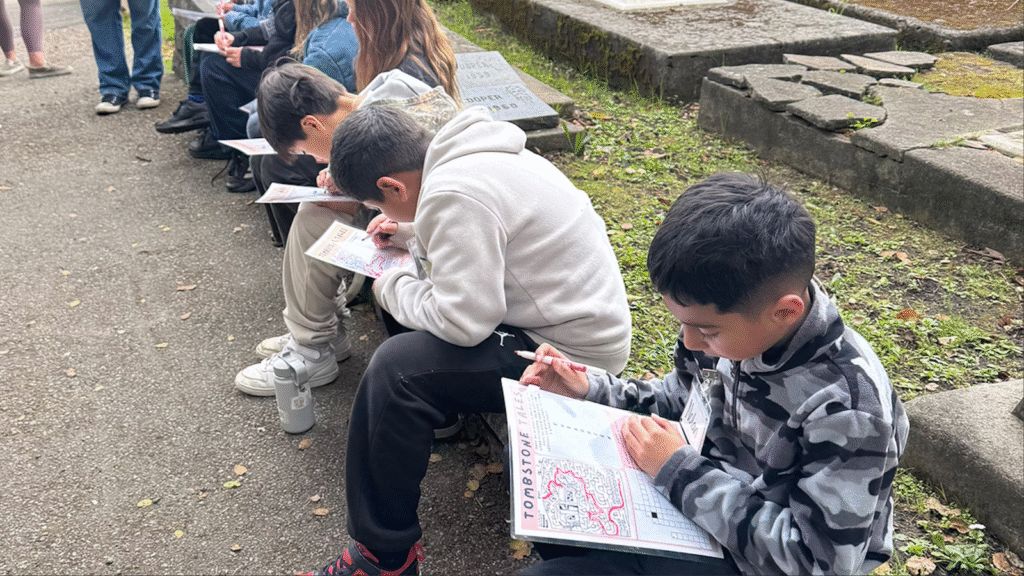
As Assistant Education Coordinator, I primarily worked with local elementary school classes to plan and lead interactive lessons on Santa Cruz history and the exhibits we have at the museum. Part of my job was working with teachers to meet their classes’ learning needs, and to make a safe and welcoming space for students to learn and explore. A highlight of last year was when I would have a somewhat rambunctious class, and I was able to guide them into directing that energy towards learning and interacting with the art and history of the exhibit.
It’s wonderful that you worked with students in local schools. Were there particular MAH exhibits and programs that students found especially exciting or engaging? What are some of the things that you hope that students take away from their visit to the MAH?
While all of our exhibits were great and well-received by the students, I think the students found our exhibit, Young, Gifted, and Black, to be especially engaging. The exhibit highlighted art from African American artists, showcasing their vibrance, culture, and creativity. For some students, they had never seen art like that before, and others may never have seen themselves represented in art in that way before. I hope that every student leaves the MAH feeling that art is for them, that they, as young people, can create meaningful art, and that art can be a medium for them to express the feelings that words sometimes cannot.
How has your Frontier Fellowship and your Humanities EXCEL Fellowship helped you gain new skills, experiences, and perspectives? Would you recommend these fellowships to other UCSC undergraduates, and do you have any advice to share with students interested in experiential learning opportunities?
Both my Frontier Fellowship and my Humanities EXCEL Fellowship at the MAH have taught me new things and allowed me to gain new perspectives. For example, my research fellowship has given me a more complex understanding of democracy. During a time of crisis, the decision to use a nuclear weapon lies in the hands of very few people, some of whom are unelected, such as the National Security Council, or the individual commander of a particular device or weapon, and the President. In other countries, such as the Soviet Union, the ability of the people to exert their will upon the government, especially in terms of national security, is even more limited. My research has broadened my perspective of democracy, helping me to appreciate the important role that civil society, protest, and activist organizations play in a functioning democracy, and can play in shaping international politics.
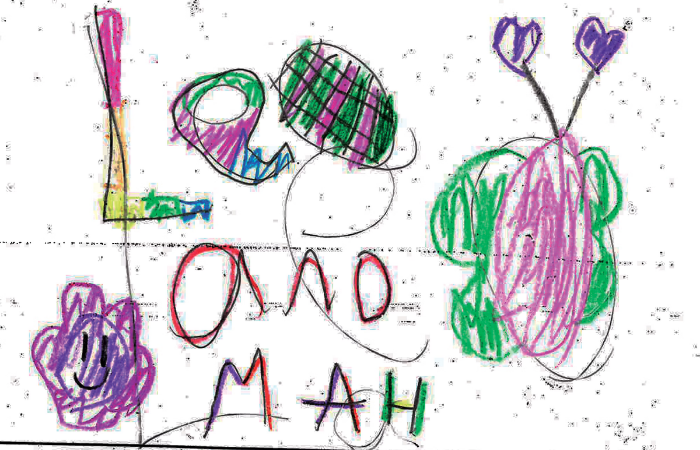
My time at the MAH has helped me think local. While much of my research and my classes have been about the large scale of international politics, the MAH has reminded me of the importance of local history and local politics in shaping history as a whole. Through my work at the MAH, I have become much more of a community member and have grown to feel much more at home in Santa Cruz.
My advice to other UCSC undergraduates who are interested in these experiences is to keep an open mind about opportunities and to try new things. Before I started at the MAH, I had never seen museums as a possible pathway for my career. With a year of experience under my belt, I am confident that even if I don’t work in a museum in the future, the skills I have learned through my fellowship will continue to aid me throughout my life.
Thank you so much! To wrap up, what have you enjoyed most during your time here at UCSC and living in Santa Cruz?
My most fond memories of my time at UCSC so far have been running with the UCSC Cross Country Club. While I love my schoolwork and my projects, running with my friends has been a wonderful outlet for me, which has allowed me to meet people with different perspectives and passions, and to feel a sense of community outside of class. It has helped me be a more well-rounded person, which I believe has allowed me to excel in my academics.
Banner image: A protest against investments in companies that manufacture nuclear weapons.
The yearlong Frontier Fellows program is an interdisciplinary research opportunity led by the Earth Futures Institute and co-sponsored by The Humanities Institute and other partners.
The Mellon Foundation, The Helen and Will Webster Foundation, The Humanities Institute, the UCSC Humanities Division, and individual donors generously support the Humanities EXCEL Program. If you’re interested in learning more about Humanities EXCEL paid internships, please contact hum-experiential-learning@ucsc.edu.