
Undergraduate Profile: Aivan Bach and Courtney (Court) Sugano
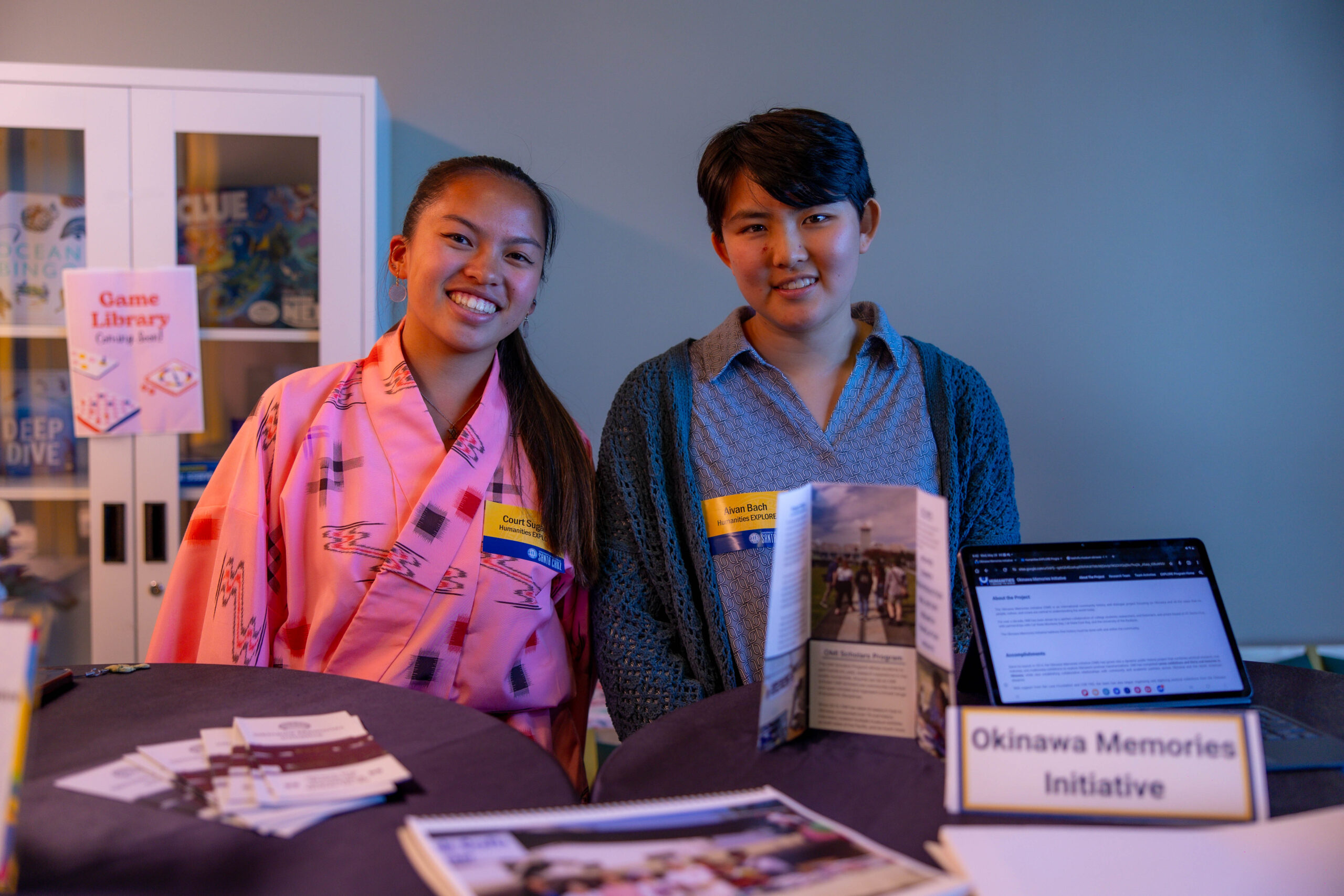
Aivan Bach and Courtney (Court) Sugano are 2025-26 Humanities EXPLORE Fellows working as Co-Lead Interns at The Okinawa Memories Initiative (OMI) — a collaborative, international public history project housed at The Humanities Institute. Both are in their fourth-years at UC Santa Cruz: Aivan is an Anthropology and Environmental Science double major and History minor, while Court is a Global and Community Health major and a History minor. This is both Court and Aivan’s second year working with OMI through the Humanities EXPLORE program. We recently caught up with them about their time supporting OMI and their new responsibilities as Co-Lead interns this academic year.
Hi Court and Aivan! Thanks for chatting with us. To start off, can you both tell us a little bit about yourselves and the Okinawa Memories Initiative (OMI). What drew each of you to join OMI and what has your experience been like so far?
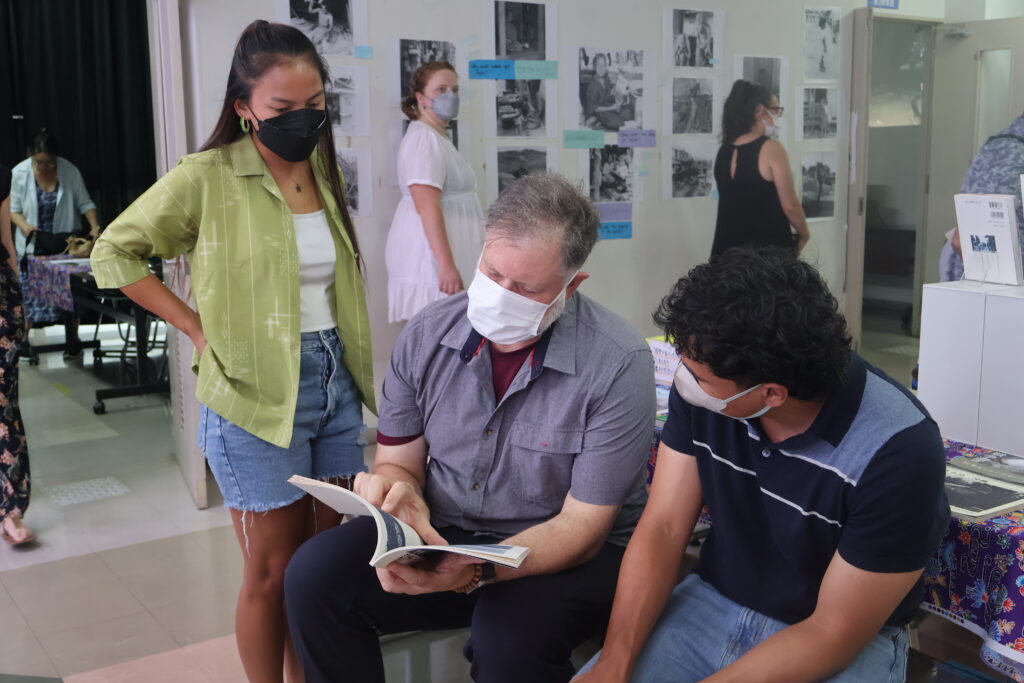
The Okinawa Memories Initiative (OMI) is a public history research project that partners with other universities and the Okinawan Community to learn, teach, and archive Okinawan history and culture pre and post WW2. OMI is comprised of six teams: Archives, Oral History, Media Production, Exhibits, Communications, and Translations. Each team supports the development of our research on deeper levels and helps us complete multi-phased, multi-media projects. In past years, OMI has taken cohorts of undergraduate researchers, graduate researchers, professional advisors, and faculty mentors to Okinawa for weeks-long research trips. During trips to Okinawa, the cohort has participated in experiential learning opportunities and conducted on-site reading where historical events unfolded.
Court: My family is Okinawan and migrated from Okinawa during the first wave of immigration for work reasons. While in California my family has participated in the Okinawa Association of America (OAA) for decades and while at one of their events I learned about OMI. During my second year at UC Santa Cruz, I joined OMI as an Oral History Team member and learned so much about learning history through the eyes of the indigenous community and their personal experiences. My second year in OMI I was the Oral History Team Lead and this year I am one of the Co-Lead Interns, who act as the liaisons between the undergraduate researchers and graduate leadership, professional leadership, and the executive board. Together we are responsible for the management of the undergraduate division of OMI and oversee the day-to-day events. Joining OMI has not only strengthened my research, communication, presenting and leadership skills but has also helped me learn more about my culture and connect with my community.
Aivan: I was recruited to join OMI at Cornucopia in my first year at UC Santa Cruz, when I did not know much about the history of Okinawa at all. I had taken Japanese language classes in high school and OMI was looking for new members that knew Japanese. I joined the Archival Team to get volunteer experience that I could add to my resume. When I first joined OMI, I never would have expected to get to where I am in the project today. My experience in the project has been very rewarding and I have gained a lot of confidence in myself in terms of leadership. Sometimes things can get very busy in OMI, but whenever we come back from volunteering at the OAA or at the end of a big event like Giving Day, I always feel a strong sense of accomplishment and pride in the work we do. I did not expect OMI to become such a huge part of my college career, but I am grateful for everything I have learned through the project.
Last summer, you both traveled to Okinawa as part of OMI to conduct research and community service. We’d love to hear more about this amazing opportunity. Was there a particular moment that stood out to you or left a lasting impression? What did you both learn and take away from this trip?
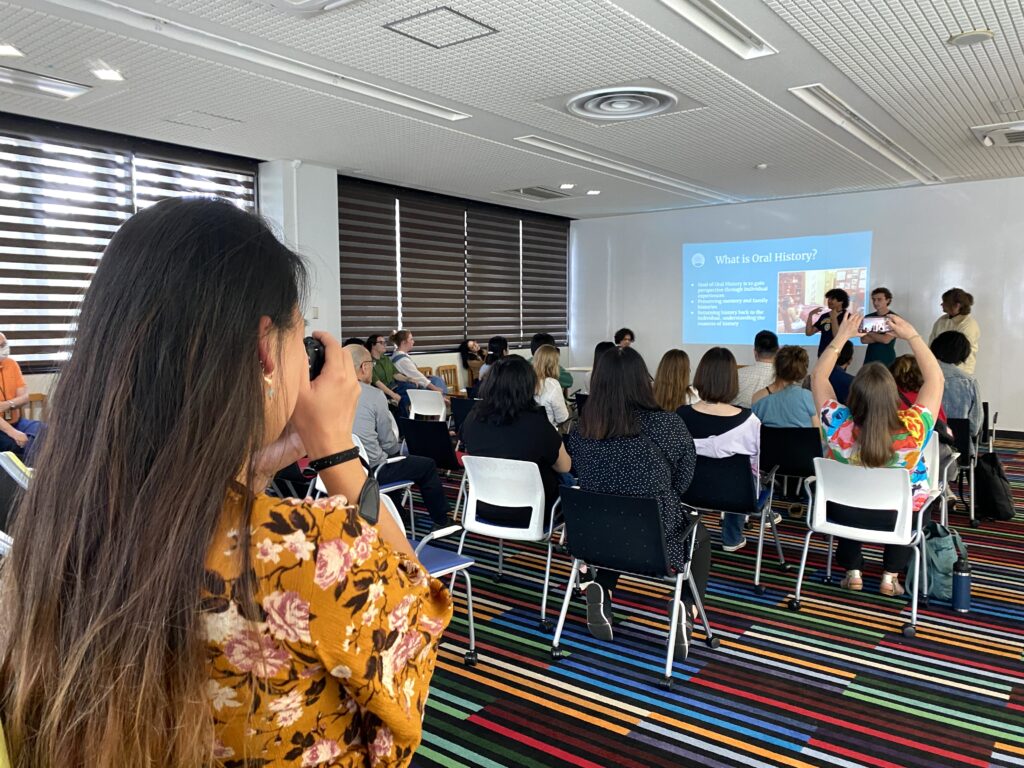
Court: At the time of the trip, I was the Oral History Team Lead and we were asked to create and conduct a workshop for students at the University of the Ryukyus. That workshop allowed us to meet students who shared a similar interest with us and who wanted to learn history through the eyes of personal experience. While we were there we each conducted our own personal research related to foodways and held a research symposium at the end of the trip. Listening to everyone’s interests and research was very illuminating to the different aspects the island had to offer. On a personal level something that made a lasting impression for me was how I was able to find my ancestral homes and my distant relatives. Something that was validated for me during this trip was that even though there is an ocean between us, people have the same interests and want to learn the same topics as us. A takeaway for me is to continue to find those people that share those interests and continue to build relationships with them.
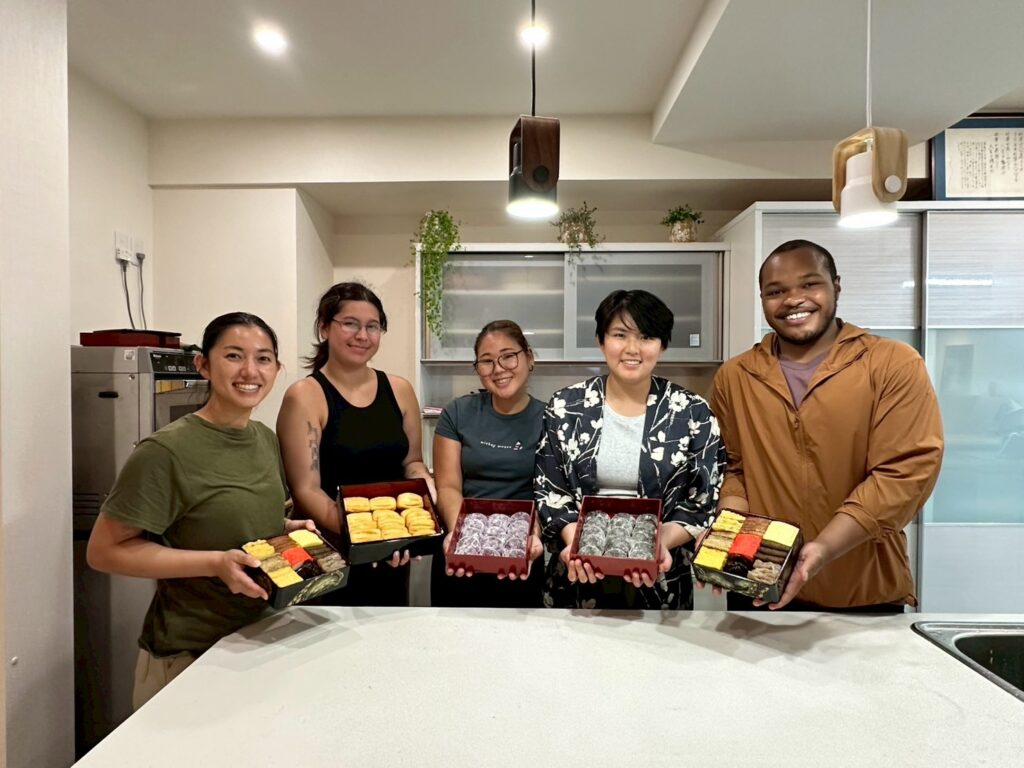
Aivan: During our one-month trip to Okinawa, we had the opportunity to travel all around the island and beyond. One day we would be attending a traditional Ryukyuan dance performance and the next we would be observing tropical fish while snorkeling. We participated in a broad range of activities to immerse ourselves in the local history and culture, but the main focus of our trip was on Okinawan foodways. I came away with a desire to learn more about local variations in Okinawan culture and many ideas for future trips.
This year, you both are working with OMI as its Lead Interns. Congratulations! What are your new responsibilities? How has it been supporting a new cohort of undergraduates? Could you also talk a bit about how other students are involved in OMI, and what this leadership experience has taught you about mentorship and collaboration?
Aivan: Our new responsibilities include regular meetings with Director of OMI, Dr. Alan Christy, planning and leading trips, administrative tasks, and overseeing OMI’s day-to-day activities. It has been very exciting supporting a new cohort of undergraduate students. It’s rewarding to see new members join and become deeply invested in the work they can do with OMI. Other students are involved with OMI through our various teams, attending weekly meetings and occasional workshops or project work sessions. Team leads run the weekly team meetings and we provide support to team leads as needed. Taking on the role of Lead Intern in OMI has taught me to both trust in myself and not be afraid to rely on others. It has taught me that mentorship and collaboration look different for each relationship; you have to assess your dynamic with the other person and the group dynamic as a whole to understand the best way to lead.
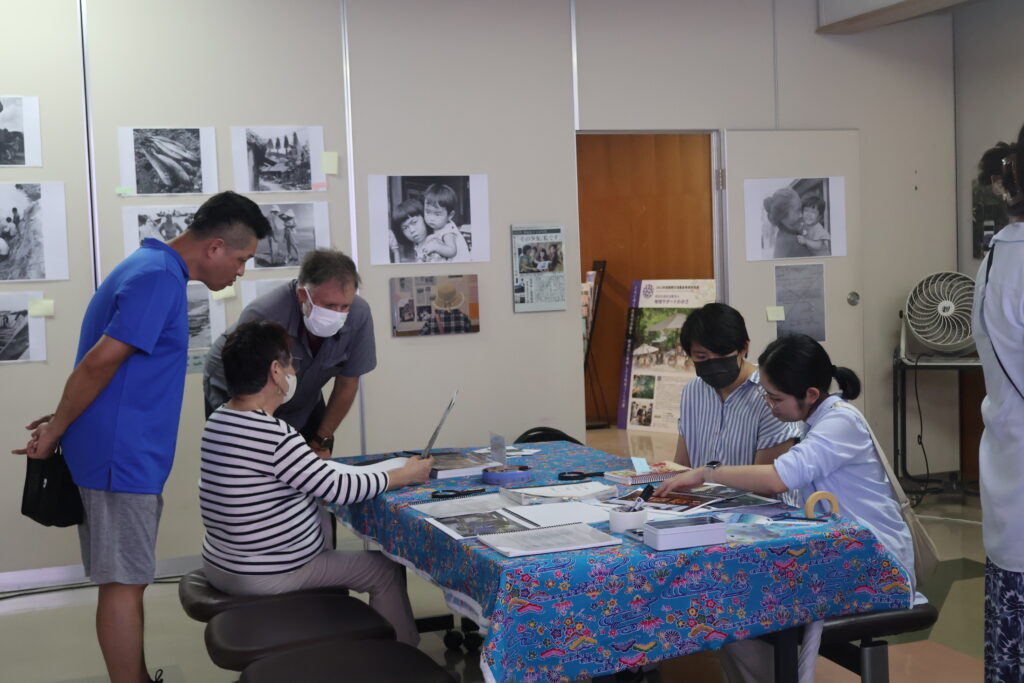
Court: Court: Being able to guide and support our new cohort is very rewarding because I was in their shoes before and having someone there to help you gives you confidence in the work you are doing. Students can become involved in OMI no matter their background or interests as we have several teams that anyone can join. Working with OMI, I have been able to connect with mentors who not only share the same interests as me but have also allowed me to connect with our work on a deeper personal level. It has also allowed me to improve my collaboration skills with not only my peers but with graduate students, faculty, and community partners.
You recently were in LA working with the Okinawa Association of America (OAA). Can you tell us a little bit about the OAA and its relationship with OMI? What were you doing on this trip and how did it build on previous projects with the OAA?
Court: The OAA is a community organization formed over a century ago that allows the Okinawan Diaspora to connect with one another while they live away from their homeland. Not only does the OAA allow Okinawans to connect with their language and culture but it teaches others about the Okinawan culture. The OAA holds various events throughout the year focusing on culture, education, and social programs that bring generations together. OMI’s relationship with the OAA is only a few years old but has allowed OMI to learn about the experiences the Okinawan Diaspora has experienced after them and their families had after moving off the island. In turn, OMI gladly assists with volunteering at their community events and archiving their vast collection of resources.
Aivan: The beginnings of our partnership developed from conversations between OMI and the OAA in 2020. OMI has conducted oral histories with OAA members, helped catalogue their cultural materials, photographs, and artwork, and supported the OAA at their annual events. On this trip we were helping with the OAA New Year’s Party. The New Year’s Party is an event that the OAA has held for many years and it was well documented by one of the former OAA presidents, Haruo Yamashiro. The main project of the OMI Archival Team in the past four years has been digitizing and creating metadata for a large collection of Mr. Yamashiro’s photos for the OAA. I think that attending the New Year’s Party was especially valuable for Archival Team members because they got to see similarities between the celebrations of the past and present. We could make connections between the photos of past OAA New Year’s Parties and what we saw that day.
I’m curious if you would like to share why you think research opportunities like this are important. As humanities students, how has being a part of this project deepened your understanding of what studying the humanities can look like in practice? Have you found that participating in OMI has shaped your academic experience at UC Santa Cruz and your thinking about what you might want to do in the future?
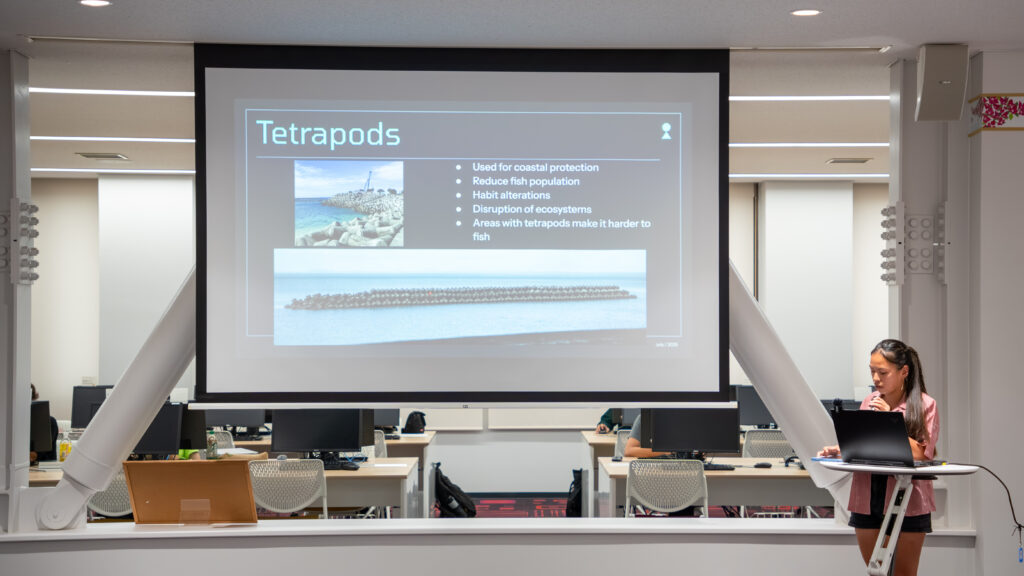
Court: I find opportunities like this are important because it gets researchers out into the field and not just behind books or resources. Meeting and interacting with the community you are studying makes more of an impact on you when you are face to face with them and can witness a small portion of their lives. This project has deepened my knowledge of studying humanities because it opened my eyes to the many ways you can conduct research and the different levels it takes to truly understand your topic. Participating in OMI has 100% shaped my academic experience at UCSC because before OMI I wasn’t a humanities student. OMI and humanities has shaped my experience because it has given me countless opportunities that I wouldn’t have gotten elsewhere, whether it was leadership opportunities or the opportunity to connect with my culture.
Aivan: Humanities research is important, not just because it is a skill you can put on a resume, but because it helps build media literacy. And media literacy is quite possibly one of the most important skills that students have been lacking in in recent years. I feel like being in OMI gave me a holistic understanding of how it is to study the humanities in practice. Participating in OMI has strongly shaped my academic experience at UC Santa Cruz. In fact, I decided to pursue a minor in history because of OMI. I think that all students should take a history class that they enjoy because it can provide them with a better understanding of why the world is the way it is today. Thinking about what I want to do in the future, I am looking up to one of my predecessors in OMI. The OMI Lead Intern two years before me, Geneva Samuelson, now works as an Administrative Support Coordinator at Cal Poly Humboldt. She says her job is very similar to the work she did with OMI and she loves it! I think that type of job is something that I would also be interested in pursuing post graduation.
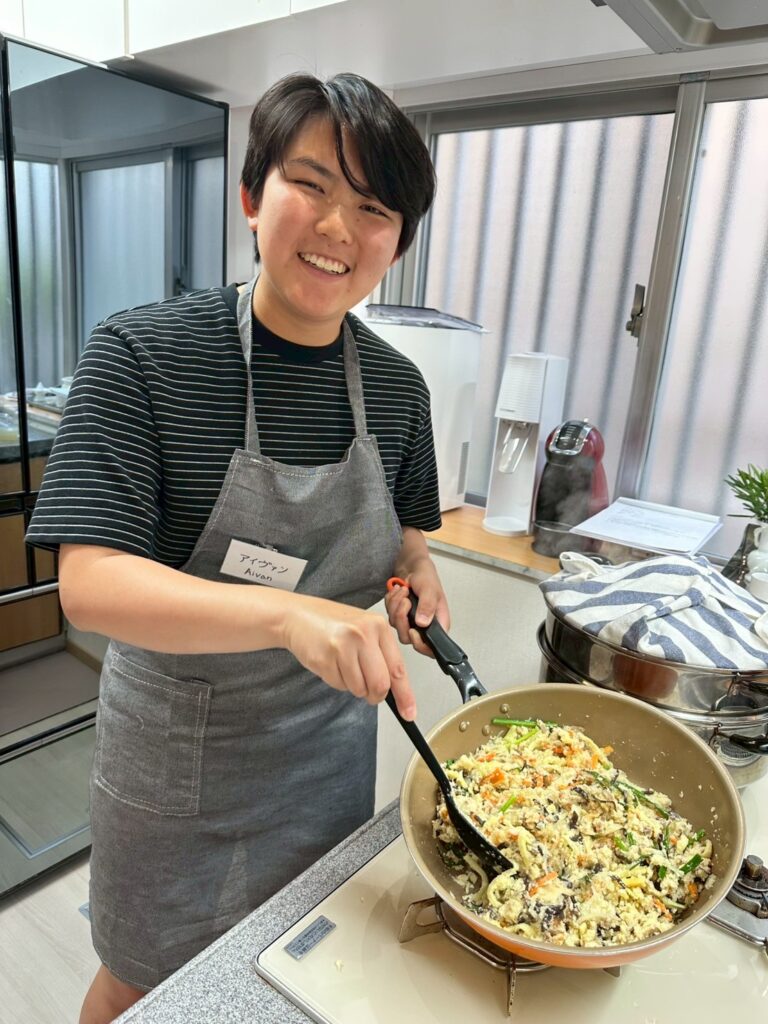
Thanks so much for sharing, Court and Aivan. To wrap up, can you both share something you’re looking forward to in the remaining academic year?
Aivan: I am excited that two students from the University of the Ryukyus (Ryudai) are visiting UC Santa Cruz in February to work with OMI. Ryudai is one of OMI’s partner universities and during our past trips to Okinawa, OMI students presented their work at Ryudai and Ryudai students joined us for experiential learning activities around the island. Now that they are coming to visit us, I am looking forward to showing them around California!
Court: This spring I will be graduating from UCSC, so I’m excited to see how the other undergraduate students will continue OMI’s legacy and its work.
The Humanities EXPLORE program is led by the Humanities Division with strategic support from The Humanities Institute and funded by the Mellon Foundation, The Helen and Will Webster Foundation, the Humanities Division, The Humanities Institute, and private donors.
Banner image: Hanari Island in Okinawa Japan. Photographed by Stefanie Akkerman. All other images courtesy of The Okinawa Memories Initiative, Maeshiro Moe, and Tsukayama Keiko.