
Undergraduate Profile: Hashna Bannerjee-Stevens
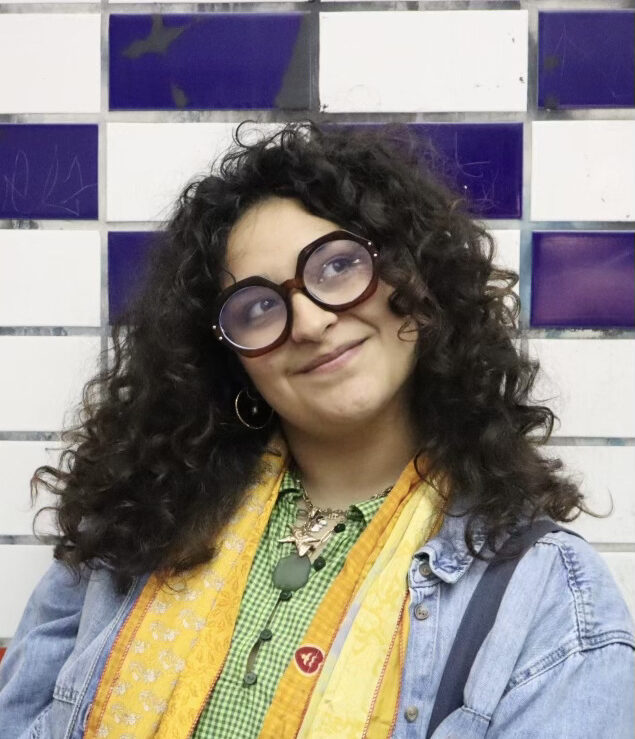
Hashna Bannerjee-Stevens is a third-year Literature major at UC Santa Cruz and intern for the Deep Read, an annual program of The Humanities Institute at UC Santa Cruz that brings together campus and community to read a recent book by an award-winning author and discuss big ideas that help us make sense of our lives and the world around us. We recently caught up with Hashna about her experience being a part of the Deep Read for two years and supporting the 2026 program on mycologist Merlin Sheldrake’s Entangled Life: How Fungi Make our Worlds, Change our Minds, and Shape our Futures.
Hi Hashna! Thanks for chatting with me. To begin, can you tell us a little bit about yourself and your major?
I’m a third year General Literature major at UCSC. Growing up, I was always an indoor kid who preferred to have my nose in a book, so I’m very happy I get to spend my day-to-day life as a student engaging in deep discussions about literature; it really warms my oh-so-nerdy heart.
This year, you’re supporting THI’s Deep Read program as the Deep Read intern. How would you describe the programming, events, and community around the Deep Read to someone who hasn’t participated before?
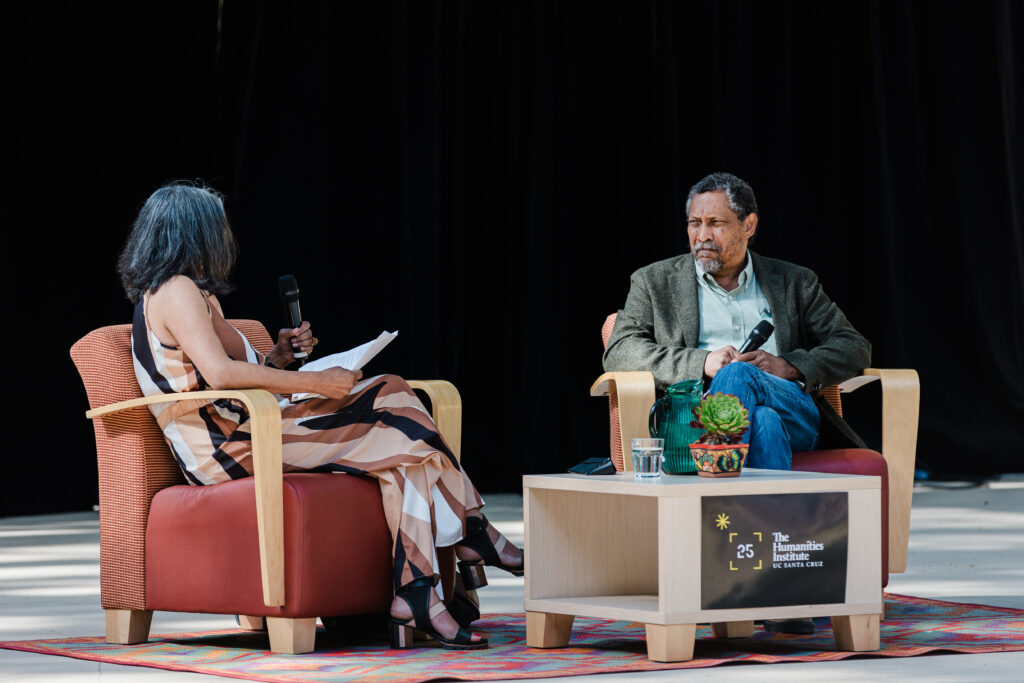
The Deep Read is a great opportunity to dive deeply into contemporary literature that addresses current issues. My favorite thing about this program has always been how interdisciplinary it is; I think that, with our programming, we bring together folks from all sorts of fields so that we can all understand the book (and, hopefully, the world around us) in a more nuanced way.
Throughout spring, we have various events to deepen our understanding of the book. This includes our smaller salons, which are led by UCSC faculty, and the final author event. We also have the Deep Read class, taught by Laura Martin, which is a great opportunity for students.
I understand you were in the Deep Read class on Percival Everett’s James last year. Can you tell us about that experience and how it connects with your position now?
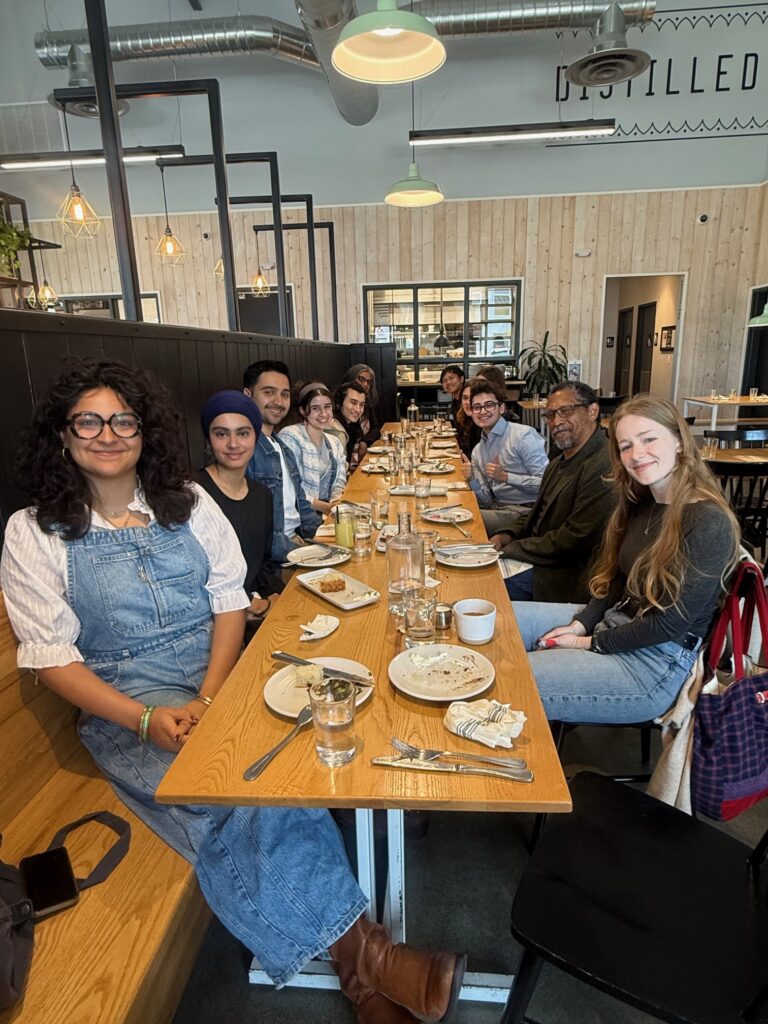
The Deep Read class had a big impact on me. I don’t think I had ever spent that much time analyzing one novel, and it really deepened my appreciation for literature even further. I ended up being so passionate about the novel that it was hard to get me to stop talking in class; now, I get paid to talk about the Deep Read book, so I think it all worked out.
It’s not often that I get to take such a small, intimate class with students from so many different disciplines, especially in such a welcoming environment, and the Deep Read really offered that. It really taught me how to have open-minded intellectual discussions with my peers; as a student, it was so rewarding to learn how to disagree with someone respectfully and then engage with them in a thoughtful and respectful way that leads to a deeper understanding for both parties.
How has your experience as the Deep Read intern been so far? What are your responsibilities?
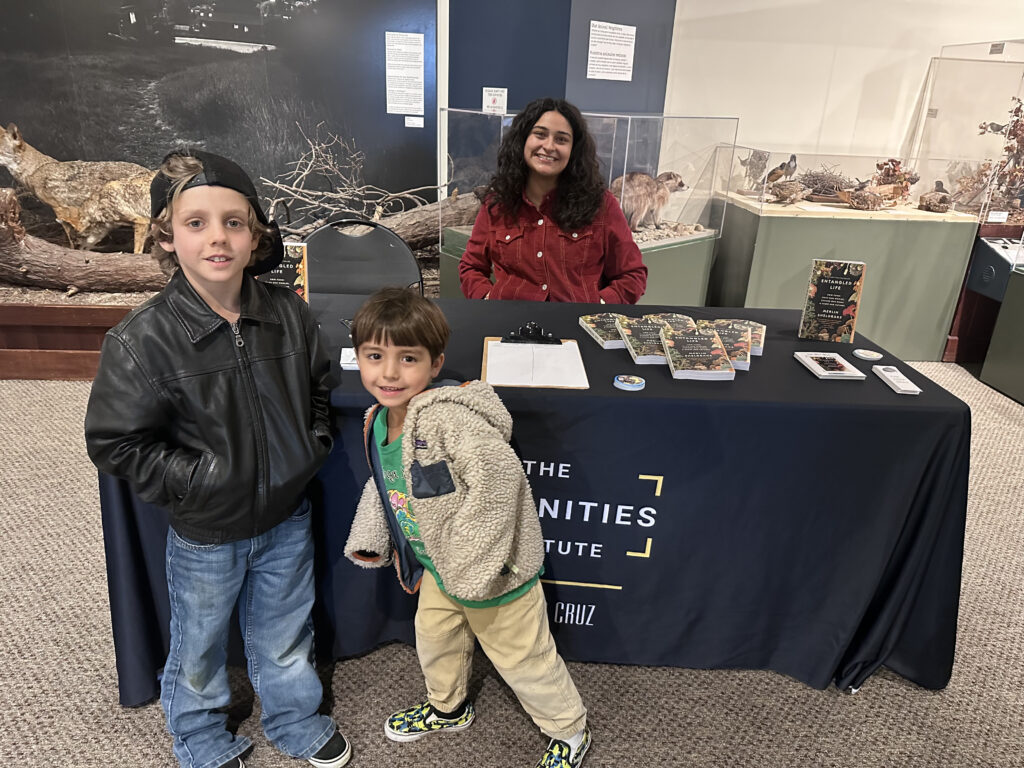
So far, my experience as the Deep Read intern has been great. I mostly handle outreach–looking for opportunities within the UCSC community to get the word out to fellow students about the Deep Read. This usually looks like tabling at events around campus and handing out free books to students.
I’ve also attended some events in the wider Santa Cruz community in order to promote the Deep Read, which has been really fun; for example, I attended the Fungus Fair in Santa Cruz earlier this year. I love that I get to engage with people who are incredibly passionate about fungi; I’ve learned so much, not just from the book itself, but just from talking to our incredibly knowledgeable local fungi experts and enthusiasts.
What skills have you developed through your role at THI that you didn’t expect going in? Has this experience shaped how you think about your academic interests or possible career paths?
One thing I was not expecting was how much my conversation and communication skills would improve as a result of this internship. I’ve definitely learned that it’s a muscle I need to exercise. Learning how to engage in meaningful conversations with the wide variety of people I meet while I’m attending an event has led me to some seriously fascinating conversations that I never would have engaged in otherwise. What may start as small talk about fungi will turn into a conversation about the best barbecue spots in Texas. In the age of social media, I think it’s more important than ever to practice connecting with as many folks as possible, however brief those connections may be. It was a lot of fun to collaborate with my fellow interns Sophia Bruce and Sophia Coffing on a promotional video for the Deep Read. I’ve had a few people come up to me and tell me they saw me while scrolling through instagram, including a professor of mine, which is only somewhat mortifying (see the video below!).
This year, the Deep Read is focused on Entangled Life: How Fungi Make our Worlds, Change our Minds, and Shape our Futures by British mycologist Merlin Sheldrake. What are you looking forward to most about the program in the weeks ahead?
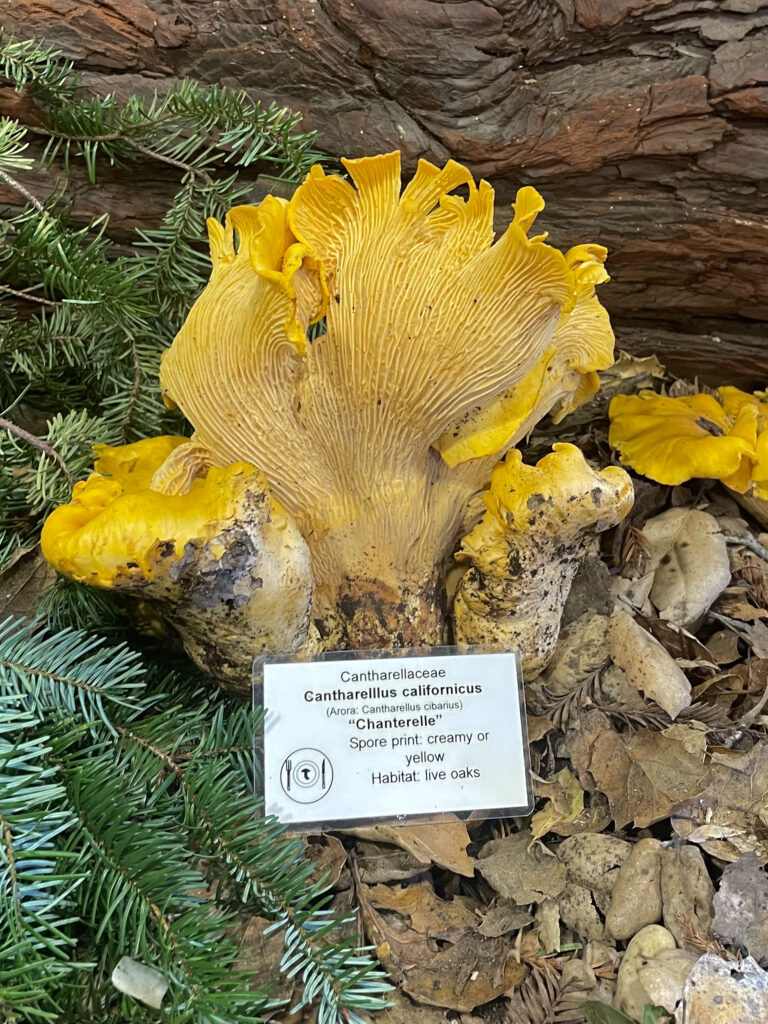
Right now, I’m really excited to attend our upcoming Literature and Poetics of Fungi Salon on May 29th. I’m a literature student, so obviously I’m dying to learn more about how metaphorically loaded mushrooms are. I don’t think I’ll ever be able to look at a wild mushroom the same way.
I’m also seriously looking forward to seeing all the mushroom-themed fashion that people will be wearing at our upcoming events. So far, I’ve seen many mushroom earrings, toadstool hats, and some groovy mushroom-embroidered bell bottoms. I was unaware that fungi has inspired such a dedicated fashion subculture, but I’m happy to know that it exists.
As part of your role, you meet with students to talk about the Deep Read and help distribute free books. What do you usually tell students who are considering signing up for the program and/or the course? Why would you encourage them to join?
I always tell students to join this course because I think that at a university as big as UCSC, it can be hard to find those small classes where you can engage in really thoughtful and intricate discussion with your peers. You’ll learn important critical discussion skills which will make you a better student. I also usually tell them that there’s a free lunch with the author in it for them if they sign up: free food will always motivate an undergraduate student to listen to you.
Hashna in a THI Deep Read video.