
Questions that Matter: Lessons on the good life from a Star Trek opera-in-progress
For the past decade, an eclectic group of professors, staff members, and show-business professionals has been working hard to bring a Star Trek opera to vibrant life. Now, they are inviting the public to delve more deeply into the philosophical heart of their interstellar project. Their talk, “How to Live Long and Prosper: Lessons from a Star Trek Opera,” challenges the audience to consider a deceptively simple question: What do we need to lead a fulfilling life?
By Dan White
For the past decade, an eclectic group of professors, staff members, and show-business professionals has been working hard to bring a Star Trek opera to vibrant life. Now, they are inviting the public to delve more deeply into the philosophical heart of their interstellar project.
Their talk, How to Live Long and Prosper: Lessons from a Star Trek Opera, challenges the audience to consider a deceptively simple question: What do we need to lead a fulfilling life?
The event will take place at 7 p.m. March 13 at the Kuumbwa Jazz Center in downtown Santa Cruz and is part of the Questions That Matter series presented by The Humanities Institute.
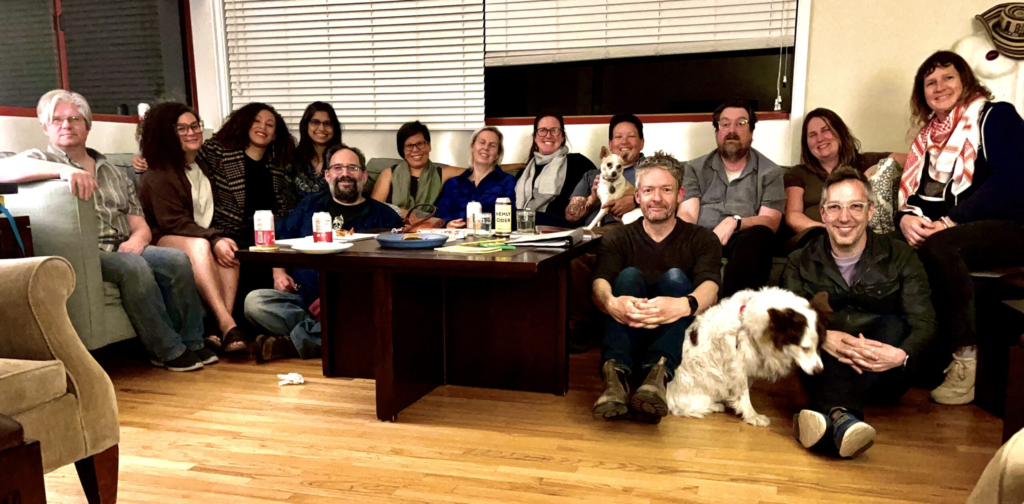
This talk features Professor of Music Ben Leeds Carson, Associate Professor of Sociology Camilla A. Hawthorne, THI Faculty Director and Professor of Linguistics Pranav Anand, and Perre DiCarlo, one of the four main authors of the opera’s libretto.
The Questions That Matter series brings UC Santa Cruz scholars together with students and local residents for conversations about urgent, complex topics. Recent discussions have explored data and democracy, disability in medicine, the future of artificial intelligence, and the role of play in life. This will be an in-depth round table discussion.
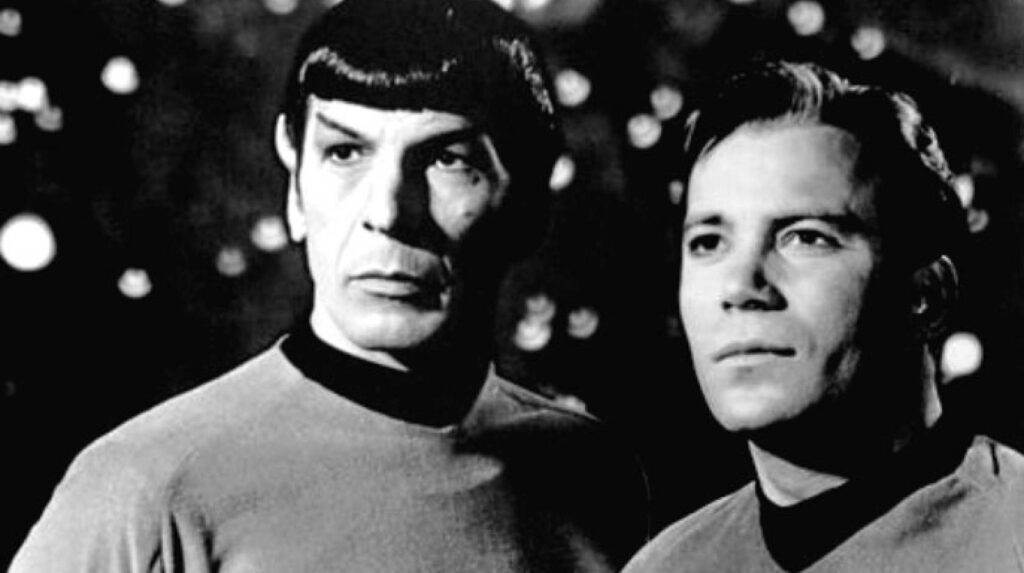
At the center of the March 13 discussion is the opera-in-progress inspired by Star Trek and based on the two-part episode “The Menagerie,” created by Gene Roddenberry. In this episode, Captain Christopher Pike is grievously injured in a training vessel accident, left completely paralyzed and unable to speak, though his mind remains fully intact. The premise raises a profound philosophical question: Can life still have meaning when all agency is mental?
The resolution comes through the Talosians, powerful aliens regarded as enemies of the Federation, who create immersive illusions that allow Pike to experience life beyond the limits of his physical body.
The episodes explore love, agency and the value of life, combining emotional drama with speculative science fiction in a way that mirrors the operatic form.
THI was drawn to “The Trial of Spock” in part because the project bridges disciplines, drawing on scholars from the Arts, Humanities, and Social Sciences to create a polyphonic, critical perspective on the source material, Anand said.
“We might at first suppose that the anxieties of 1960s Star Trek are quaint and simple by contemporary standards, but ‘The Trial of Spock’ shows how many of our current worries map onto concerns from 60 years ago,” Anand said. “The episode explores themes of real contemporary import, including conceptions of disability, the power of virtuality and imagination. The creators use the plot and the structure of opera to examine tropes of protection and freedom, the role of fiction in our lives, and the nature of love.”
“The Trial of Spock” has roots going all the way back to the 1960s, when one of the project’s creators — renowned plant biologist and science writer Lincoln Taiz, now an emeritus professor at UC Santa Cruz — became a lifelong Trekkie.
Taiz wrote the libretto for the opera along with his wife, Lee.
Early in the writing process, David Cope, a long-time friend of Taiz in the UC Santa Cruz Music Department, suggested Carson as a possible composer for the “Star Trek” opera. Carson liked the idea, and soon he and Taiz joined forces and became friends.
“My life was changed when Lincoln and Lee invited me to compose the opera and generously welcomed co-authorship of the libretto,” Carson said. “Their collaborative spirit allowed the three of us to conceive of what is without a doubt my largest and most deeply loved creative project.”
“After Lincoln brought theater and opera director John de Lancie on as a contributing co-author and director of a 2016 workshop, the project gained emotional realism, relationship realism, tautness, Trek-world-fidelity, and humor since 2021, under Perre’s leadership,” Carson said.
DiCarlo has done several “refinement passes” on the libretto, editing the text to make sure the pacing keeps the audience leaning forward.
“We want the twists and turns to land solidly, to make sure all the elements of the story are understandable, or when they are meant to be mysterious that the reveal makes up for being left in the dark,” DiCarlo said.
Taiz recalled how the TV series first captured his imagination:
“We were living in Berkeley when the Star Trek series first aired,” he said. “Its tongue-in-cheek campiness combined with a focus on important social issues resonated with the zeitgeist of the sixties.”
Lee Taiz explained why opera became the chosen medium for the project.
“Opera has always seemed to me the most realistic of art forms,” she said. “It is the only one that can fully express our deepest and most over the top emotions … If most people dared to really listen, to really see opera, it would probably put a lot of therapists out of business. Growing up, I think the Metropolitan Opera’s Saturday broadcasts were the main thing that pulled me through all the turbulence in my own family.”
Far from being a relic of 1960s television, “The Menagerie” grapples with themes that feel urgently contemporary: conceptions of disability, the power of virtuality and imagination, and the tension between personal loyalty and institutional obligation.
In an era shaped by artificial intelligence and rapidly evolving technologies, those questions resonate with new force.
By translating the story into opera — an art form built on heightened emotion — the creators deepen its inquiry into intelligence, love, freedom and responsibility. Placing the famously logical Spock into the expansive emotional terrain of aria and recitative becomes, in itself, a meditation on what it means to be human.
The talk follows the “The Trial of Spock — An Opera Workshop”at 4 p.m. March 8th at the Music Center Recital Hall on campus, which will include a performance and an informal question-and-answer talk-back with the project’s creators.
Original Link: https://news.ucsc.edu/2026/02/questions-that-matter-lessons-on-the-good-life-from-a-star-trek-opera-in-progress/