
Undergraduate Profile: Danielle Chaplin
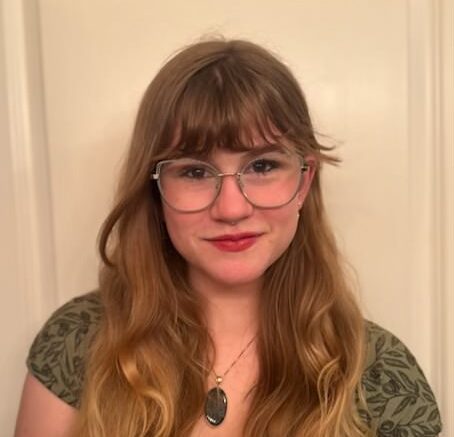
Danielle Chaplin is a third-year Intensive History major, with a concentration in Europe and the Mediterranean, at UC Santa Cruz and a 2025-26 THI Undergraduate Research Fellow. Danielle was awarded the Bertha N. Melkonian Prize at The Humanities Institute for submitting the top undergraduate research proposal this academic year. Titled “From Revival to Rebellion: Gendered Selfhood and the Rewriting of Irish Modernity in Kate O’Brien, Nuala O’Faolain, and Emma Donoghue,” her project examines three queer female Irish authors and how the shifting world around them influenced their writing as well as the reception of their work. We recently caught up with Danielle to learn more about her fascinating research.
Hi Danielle! Congratulations on your THI Undergraduate Research Fellowship and for winning the Bertha N. Melkonian Prize. We’re so excited to learn more about how your research is going. To start off, could you please share a little bit about yourself and the research project you are working on for the THI Undergraduate Research Fellowship?
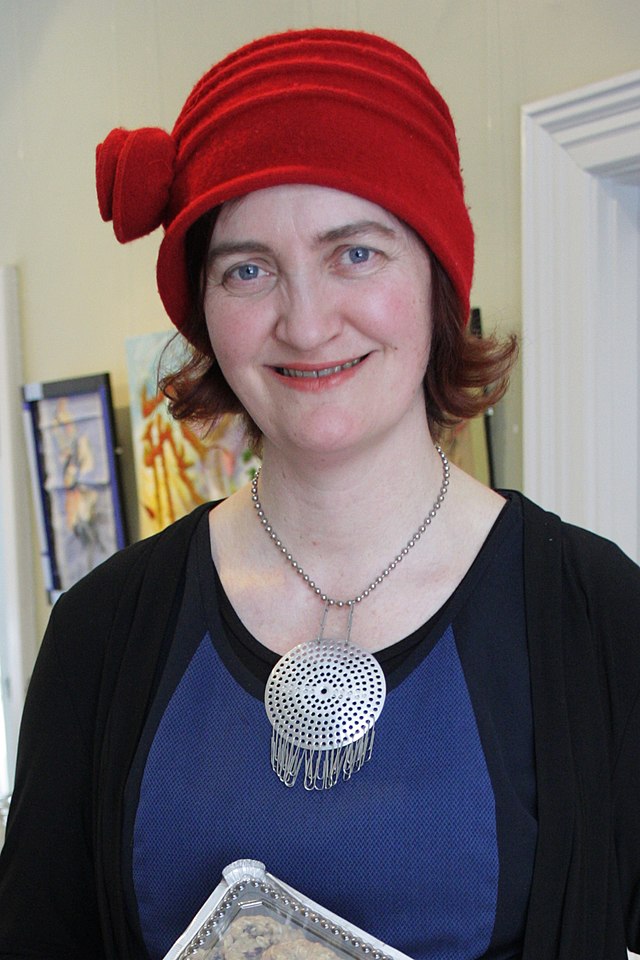
I graduate in the Spring and plan on working with children for my career. I hope to get a summer position at the Santa Cruz Natural History Museum after I graduate, and I currently work as a caregiver for disabled adults. History has always been incredibly important to me, particularly as humanities are suppressed in favor of STEM (which is also very important), leading to a decline in intellectualism. I believe that everyone should know some history in order to best understand the world we live in. My project is about three queer female Irish authors—Kate O’Brien (1897-1974), Nuala O’Faolain (1940-2008), Emma Donoghue (1969-present) —and how the shifting world around them influenced both the creation of their works and how they were received by consumers, going from banned for the phrase “embrace of love” to being ridiculed for open sexual promiscuity, to being happily married with kids, writing often graphically on hard-to-swallow topics.
I’m curious, what drew you to these particular Irish authors? What led you to put their work in conversation in this way? For readers who may not be familiar with these authors, what should we know about them and why do you think these writers and their work are important to study today?
I was first drawn to Nuala O’Faolain through her initial memoir, and in research of her I discovered Kate O’Brien’s work. Noting the timeline between the two, I thought it would be interesting to put their works in conversation with a modern Irish queer female author, and thus I found Emma Donoghue. Emma Donoghue is likely to be the author most people are familiar with—her novel Room was adapted into an Oscar-winning movie starring Brie Larson and she has a Netflix adaptation of her novel The Wonder. Her novels cover a variety of genres, mainly historical fiction, and are on the whole very accessible to the average reader (she is also the only of these authors that has books in stock at Bookshop Santa Cruz, I highly recommend picking up one of her books). She is interesting because she moved from Ireland to Canada under protection for her homosexuality, staying entwined with her Irish roots through novels and family visits. She is also a lover of Kate O’Brien, having published two essays on her in her 20s.
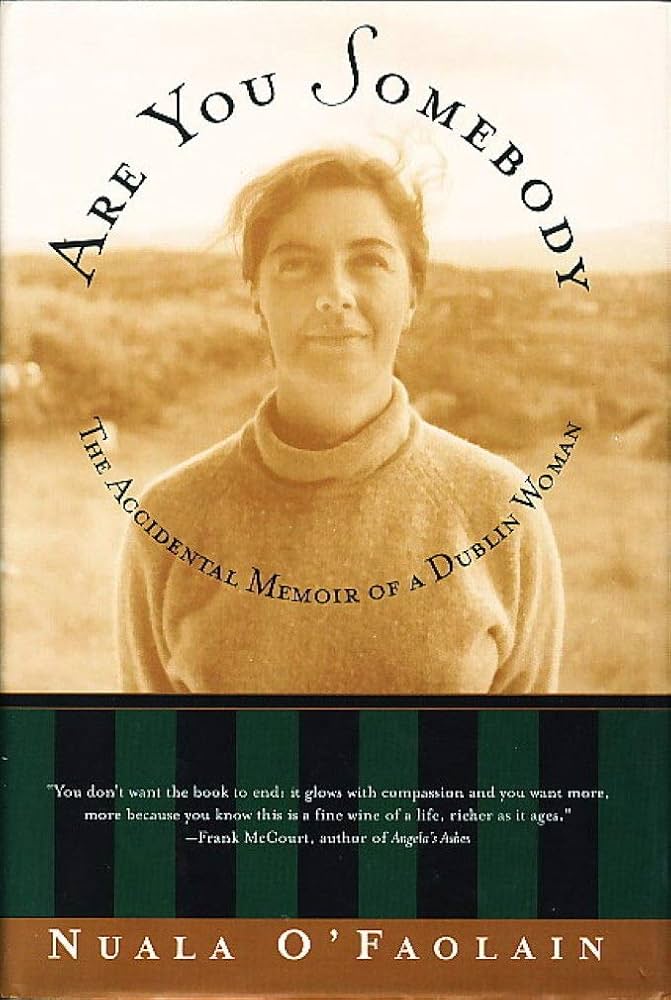
Nuala O’Faolain is known for her memoirs (of which she has two) and their showing of the reality of growing into middle age, a period of life often ignored in society. O’Faolain is also the only of the three who is known to have had relations with men and women. Anyone interested in Irish life in the 90s should pick up her memoirs, and her fiction is phenomenal as well.
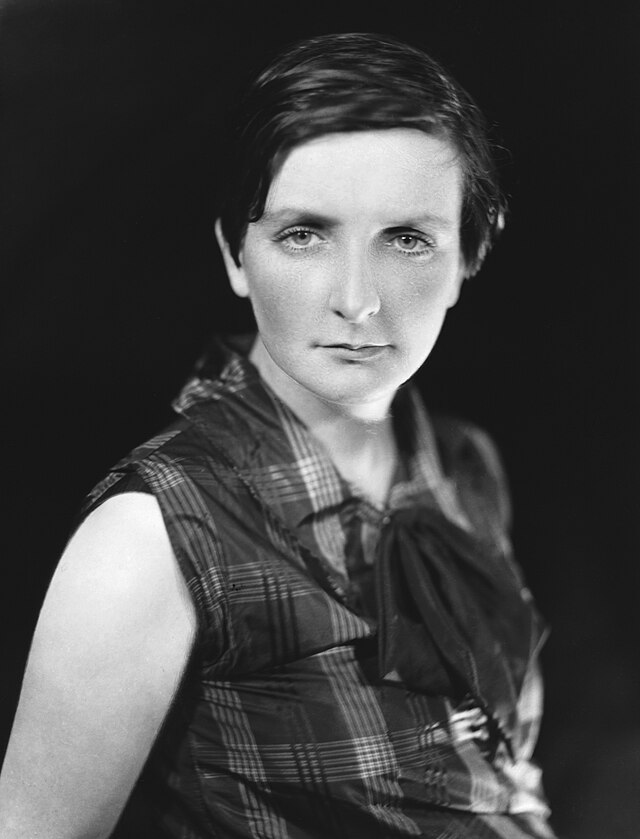
Kate O’Brien is mostly unknown today. Her novels are only in print by demand by Virago and her non-fiction works are out of print completely. An important name in female Irish literature, O’Brien’s work mainly discusses family dynamics and restrictions, in a style that reminds me of Steinbeck, particularly in the multi-generational stories in O’Brien’s Without My Cloak and Steinbeck’s East of Eden. In our world of AI and anti-intellectualism, it is incredibly important for readers to be aware that books—like everything—exist within a context and continuum. The only reason I am able to write this now is because women not so long ago fought for a woman’s right to education and literacy. By examining how each author has explored the human condition, connections are drawn between life then and life now and how literature encapsulates the past.
We would love to hear a little bit about your faculty mentor. How have they supported you as you develop this project? What research methods have you been trained in, and how are you using these methods in your current research project?
In the Fall I took Bruce Thompson’s senior seminar on modern Irish history, culminating in a 25 page paper with the same thesis of this project. Professor Thompson helped me with everything from structure to style and methods of research. He is also who recommended I apply for the THI Fellowship. Due to recent restrictions on some professors being unable to be official faculty advisors for student credit, he reached out to Professors Gregory O’Malley and Renee Fox, the latter of which became my mentor. Professor Fox has met with me every couple of weeks, and we go through my writing, seeing what needs clarification, revision, omission, or expansion. Because this project began under her mentorship with a 25 page paper, we have been focused on expanding my research and creating clearer arguments. The most notable assistance in tying everything together, as I have read nearly 30 books and countless articles during my process, causing my ideas to get jumbled at times. I have been mainly reading books by or about my authors and utilizing the university library website to find articles or chapters of useful information, I have also interviewed Emma Donoghue via email, which was very helpful in getting perspective less publicized.
What initial findings or patterns are starting to emerge from your research so far? Has there been a particular text or moment in your research that was especially interesting or surprising? Did anything challenge your expectations of what you would find?
Initially I noted similarities and differences in each author’s descriptions of Ireland and their personal lives as queer women in a traditionally Catholic nation. I was most amazed by how drastically things changed since O’Brien was born in 1897—in a period of 120 or so years, essentially everything has changed legislatively and socially, and yet the same Catholic ideas are still propagated in rural areas. It is also quite interesting how each author has pushed boundaries and reader comfortability in order to share their stories.
I understand that you plan to conduct interviews with the friends and family of O’Faolain and O’Brien. How are you aiming to get in touch with these contacts? What are you hoping to learn from the interviews?
Although I was unable to contact those who knew O’Faolain and O’Brien, I conducted an interview with Emma Donoghue via email. I did this by emailing her publisher and going through a few channels before being connected with Donoghue personally. The interview allowed me to learn more about Donoghue’s personal reasons for moving to Canada and her experiences with discrimination, particularly in Ireland. My initial plan to reach out to the creators of the film Nuala and O’Brien’s family yielded no results, in part due to the commonality of O’Brien as a last name.
As we close, could you reflect a bit on what it’s been like to carry out your own independent research? How has your THI fellowship shaped or supported that process and what guidance would you offer to other undergraduates hoping to do the same?
Over the past summer I completed an independent research project under the guidance of professor Nathanial Deutsch on historic continuity and precedents for the suspension of Habeas Corpus in Dachau (the first concentration camp), Guantanamo Bay, and Alligator Alcatraz. By working on that I was able to learn how to best conduct research and draw connections without the guidance of a class. Many of the skills Deutsch taught me such as outlining and making arguments clear I have utilized in this project. Doing my research for this project was fairly straightforward as they are authors and thus have many primary sources about their worldly perceptions. The THI fellowship has allowed me to focus on the project rather than putting it to the side in favor of work for financial reasons. The money has also helped in purchasing the author’s works, mainly O’Brien’s out-of-print books. To other undergraduates hoping to conduct their own research I would say: Ask for help! The professors here are amazing and most are eager to help you achieve your goals. If things don’t go as you want, that’s okay too because at least you learned! A lot of learning (at least for me) has been feeling insufficient for not being the best or having to admit “I don’t know.”
Banner image: The Great Meadow at UC Santa Cruz.