
Graduate Profile: Sam Kahn
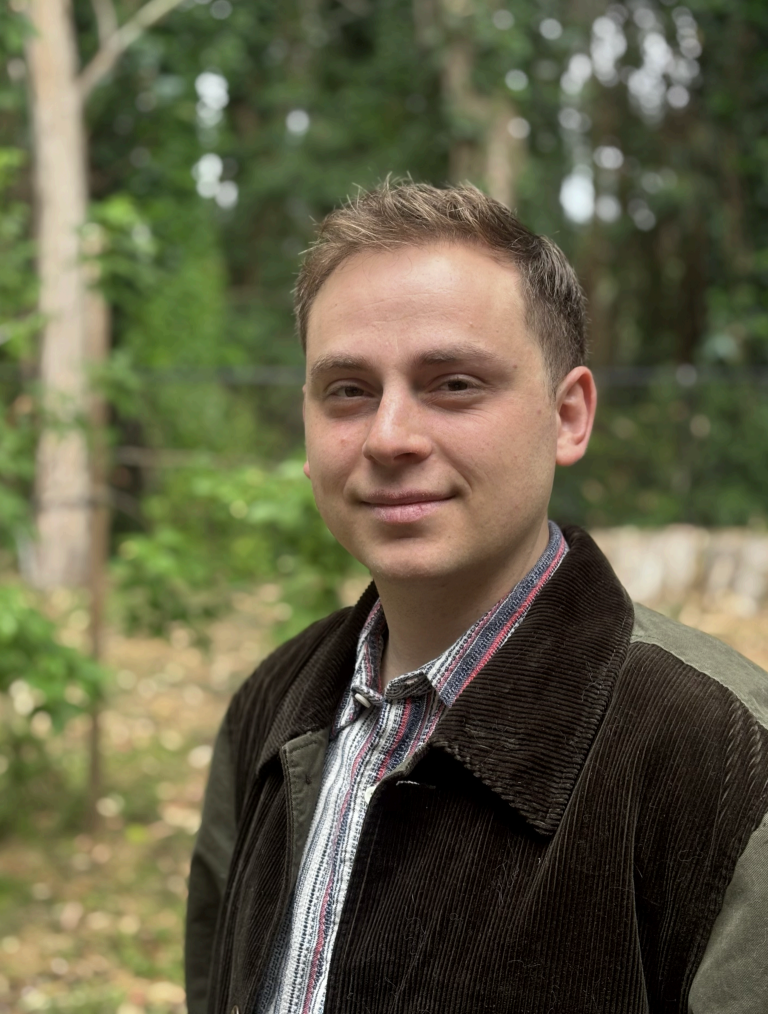
Sam Kahn is a second-year Ph.D. student in Philosophy and was a 2025 THI Summer Public Fellow. During his Public Fellowship, Sam collaborated with the Philosophy Learning and Teaching Organization (PLATO), a nonprofit dedicated to advancing philosophy and ethics education for K–12 students, to develop philosophy lesson plans on diverse academic topics for their teacher toolkit. Sam’s research is interested in the social ontology of the subject, exploring how humans are social beings, including the psychological, phenomenological, and political dimensions of social life. We recently caught up with Sam about his time working with PLATO and how it has informed his research so far.
Hi Sam! Thanks for participating in a THI profile. To begin, can you talk with us about your background and what drew you to pursue a PhD in Philosophy. What are your current research interests?
Absolutely, and thanks for giving me this chance to share about my work!
I am pursuing a PhD in Philosophy because effective work in philosophy, either in writing or in a classroom, can change the way people see the world. Whenever I take a good philosophy class, I leave with a much clearer and complicated perspective (on life, politics, reality, whatever!). It was all of these wonderful educational experiences that led me down this path, and I desire to be a part of this transformative discipline.
My research questions concern the social ontology of the subject, asking “in virtue of what are individuals social beings?” I am interested in the psychology and phenomenology of our social lives. I currently have projects in development on the social and moral dimensions of our imagination and attention. I am also writing on the philosophy of technology– specifically, the contemporary “attention crisis” (which I am discussing at the upcoming “Night of Ideas” in Santa Cruz) and an interdisciplinary paper on the social risks and solutions associated with AI hacking technologies. My MA thesis was titled “An Interdependent Conception of Freedom, and What We Owe to Children.” Together, I conceptualize my philosophical research as theorizing about our sociality and what these insights mean for contemporary moral and political issues.
This past summer, you worked with the Philosophy Learning and Teaching Organization (PLATO) as a THI Graduate Summer Public Fellow. Tell us a little bit about PLATO, what drew you to it, and the kinds of projects you worked on over the summer.
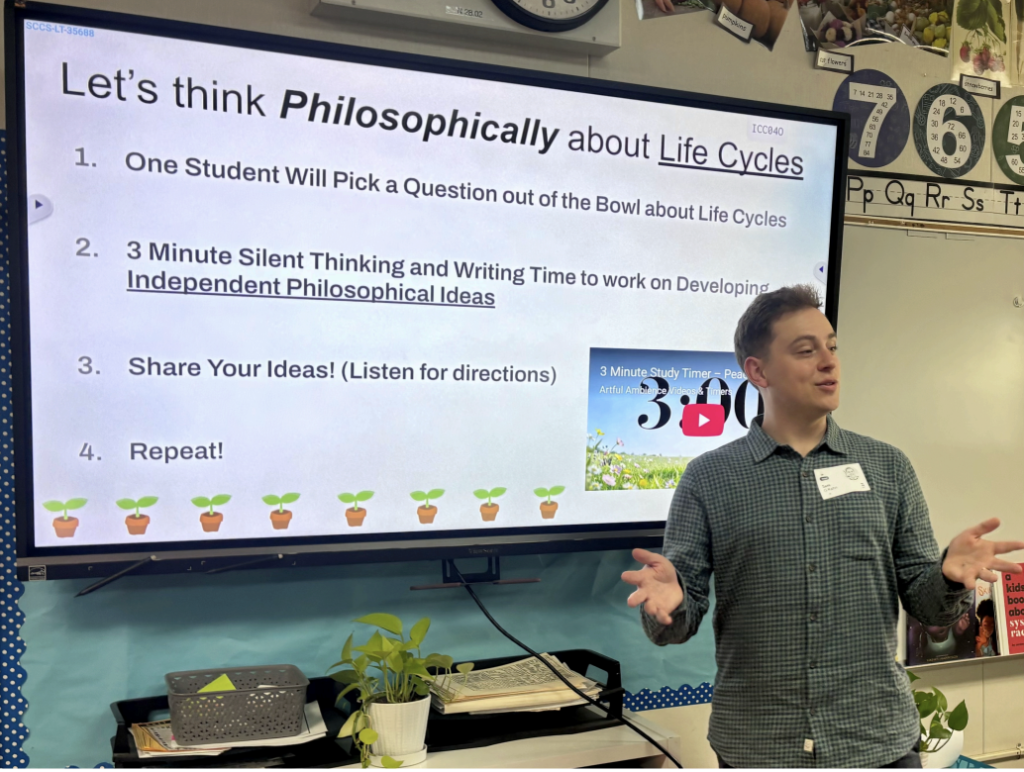
I learned about PLATO in my capacity as a middle school humanities educator prior to joining my PhD program. PLATO’s mission, from their website, is “to nurture young people’s curiosity, critical thinking, and desire to explore big questions, through philosophy and ethics programs for students, educators, and families.” As a teacher, I often used their public “ Philosophy Toolkit” as a resource for excellent “Philosophy for Children” lessons on a variety of academic topics. When I learned about THI’s Public Fellowship, I immediately thought of pursuing a partnership with PLATO. In collaborative conversation with members of PLATO’s staff, we agreed that my contributions would primarily center around auditing and creating lesson plans for their teacher facing Toolkit, filling content gaps and other organizational needs. I am quite proud of the work I did this past summer. I am hoping teachers from all over can find these lessons engaging and easy to implement.
(If you’re interested, I created philosophy lesson plans on: Life Cycles, AI and Student Voice, Atoms and the Universe, The American Revolution, Weather and Emotions, Measurement, Power and Hierarchy, Separation of Powers, Bill of Rights, Forms of Government, and Wondering about Objects in the Sky.)
In what ways did your academic training as a Philosophy PhD student prepare you for this fellowship? In turn, what new skills or insights did you gain from working with PLATO?
When I was teaching middle school and curating lessons for my particular group of students, I had a particular set of goals in drafting and implementing the lessons. In my work with PLATO, I was much more putting on my “philosopher hat” to consider the general big picture questions associated with the content area I was working on. I found that first thinking deeply as a philosopher about the content area was really important for determining which philosophical skills would be the focus of the lesson, as well as how the engaging activities would be structured. By the end, I really got in a groove of identifying how certain topics almost “called out for” expression in certain lesson structures. (You may get a sense of what I mean by looking at how the lessons differ.)
Additionally, I learned a lot from working regularly with my mentors (Karen Emmerman and Debi Talukdar) and engaging with the intellectual and professional community at the PLATO Conference in Boston. I have immense gratitude for how generous they were with their time, for their thoughtfulness in feedback and planning sessions, and for allowing me a peak behind the curtain of how a non-profit organization actually runs. The PLATO community welcomed me with open arms, and I look forward to continuing these professional relationships into the future.
I learned that you are working with students at Westlake, one of our local elementary schools, now. Can you tell us more about the program? How is it building on your work with PLATO?
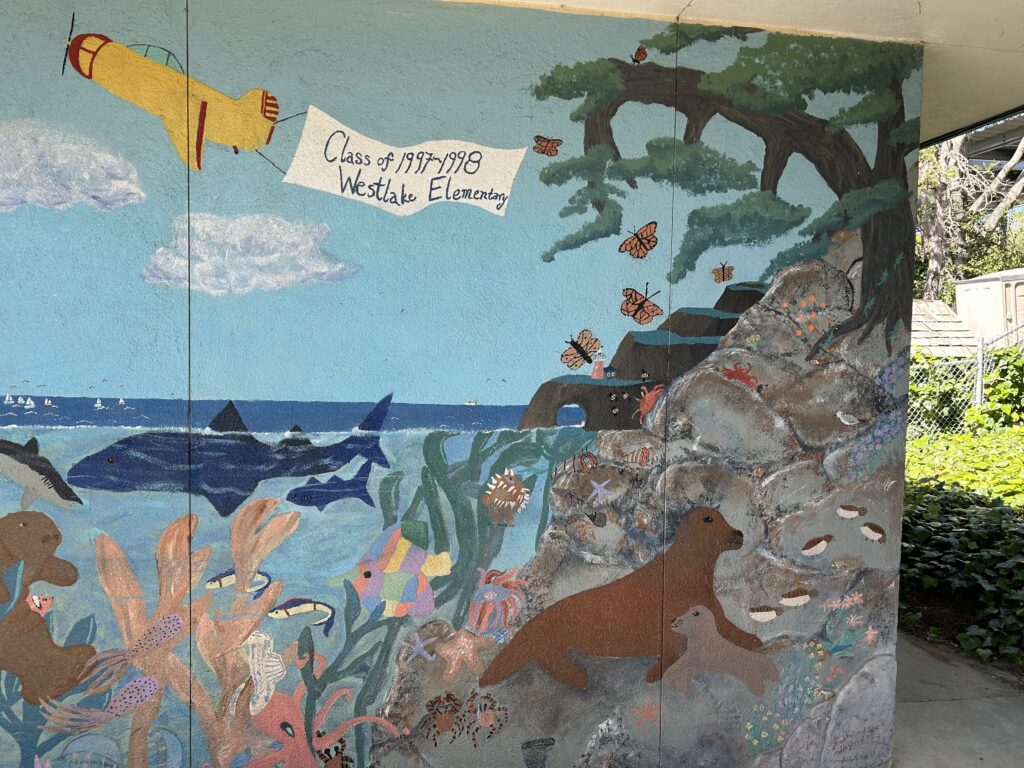
Yes I am! I have been very fortunate to work alongside the Center for Public Philosophy at UCSC to teach philosophy lessons at a 3rd grade classroom at Westlake Elementary. I push in once a week for about 45 minutes to an hour and facilitate philosophical exploration with these young minds. I really love working with the kids– a lot of people would be surprised by the kinds of insights many of them provide!
The work at Westlake builds on my Public Fellowship quite naturally. I have the chance to implement some of the lesson plans that I created over the summer and see them in action. Also, I am able to use many of the skills and philosophical/pedagogical insights that I learned over the summer in the development and improvement of additional P4C lessons.
Are there any particular philosophy lesson or class that you’ve taught since your work with PLATO that has stood out to you in particular or that your students have especially enjoyed?
One of my favorite lessons that I teach is a multi-week lesson on social and political philosophy. I take the students on an imaginative “field trip” on a magic bus around the world and through time to explore how various societies have structured their societies to reflect their culture’s values. On the way back home from the trip (by the end of the story framing the lesson), we have an emergency crash landing on a deserted island and have to decide which values we want to live by in our new society and what rules and structures we will implement to live them out. It’s so fun, the students gain an understanding of how social values are expressed, and it builds a strong sense of community. Although I didn’t create that lesson with PLATO, it’s one that I love talking about.
Lastly, how has your experience as a THI Public Fellow informed your ongoing research and professional goals? How did it change your sense of opportunities for a Humanities degree? Why would you encourage someone to apply for this fellowship?
In my research, I seek to understand how individuals both construct and are constructed by their social and political situations. If we take this idea seriously and use it to reflect on our own positions as (aspiring) academics, one can see how our research and professional contributions are situated in a time and place. I view pursuing public-facing scholarship as one way to fulfill my social responsibility, given who I am and my place in the world. I encourage anyone who is interested in exploring how academic skills and insights can affect the world outside of the university to pursue a public fellowship like this one. The opportunity to work with PLATO this past summer enabled me to reiterate and deepen my commitment to both wide-ranging and local public impacts.
As humanities scholars who take “humanity” as our object of study, I believe that we are in a unique position to transform the ways we live together and see one another. Public facing research and praxis is critical for realizing this ideal for humanities scholarship.
Banner image: Porter Bridge at UCSC.