
Week 1: A Fungal Awakening – Centering Fungi, Transforming Perspectives, Making Connections
Welcome to the 2026 Deep Read!
This is the first of four emails exploring Merlin Sheldrake’s Entangled Life: How Fungi Make Our Worlds, Change Our Minds, and Shape Our Futures. As your guide to the book, our email series will offer various approaches to reading Entangled Life and provide insights, contexts, and questions raised by both you, our community of Deep Readers, and our participating faculty, all of whom have expertise and interests related to Entangled Life. Today, we’ll introduce you to our Deep Read faculty, and we’ll suggest themes and issues to pay attention to as well as ways to think about deep reading as you embark on another reading adventure with us. This week, you’ll want to read through Sheldrake’s first chapter, “A Lure,” an investigation into what we know and don’t know about the “allure” of truffles (pun very much intended by him). Here we go!
Meet the Faculty

Benjamin Breen, Associate Professor of History at UC Santa Cruz, is a scholar of early modern Europe; environmental history; and the history of science, technology, and medicine. He will bring his historical perspective and knowledge to both the faculty salon on May 19 and the Quarry event on May 31 where he will be in conversation with Merlin Sheldrake.
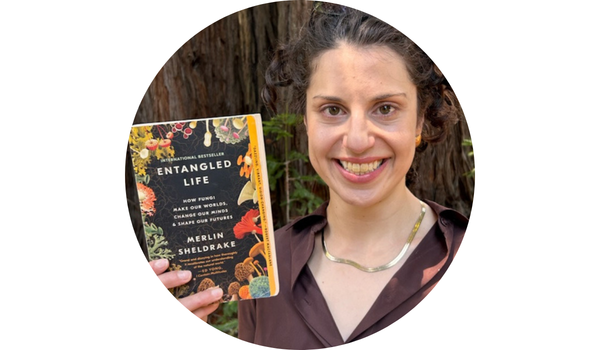
Hannah Cole, Assistant Professor of Literature at UC Santa Cruz, is a scholar working at the intersection of environmental humanities and Caribbean literature. A participant in the faculty salon on May 26, she will help us understand how Sheldrake’s book intersects with literary criticism, environmental humanities, and Caribbean literature and history.
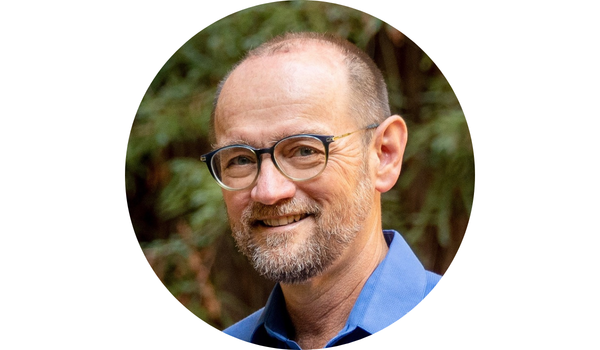
Gregory Gilbert, Distinguished Professor of Environmental Studies at UC Santa Cruz, is an agronomist with the UCSC Agricultural Experiment Station who has spent the last four decades studying the ecology and evolution of interactions between fungi and trees. He will guide our scientific exploration of Sheldrake and bring his expertise to the faculty salon on May 19.
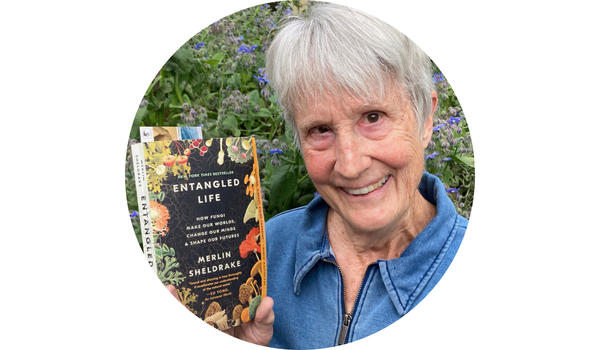
Donna Haraway, Distinguished Professor Emerita of History of Consciousness at UC Santa Cruz, is an expert in the fields of science and technology studies, feminist theory, and multispecies studies who attends to the intersections of biology with culture and politics. She will bring this interdisciplinary attention to our study of Sheldrake and to the faculty salon on May 19.
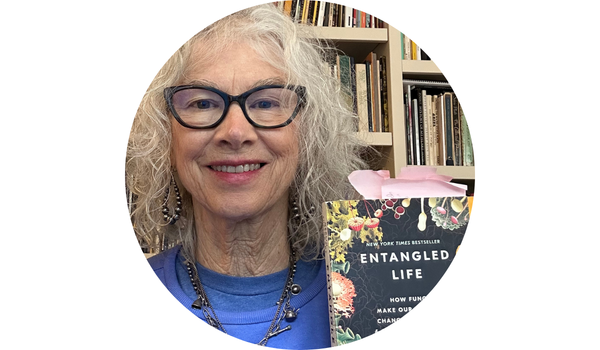
Brenda Hillman, Filippi Professor Emerita of Poetry at Saint Mary’s College, is a poet, writer, and activist who has been a staple of the Bay Area literary community since 1975. A writer in the genre of ecopoetics, among many others, she will share her poetic work on lichens and her literary insights on Sheldrake and his book in this series and at the faculty salon on May 26.
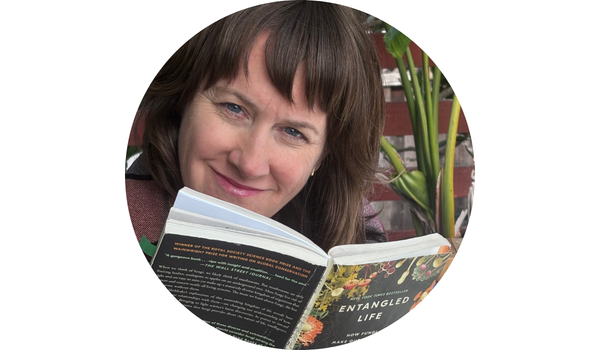
Laura Martin, Deep Read Faculty Lead and Continuing Lecturer at UC Santa Cruz, is a literary scholar who teaches the Deep Read course, manages the Deep Read program, moderates the faculty salons, and writes and curates the email series. She’s been a key part of the Deep Read since its launch and her literary training and interests keep the humanities central to the program and every book we read together.
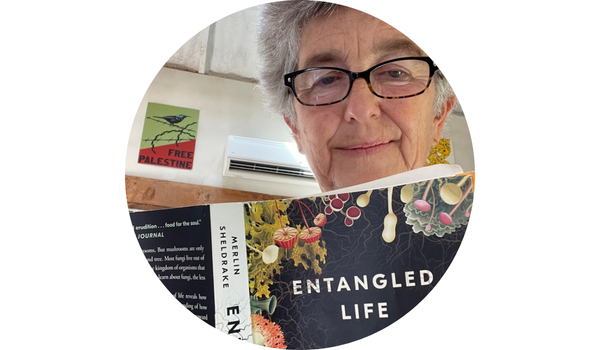
A. Laurie Palmer, Professor Emerita of Art at UC Santa Cruz, is an artist, writer, and teacher whose research-based work focuses on undoing and re-crafting human practices of relating with the material world towards building just, livable, and joyful social and environmental relations. Author of The Lichen Museum, she will share her perspectives on art, lichens, and more in this series and at the faculty salon on May 26.
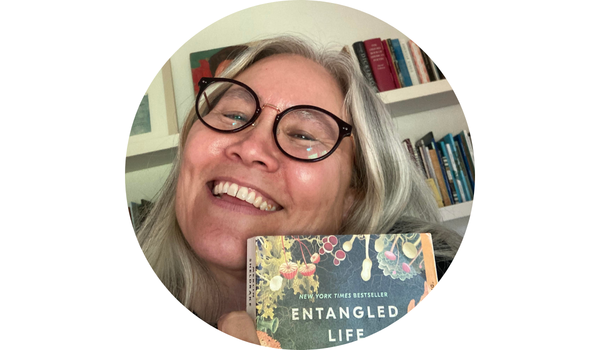
Jennifer Tseng, Associate Professor of Literature and Creative Writing at UC Santa Cruz, is a poet, essayist, and novelist whose most recent novel, Mayumi and the Sea of Happiness, was a finalist for the PEN American Robert W. Bingham Prize for Debut Fiction and the New England Book Award. She will discuss Sheldrake from the perspective of writing and literature in this series and at the faculty salon on May 26.

A Fungal Awakening: Sheldrake and the Case for Entangled Enlightenment
Fungi, as you may know, are having a moment. From hit television shows and documentaries like The Last of Us and Fantastic Fungi to growing popular interest in psychedelic therapeutics, mycelial fabrication, and fungal climate solutions, we are in the midst of what one Guardian journalist calls, “a fungal awakening.” What was once a cultural fear and disdain of fungi, at least in “the Anglosphere,” is now fascination, enthusiasm, and esteem. If we are waking up to fungi, what we are waking up to and how we are waking up is very much up for grabs. While fungal ambassadors like Paul Stamets and Michael Pollan have done much to raise awareness about the importance and potential of fungi, it could be argued that they are most focused on what fungi can do for us, how they can “save the world” in the case of Stamets and how they can “change our minds” in the case of Pollan.
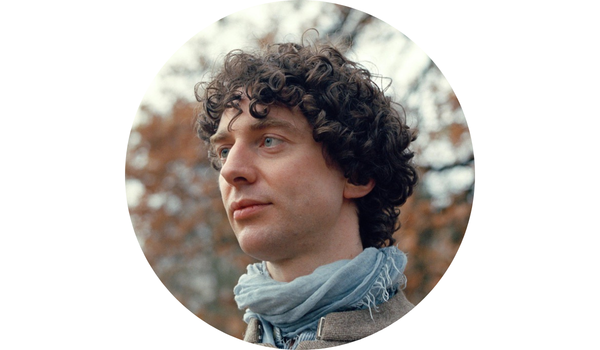
In Entangled Life, mycologist Merlin Sheldrake is modeling another mode of fungal enlightenment that asks a different, though not wholly unrelated, series of questions: What can fungi teach us? How can connecting with fungi, seeing ourselves from their perspective and in relation with them, transform us and our thinking and living? Although not uninterested in fungal solutions and applications such as those celebrated by Stamets and Pollan (he discusses many in Entangled Life and them, too), he is most focused on the question he asks in the title of his introduction, “What is it like to be a fungus?” This question, while it may seem straightforward, is a layered, complex one for Sheldrake, who takes us on a scientific as well as a philosophical journey to explore it.
If Sheldrake has become the “face of fungi,” as one writer asserts in a recent New York Times Magazine profile, then it is a face decentered, one leading us to the dirt to dwell down at the mycelial level where fungi, plant roots, and other organisms are in dynamic interdependence. In a highly descriptive, personal narrative in the short “Prologue” to his book, he recounts slowly, almost sensuously digging out and following a tree root to discover where it meets its delicate mycelial layer and links to the broader fungal network: “I lay down on my stomach and lowered my face into the shallow trench I had made … for several hours I inched along the ground, scratching and sniffing every few centimeters to make sure I hadn’t lost the thread” (x)
The thread he wants us to follow, inching along on the forest floor with him, is both literal and metaphorical. What he is carefully uncovering is a physical connection between tree and fungus and a metaphorical representation of how bound up fungi are with other kingdoms of life, from plants and animals to bacteria, and, thus, how interdependent we all are: “Without this fungal web my tree would not exist. Without similar fungal webs no plant would exist anywhere. All life on land, including my own, depended on these networks. I tugged lightly on my root and felt the ground move” (x). It is a tactile, entangled enlightenment of fungi that he is after, both a simple tug and an earth-shaking awakening. And he is inviting us along for the slow and methodical, but transformational ride.
Fungi as Teachers: Inverting Hierarchies and Transforming Perspectives
While there are many transformations that Sheldrake reveals in Entangled Life, a key one that he both models and discusses is an inversion of the typical hierarchical relationship between scientist-observer and object of study. His dedication to his book, “with gratitude to the fungi from which I have learned,” initiates this shift that he then demonstrates in his “Prologue” and speaks explicitly about in his introductory chapter and beyond. Fungi, for Sheldrake, are not objects of study but subjects, specifically teachers, who have instructed him and who have guided him to the knowledge and experience that he is sharing with us. From the first pages of the “Prologue,” he takes us down to the level of fungi to be led by them and to see the world from their perspective.
In this way, Sheldrake not only centers fungi and decenters himself (as well as humans, scientists, and observers in general), but he also troubles the subject/object hierarchy that conditions scientific, and perhaps all, human attempts to understand nature and the world. Why is this important? For Sheldrake, if we treat nature, or fungi, as an object of study, we reduce it, see it as an abstract other separate from us; we understand ourselves as having control over fungi and as being independent from them, the natural world, and, by extension, each other. We see them as “things” instead of dynamic processes. What we miss is the reality of both our dependence on fungi and our interdependence with them and other biological organisms and systems. This is one reason why the vast, diverse kingdom of fungi is often “hidden” from us, despite the fact that “fungi are everywhere,” as he writes at the beginning of his introduction (3).
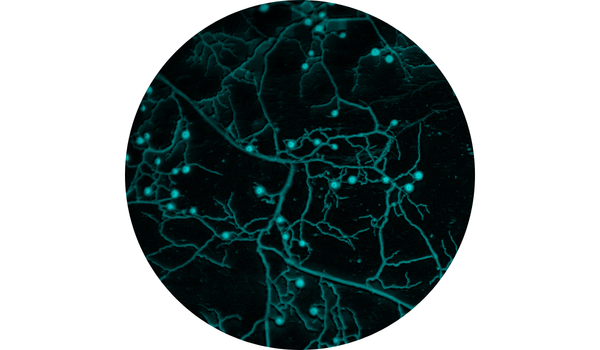
By the end of his introduction (and while reflecting on his LSD trip in a scientific study), what Sheldrake is inviting us to do is to move away from how he once saw fungi, “involved in abstract ‘interactions’ between organisms … semiautomatic entities that behaved according to an early-nineties Game Boy logic” (22). Instead, he describes opening up to the possibility of imagining and understanding them differently. As he explains, “I wanted to understand fungi, not by reducing them to ticking, spinning, bleeping mechanisms, as we so often do. Rather, I wanted to let these organisms lure me out of my well-worn patterns of thought, to imagine the possibilities they face, to let them press against the limits of my understanding, to give myself permission to be amazed–and confused–by their entangled lives” (22).
Entangled Life is his reflection of this very journey, how imagining fungi as a relational partner in understanding has caused him to “reexamine” what he knew, loosened his “certainties,” and transformed his perspectives. As you get started with the reading this week, notice how Sheldrake describes and models these transformations and reexaminations. How is he positioning himself in relation to fungi and us? How is he including and inviting us to be part of the experience? How are we, as readers, part of the transformation?
Themes and Concepts for the Fungal Awakening
There are many themes and concepts to highlight in Entangled Life. Here are a handful to get us started. As you’re reading this week, think about why he is interested in these particular themes and concepts, what role they play in his exploration of fungi, and what kinds of effects they may have.
Entanglement
Given the title of his book, it’s probably not a surprise that this is one of Sheldrake’s major themes. He wants us to see life and earth’s systems as “entangled”—both interconnected and interdependent. From this follows a host of other themes—collaboration over competition, dependence over independence, collectivity over individuality, and more.
Imagination
Note how Sheldrake both invokes his own imagination when describing fungal processes, but also how he highlights it, points to its unconventional place in science, and argues for the necessity of imagination in science and beyond.
Metaphor
Similarly, Sheldrake will self-consciously use metaphors to understand fungi and fungal processes, and he will invoke poetic metaphors and treat fungi as metaphors, prodding us to think about both the value and potential limitations of doing so.
Shifting Points Of View
Sheldrake shifts from the third-person point of view to the first-person point of view throughout his book, balancing a more detached, objective voice and a more personal perspective throughout.
Interdisciplinarity
Entangled Life mixes scientific explanation with philosophy, poetry, art, popular culture, and more. Note where these other disciplines enter his book and how they are woven into his scientific narrative.
Challenging Categories/Transforming Perspectives
In the introduction, Sheldrake claims that fungi “make questions of our categories.” From communication to intelligence, he shows us how fungi challenge existing categories and transform our perspectives on what such concepts mean and who can be included in them.
Ambiguity and Uncertainty
While focused on scientific precision and communicating accurate scientific understanding, Sheldrake does not shy away from ambiguity or uncertainty. He draws our attention to the limits of scientific knowledge, at one point, insisting that we must “find comfort in–or just endure–uncertainty.”
Science and Mysticism
Entangled Life is rooted in meticulous scientific research, but the book also weaves in mystical and immaterial perspectives on fungi, which creates a kind of tension worth paying attention to
Deep Reading as Transformation
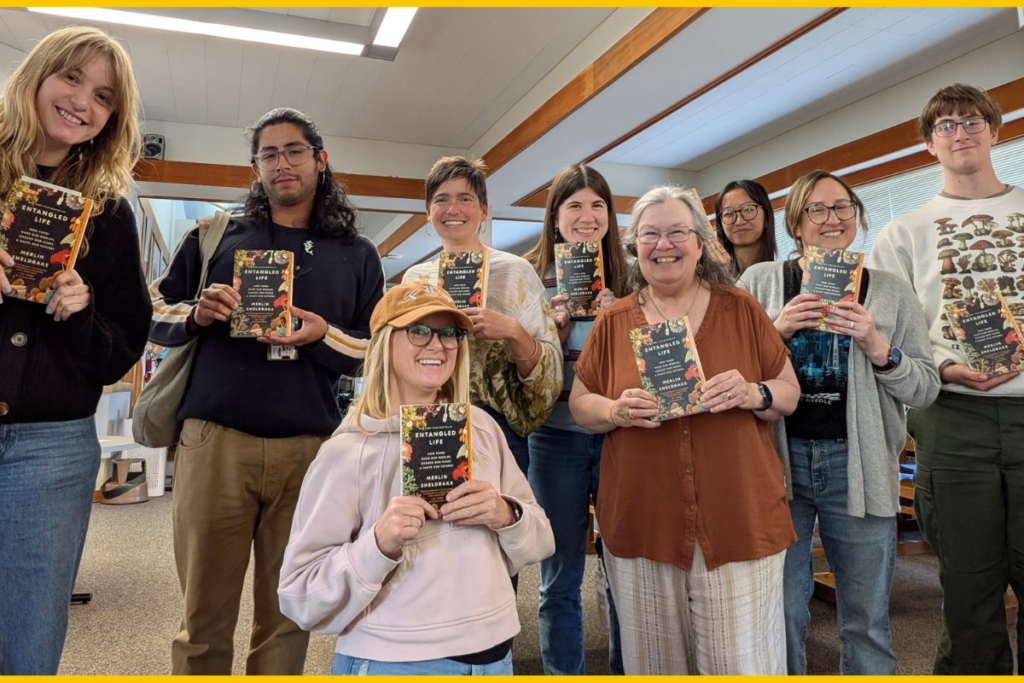
As many of you know, one goal of the Deep Read is to foreground the diverse ways we can read deeply and to understand the various effects that it can have, both personal and collective. We asked our Deep Read scholars this year to share their takes on deep reading, and they highlight the various ways that it can be a transformational practice and opportunity.
For Greg Gilbert, deep reading is a frame for understanding:
“I think deep reading provides a framework and a way of thinking about the world.”
For Brenda Hillman, all kinds of reading are important, but deep reading is about rereading what most interests you:
“You have to reread. You should reread. I feel that way about poetry … any poetry that really interests me or that I want to write … should be full of mysterious implications and fascinating ideas, metaphors, and language that I want to go back to. So, yes, to deep reading, but also to lateral reading and to jumpy reading. And as long as people are reading, I’m happy right now because there’s so much tapping on the phone that doesn’t involve reading.”
Laurie Palmer considers how deep reading forms us:
“I think so much about how reading forms our beings, and how now that I’m trying to relearn how to do it, how much more in touch with my own being I am … I think this [need to relearn] is a critique of capitalism and of social media (in its most clichéd form), but it is mostly a critique of the way that time is being snatched from us.”
For Jennifer Tseng, deep reading is a process of making the book a part of us:
“The way I read deeply depends on context. Reading a book deeply for pleasure often means I read the book more than once, mark (on paper!) lines that I love, then, once I finish the book, return to those lines and handwrite them in a notebook or type them. This process feels akin to recording memories of a journey to a faraway place or recording my memory of a dream. The purpose is to bring the book closer, to invite it to become part of me.”
Donna Haraway meditates on the difficult but transformational nature of deep reading:
“There are many different ways to read deeply, but it’s a difficult practice. And, unfortunately, I think we do it less and less. I think we skim; we read fast. We delegate reading to things like an AI synopsis. Reading deeply is a really crucial practice. The history of the book is incredible. Books are like psilocybin in terms of opening up our brains … they alter neurons … And I think the corporeal quality of a book, whether it’s a recording or on screen or handheld device or read to you by another person, all of these practices of reading can lead us into a kind of depth, lead us into inhabiting the meaning making work of the story or the argument or the poem. Deep reading, I think, is inhabiting. It’s being at home in something, and it changes you.”
Joining the Community Conversation
As you begin Entangled Life this week, we hope you will reflect on and be open to the different ways that deep reading and Sheldrake may inspire a change or transformation in you and your thinking.
What do you think about this notion of deep reading as transformation? What do you think about the transformations that Sheldrake claims centering fungi can bring about? Are you experiencing the book in this way? If not, how are you experiencing it? If so, what kinds of transformations are happening for you?
How would you characterize Sheldrake’s role in the “fungal awakening” that we find ourselves in, and do you agree with our assessment? If so, why do you think fungi are receiving so much public attention right now?
Did you pick up on Sheldrake’s depiction of fungi as “teachers” and the implications that follow from this repositioning? How do you feel about Sheldrake’s reworking of this typical human/nature dichotomy? What other themes, issues, or concepts were you drawn to in the first part of the book?
Please share your thoughts and insights in the comments section below. We’ll leave you with one final comment from Donna Haraway on reading in community: “I love the way the deep reading that our campus does creates communities of reading. It’s very different from reading from a reading list. It really takes one thing and stays with it, one big thing and brings everyone around to it.”
We’re so glad to be reading around this book with you.
-Laura
THI Deep Read Faculty Lead