
Graduate Profile: Katherine Johnson-Rodgers
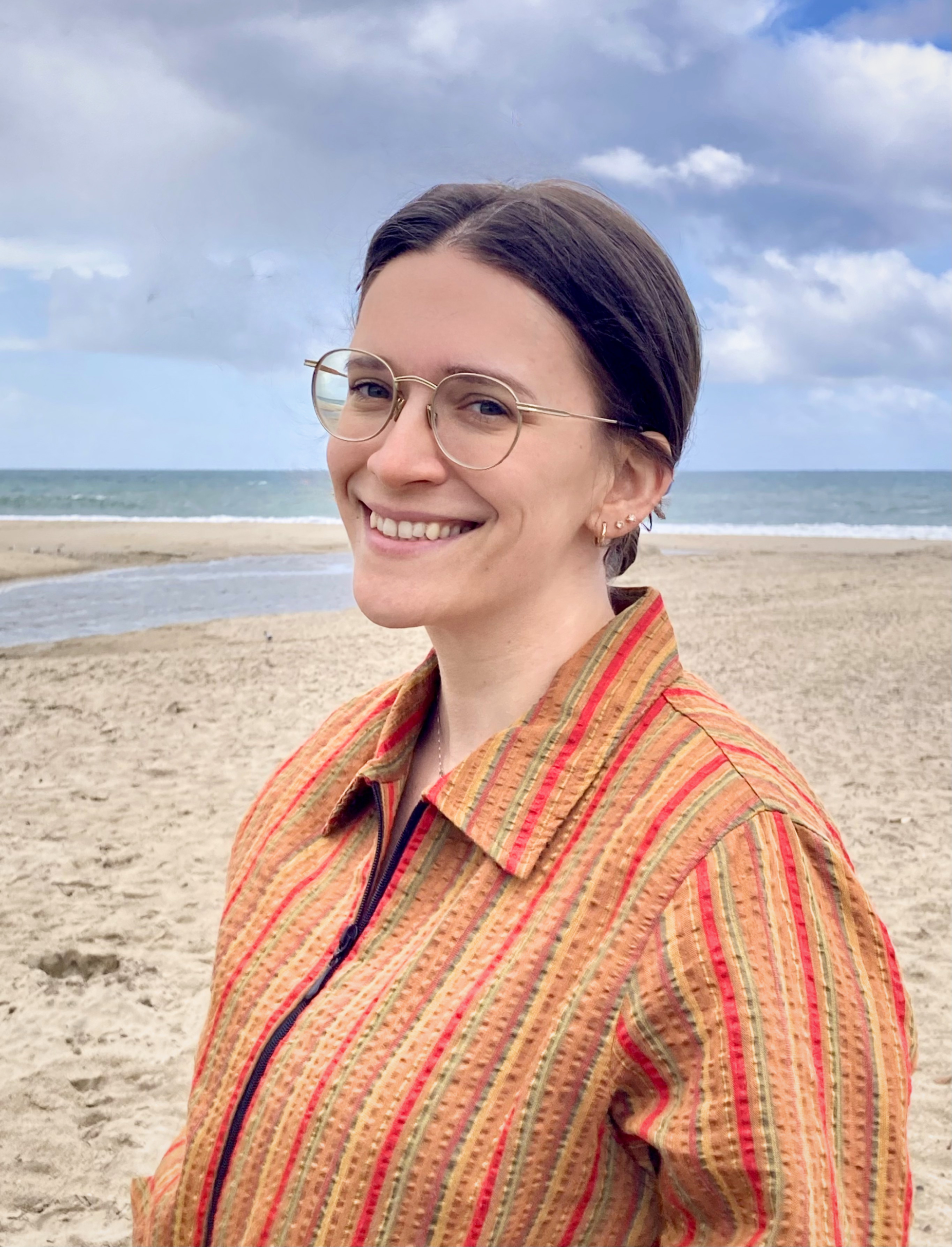
Katherine Johnson-Rogers is a sixth-year PhD Candidate in the Literature Department and a 2026 THI Summer Dissertation Fellow. In addition, Katherine participated in the 2024-2025 Abolition Medicine and Disability Justice Graduate Research Fellowship at The Humanities Institute. Katherine’s research examines the U.S. healthcare system, its relationship to capitalism, and how pretty much everyone who lives here can identify as a “patient” of that system at one time or another. She looks at medical memoirs, films, advertising campaigns, the archives of the healthcare collective that wrote Our Bodies, Our Selves, and other cultural material in thinking through the identity of the patient as a political one. We recently caught up with Katherine to talk with her about her research and THI fellowships.
Hi Katherine! Thanks for chatting with us. To begin, can you give us a general overview of your current research interests?
Yes, certainly! In the broadest sense, my research is on the US healthcare system. It is an extremely costly and inefficient system that shapes our lives in a variety of ways – things like what jobs we take and how long we stay in them, whether or not we get married (for insurance) or at times get divorced (to avoid medical debt), and what treatments we seek. I’m interested in how it works and, perhaps more importantly, why it runs the way it does. The major question my research asks is: what function does the healthcare system play in reproducing, stabilizing, and expanding US capitalism?
To get at that topic I look at the lived experience of all of us as patients within the system. My research looks at things ranging from the bureaucratic elements (long waits for appointments, confusing systems like insurance and billing, the experience of medical debt) to the very embodied experience of illness and pain itself. Methodologically, I try to think about how to go from an analysis of the very particular minutiae of patienthood ranging from individual experiences to a broader question of the politics at stake in each of those moments. What is happening when someone is arguing with their insurance company on the phone about a bill, for example? Or, when someone feels dismissed by a healthcare practitioner who most likely just doesn’t have enough time per patient to really understand their case? By looking at the lived experience of working through the overlapping maze of for-profit industries that the sociologist Howard Waitzkin calls the “medical industrial complex,” I argue that the experience of being a patient is a political one and that therefore it can be used to build communities of solidarity to ultimately remake the system.
We’d love for you to share more about the writing you’ve been doing during your THI Summer 2026 Dissertation Fellowship. How has this opportunity supported you? Will you tell us about a particular book you’ve written about or a theorist whose work has shaped your thinking this summer?
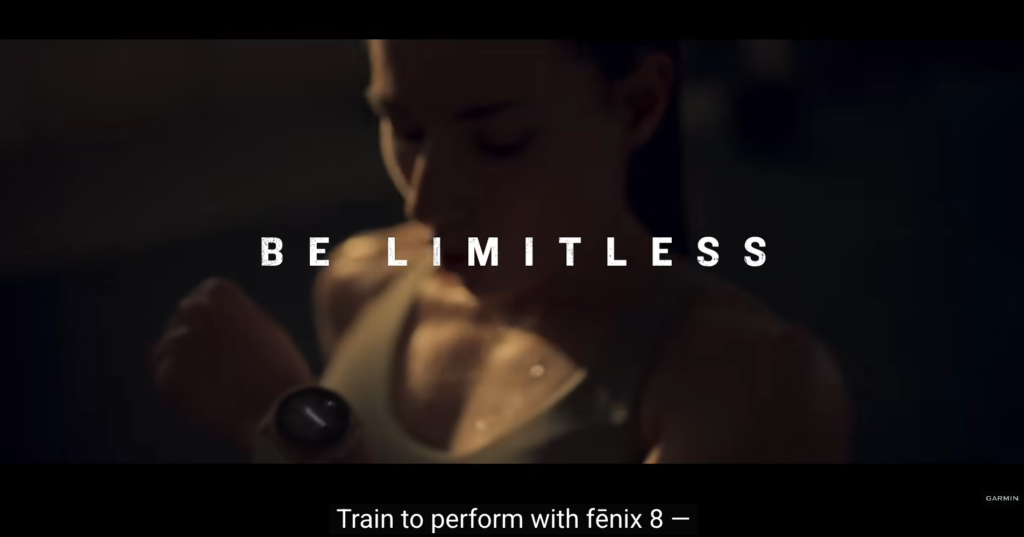
Thanks to the support of THI, this summer I’ve been able to work intensively on a section of my dissertation that is looking at the wellness industry as an arm of the medical industrial complex. One of the chapters in this section is about wearable biometric technology like, for example, the Oura Ring. This ring is a biometric device that tracks health metrics like sleep and body temperature. Biometric devices like this certainly have important use cases. Some people, for example, find they help them to manage chronic illness. But in the chapter I’m approaching the technology from the perspective of biometrics and the workplace. I’ve been trying to think about the function that wearable technology plays in transfiguring our relationship with our bodies – specifically as bodies that labor. What sense does a technology like this give us of a body that could be endlessly at work if it was just modified enough? E.g. if we just got the perfect amount of sleep or restoration. What edicts of personal responsibility for health does an idea like that imply?
As I’ve been working on this chapter and thinking about a closely related one about direct-to-consumer pharmaceutical companies, I’ve been really inspired by Annie McClanahan’s most recent book Beneath the Wage. In the book McClanahan focuses on the work process of gig laborers in the contemporary US with a really keen eye for the way things like platform apps and wage structures including tips and piece wages intensify work. Here I see wearables as another form of workplace intensification where the body itself is transformed into a machine that does endless work. Beneath the Wage helped me clarify the relationship between biometrics and work as I’ve been writing this summer and I really enjoyed thinking alongside the book.
Previously, you were also a 2025 fellow with the Abolition Medicine and Disability Justice project at The Humanities Institute. What was your experience like as a THI Abolition Medicine and Disability Justice Research fellow and how has this scholarship informed your dissertation as it has developed?
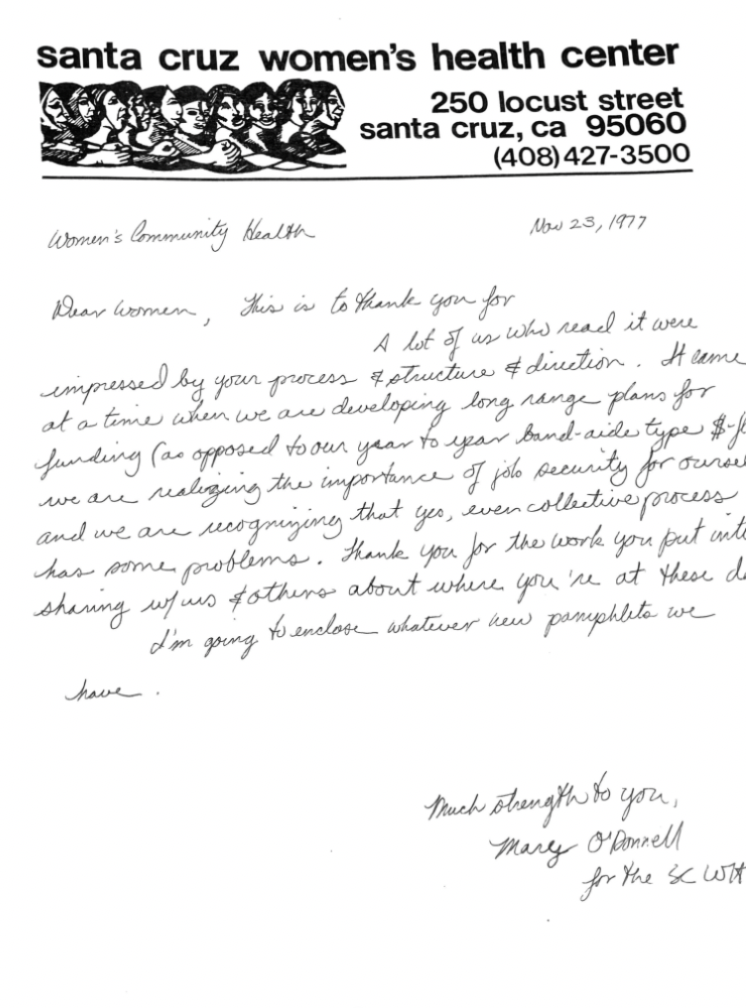
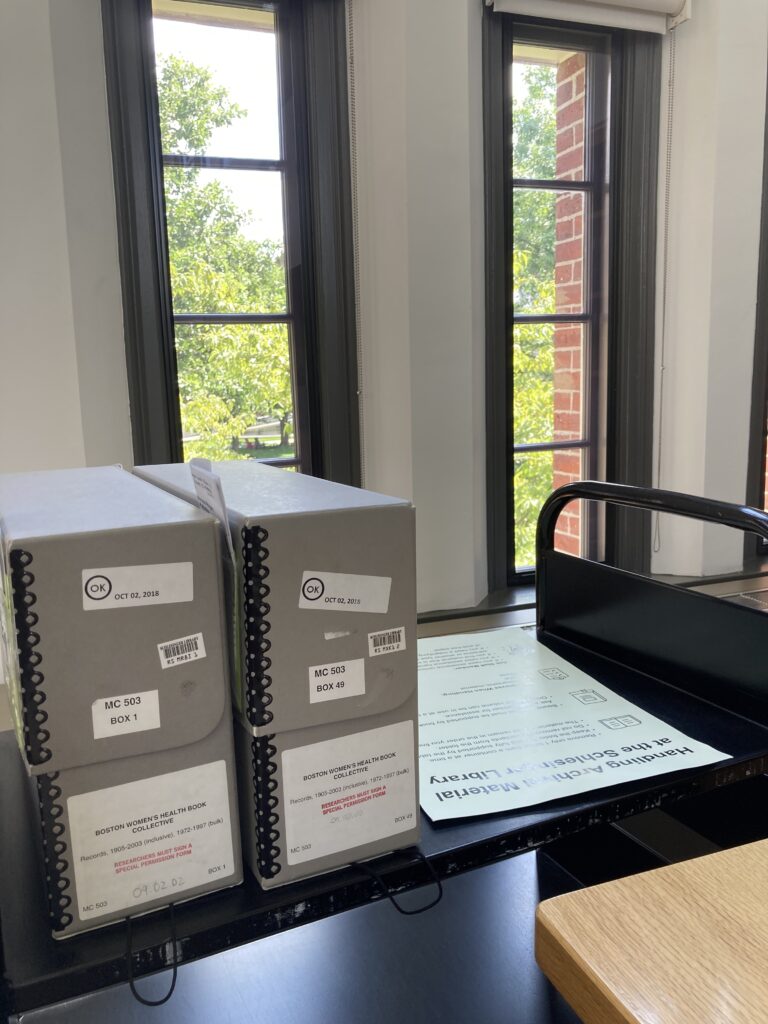
I was so grateful to AMDJ and to THI for the opportunity to be a fellow last summer! The grant afforded me the opportunity to go to the Schlesinger Library at the Radcliffe Institute to look at the papers of the Boston Women’s Healthbook Collective. This was the collective that wrote the famous feminist health guide Our Bodies, Ourselves (OBOS). The group met at a women’s liberation conference in Boston in 1969 and were brought together by the shared experience of what they then called the “doctor’s story,” or, a story of receiving poor medical care. OBOS was initially a small cottage-industry and quite polemical health text but it evolved over subsequent issues into a several hundred page guide to the body and the healthcare industry that was published in various editions by Simon and Schuster between 1973 to their last edition in 2011. In their archive I was interested in the way their project evolved in between versions in response to group conversations among the founding members and with a wider network of workshop participants, readers who wrote in, and letters from feminist health clinics (including one that is right here in Santa Cruz down on Laurel street!).
The research I did with the support of AMDJ and THI last summer shaped an article I have forthcoming in Signs: The Journal of Women and Culture in Society. In the article I write about the feminist health movement consciousness raising projects 1960s and 1970s. As scholars like Lisa Diedrich have argued before me, this moment was one of real patient politicization where people were contesting how they were treated by doctors, what conditions got attention, and really stepping into a political role through the experience of being a patient. In the article I put this earlier movement praxis in conversation with three contemporary memoirs about endometriosis (a chronic disease in which endometrial tissue grows on other parts of the body causing pain and other symptoms) to argue that we are in a renewed moment of opportunity for organizing politicized patients.
We would love it if you could share more about this phrase you used in your project description for the Dissertation Fellowship, “The Patient as a Revolutionary Subject,” and how you understand this concept. Could you tell us more about your academic journey and what led you to pursue “the patient as a revolutionary subject” as a literary scholar?
Yes! I think this question ties back nicely to the work I was doing as an AMDJ fellow. At the core of my work is a question of transformation. Rather than simply assessing the healthcare system as it is (costly, ineffective, etc.) in my scholarship I strive for praxis. Part of this is because of my commitments as an organizer. In so many ways my academic journey and my organizing journey have been fundamentally intertwined in my time as a graduate worker at UCSC. On the one level this is because the things we learn and teach in the classroom are impacted by the funding structures of the university itself but on another level it’s because of the content of the work itself.
In the context of my work as an organizer I’m always thinking about ways to bring together groups of people, to fashion and deepen solidarities, and to make (and win!) transformative demands. In terms of the work itself, another overlapping reason why this topic interests me is because of my commitments as a Marxist scholar. When thinking about what a “revolutionary subject” is (e.g. the politicized patient) as the agent of history in Marxism I think we run into questions about those who fall outside the traditional wage relationship. For example, the disabled and the chronically ill. People who perhaps embody the role of “patient” most acutely. Without getting ahead of the next question, the suggestion I’m making by calling the patient a “revolutionary subject” is that irrespective of a direct wage relationship the patient is so fundamental to the way US capitalism works and reproduces itself that that subjectivity is also an agent of history capable of affecting real, transformative change.
The idea that the identity of “patient” could be considered a unifying experience for all U.S. residents is exciting. Is there a memoir or other ‘life-writing’ that produced a lightbulb moment for you in developing your argument or that you particularly enjoyed? Or is there anything in your own experience that you would want to share that gave you a sense for this unifying political identity that can be perceived in these health-related first-person narratives?
A couple of texts that come to mind while thinking through this question are Health Communism by Beatrice Adler-Bolton and Artie Vierkant and The Undying by Anne Boyer. The first text, Health Communism, was influential in shaping my argument that the patient identity is a unifying one. In the book Adler-Bolton and Vierkant argue that capitalism wields the concept of “health” as a way to divide people between those who labor and those who are relegated as “surplus.” I find this argument really compelling as I’m thinking about the patient identity because that is one subject position that really we all embody and at times without really realizing it. There are obvious moments when people think of themselves as patients like when undergoing long treatments but in my work I’m making the argument that more of our lives are shaped by “patienthood” than we realize. For example, if you’ve ever thought about a life choice in the context of insurance coverage. Or, if you’ve ever worked to pay down medical debt. Those are forms of patienthood. On the level of wellness, the element I’ve been working through this summer, patienthood might look like choices to modify sleep or diet in order to be more productive for the next day. So, if you’re thinking about patienthood on that more expansive level all of a sudden we have a social and political category around which to unify.
The other book, The Undying, I mention simply because I think it’s beautiful and people should read it!
You write not only memoirs but also films and advertising campaigns. What methodologies or theoretical frameworks inspire you to write about different kinds of cultural products – including but not exclusive to “literature”?
I feel so grateful to be in a program that takes an expansive approach to what is “literature.” This question makes me think back to my very first class here at UCSC which was our proseminar with Carla Freccerro. In the class Carla assigned a short book that immediately challenged the assumption that literature is only a narrow canon of great works in traditional literary genres. I think that introduction to the program gave me a lot of freedom to start to write about quite simply the things in the world that interest me. More recently, in Annie McClanahan’s book that I referenced earlier, she calls a similar approach that reads a wide variety of texts across genres reading “unruly objects.” I was really captivated by that description that signals an openness to a wide range of genres as long as they fall within a certain topic. In my work I certainly find I need to take this approach because already many of the memoirs I read as literary texts fall outside of the tradition of literary memoir. And then a few of my chapters look at advertisements, news articles, and short form video content like Youtuber product reviews or TikToks as their texts. To me it’s more about the way you’re reading a text as a cultural product than whether or not it fits some externally-defined category. The unruly objects of the world that are interesting, if you will.
What’s next for you?
This year I’ll be writing with the support of the Chancellor’s Dissertation Fellowship and am planning to finish up a couple open chapters. One chapter thinks more directly about this conversation about genre and reading practices that we were just having and the other will be close reading a series of illness memoirs to be thinking about the lived experience of illness. At the moment I’m reading broadly for those two chapters and looking forward to writing as we settle into the fall!
Banner: Photo by Beelith USA on Unsplash