
Graduate Profile: Ja Bulsombut
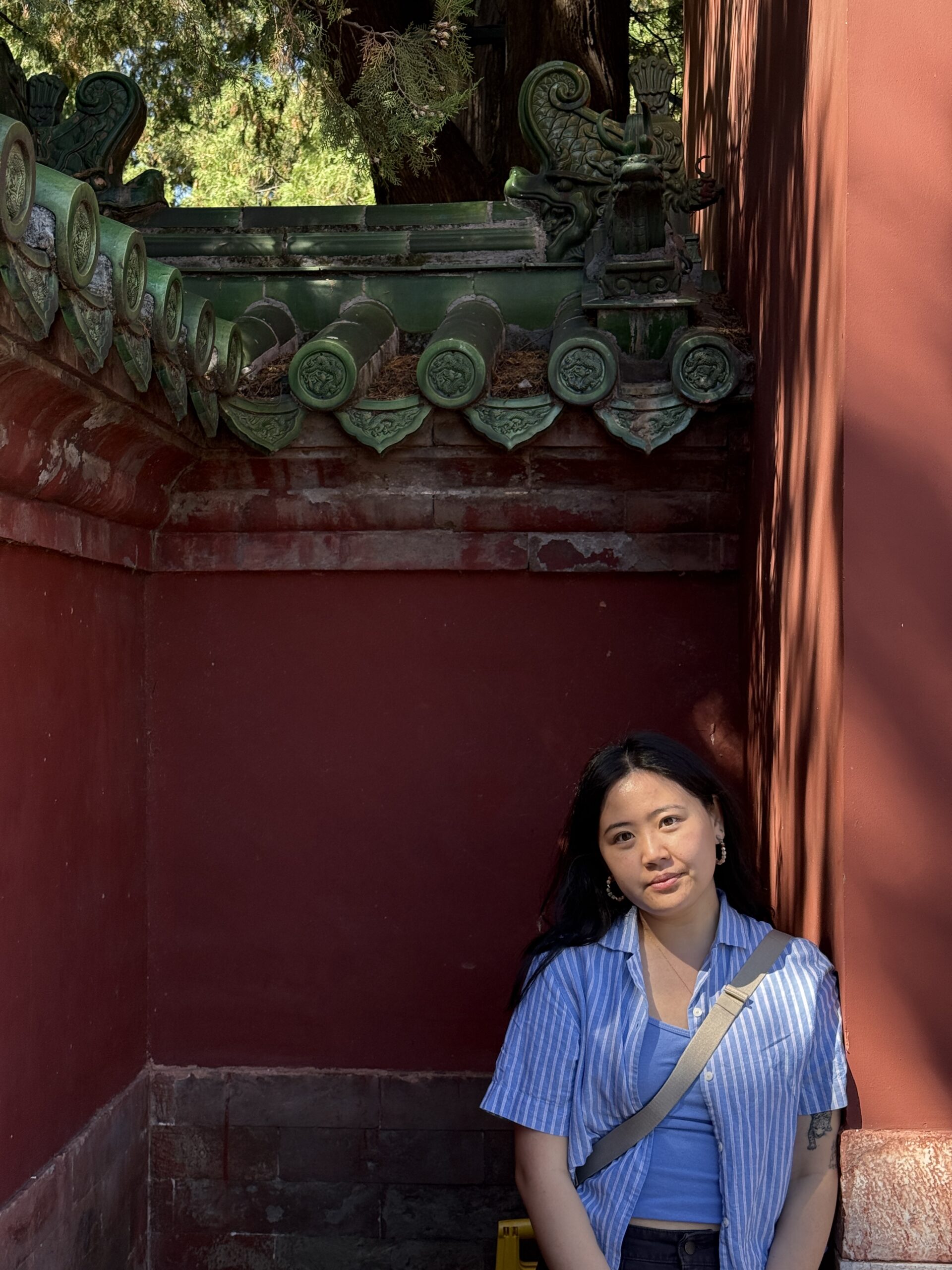
Ja Bulsombut is a PhD Candidate in Sociology and was the Graduate Student Researcher for The Humanities Institute and the Center for Cultural Studies from 2024-2026. Throughout her time at THI, Ja has been working on her dissertation, which is (currently) titled “Race, Gender, and the Politics of Victimhood in Conservative Asian America,” about how race, gender, and class shape conservative and reactionary ideologies within Asian American communities. While writing her dissertation, Ja interacted with a wide range of academic discussions and methods with scholars across disciplines. We recently caught up with Ja about her own research and what it’s like to work in such interdisciplinary settings!
Hi Ja, it’s such a pleasure to have you as the interviewee for a change! As a Graduate Student Researcher with The Humanities Institute, you’ve spent a lot of time helping others share their work with broader audiences. Turning to your own research, could you tell us about what you’re studying and why it’s especially important right now?
The pleasure’s all mine – thank you for giving me the opportunity to talk about my work! I study how race, gender, and class shape conservative and reactionary ideologies within Asian American communities. My dissertation looks at three political formations in particular: 1) a subculture within the manosphere colloquially known as the “Men’s Rights Asians,” 2) the coalitions against affirmative action, which led to the repeal of affirmative action in 2023, and 3) the Stop AAPI Hate movement, a liberal political coalition that emerged in response to the rise in anti-Asian violence during the Covid-19 pandemic.
My motivation for this project stems from a desire to understand why some Asian Americans might come to see their political interests reflected in conservative political projects, particularly amidst a resurgence of fascist and right-wing politics both domestically and abroad. We often assume that these movements would naturally alienate marginalized groups, but the reality is much more complex. How is it that these ideologies are taking root in places we might least expect them? I hope that by attending to this question I can contribute to a broader understanding of the appeal of the Right in this contemporary political moment and of its ability to recruit and maintain a diverse set of constituencies.
How did you select these cases and decide to study them together? Based on your initial findings, what are some key similarities and differences across these groups?
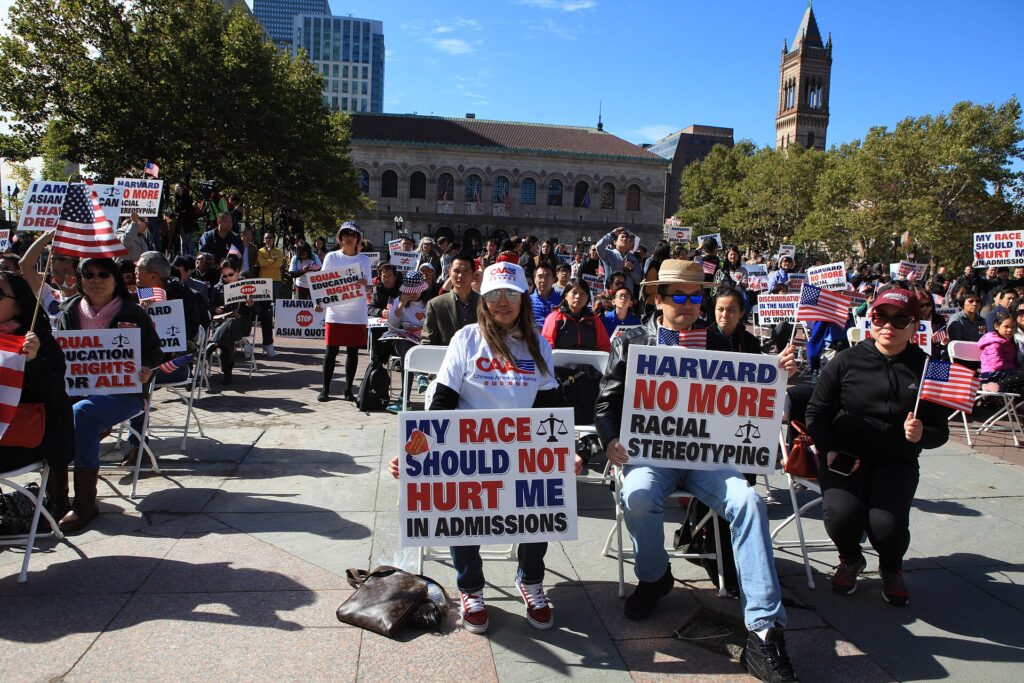
I think there’s a common assumption that people of color who identify as conservative are merely political pawns acting out of a desire to assimilate or what may be called a racial “false consciousness”. I was drawn to these three cases because they each complicate that assumption by leveraging progressive rhetoric to legitimate their specific agendas. For example, the “Men’s Rights Asians” subculture draws from anti-colonial and anti-racist political frameworks to position Asian American men as uniquely marginalized, oppressed simultaneously by white supremacy and mainstream progressive activism. Similarly, the non-profit coalitions against affirmative action specifically deploy the language of civil rights to frame Asian American college applicants as the primary victims of elite institutional bias, advancing a particular vision of racial justice as a color-blind meritocracy.
Although Stop AAPI Hate is a progressive liberal coalition, it notably also operates within the same political register of victimhood, framing Asian Americans as a community under siege from “hate” and in need of state protection. Including it allows me to highlight the continuities between liberalism and conservatism and show how progressive language can be marshaled in service of non-liberatory ends, which in this case is carceral expansion and increased policing/surveillance. By tracing this form of political claim-making across different contexts, I hope to show how genuine anxieties shaped by race, gender, and class get transformed in various ways into support for reactionary and/or conservative agendas.
One of the striking aspects of your project is how these groups use the language of racial justice in very different ways. How does your research complicate common understandings of identity and politics in the U.S.?
The groups that my project examines – and the emergence of a multiracial coalition on the Right in general – already complicates the prevailing idea that experiences of marginalization will necessarily yield a progressive or emancipatory politics. By showing specifically how the language of anti-colonialism, civil rights, and racial justice is being repurposed to serve conservative agendas, I hope to suggest that the vocabulary of identity is itself malleable and can just as easily be taken up to reinforce existing power structures as it can be to dismantle them. Further, that the assertion and affirmation of racial identity is central and not merely incidental to these projects perhaps also hints at a broader shift in the racial logics and meanings of our current historical moment, where the Right can simultaneously affirm and absorb the minority identities it has historically excluded from its base without abandoning its racist, xenophobic and anti-egalitarian principles.
Over these past two years working with The Humanities Institute and the Center for Cultural Studies, you’ve participated in a wide range of academic discussions with scholars across disciplines and engaged with diverse forms of humanistic research. Can you share more about your role as a Graduate Student Researcher and some of your most meaningful experiences? How have you grown as a scholar and professional during your time at THI?
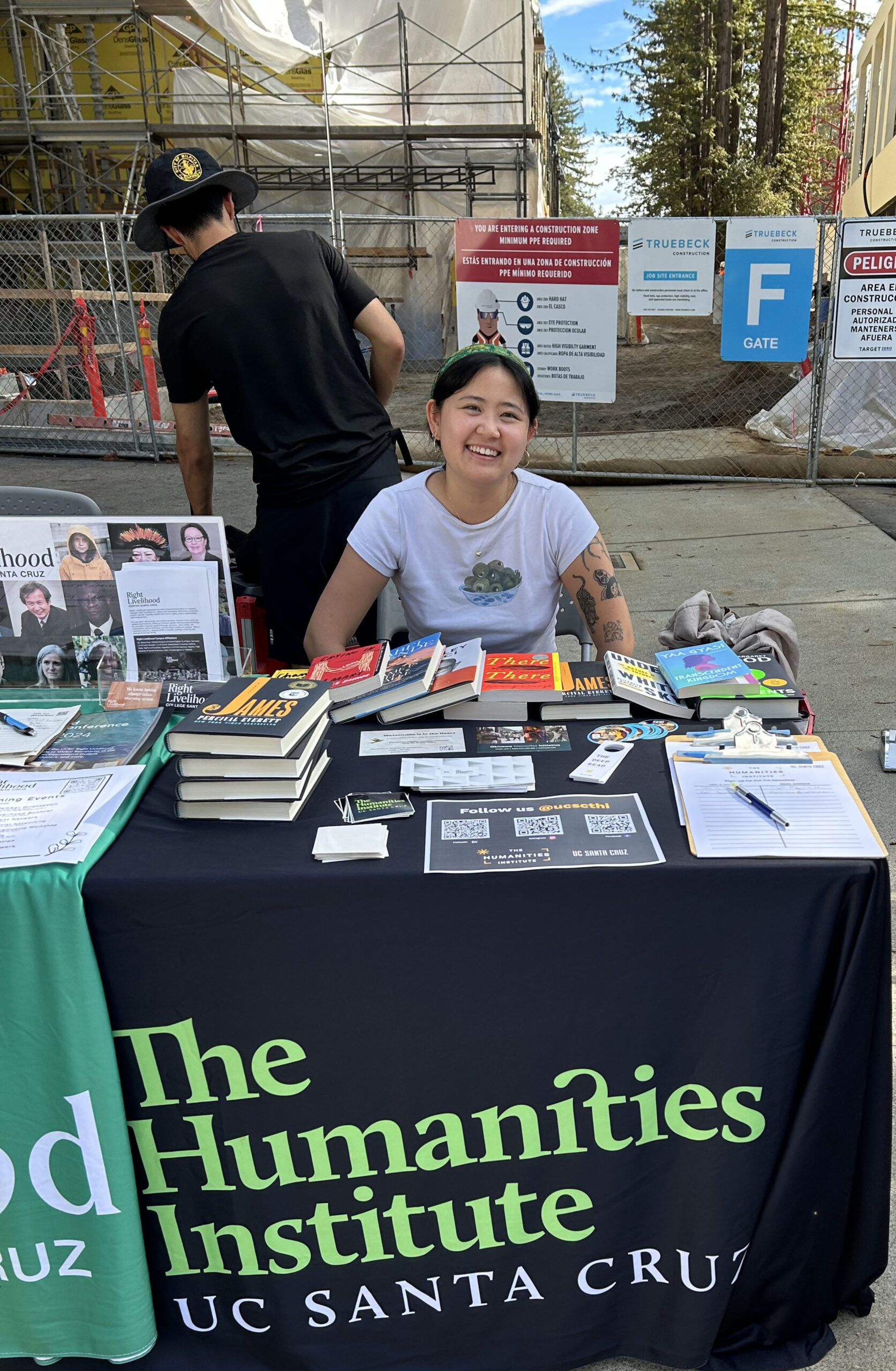
At the Center for Cultural Studies, my main role was supporting the faculty directors (Debbie Gould and Vilashini Cooppan) with running the quarterly colloquium series. I put together the quarterly newsletter and the weekly emails, coordinated with guest speakers, and set up the room for our events. Over at The Humanities Institute, I worked with THI’s Research Programs and Communications Director Saskia Nauenberg Dunkell to develop THI Fellow profiles for the website and to support THI’s undergraduate and graduate fellows with making a research poster for the annual Graduate Symposium and the Humanities Division’s Celebrating the Humanities year-end event.
I feel very grateful to have been a part of these incredible intellectual communities for the past two years. It was really cool to have the opportunity to engage with a vast and interdisciplinary range of scholarship (through both the colloquium series and the poster process), especially while I am writing my dissertation and otherwise spending most of my time thinking about a single, narrow topic. It allowed me to be in conversation with and thereby situate my own work within some of the critical questions and intellectual debates driving humanistic and social inquiry in the contemporary moment. I’ve also definitely learned a lot about the amount of work that goes into creating and maintaining intellectual communities like THI and the Center for Cultural Studies and gained a real appreciation for all the awesome people – like Saskia, Jessica Guild, Laura Martin and the rest of the THI team – that make it happen! Alongside that, it’s been really valuable to practice stepping outside of a strictly academic register and practice communicating research effectively to a public audience. My time as GSR has deepened my desire to remain involved in supporting these kinds of spaces within the university and certainly equipped me to do so, whether as a researcher or otherwise.
Yes! I think this question ties back nicely to the work I was doing as an AMDJ fellow. At the core of my work is a question of transformation. Rather than simply assessing the healthcare system as it is (costly, ineffective, etc.) in my scholarship I strive for praxis. Part of this is because of my commitments as an organizer. In so many ways my academic journey and my organizing journey have been fundamentally intertwined in my time as a graduate worker at UCSC. On the one level this is because the things we learn and teach in the classroom are impacted by the funding structures of the university itself but on another level it’s because of the content of the work itself.
Now that you’ve had a behind-the-scenes view of The Humanities Institute for two years, how do you describe THI to someone learning about us for the first time? What are some of the reasons you would encourage different people (graduate students, undergraduate students, community members, etc.) to become involved in THI events and programs? And finally, as your GSR position comes to a close, how do you hope to stay connected with THI moving forward? We hope to stay in touch and celebrate with you when you graduate!
An invaluable resource for faculty, graduate students, and undergraduate students in the Humanities at UCSC! For graduate students, THI offers a vital academic community outside of your department, providing financial support, professional development, and opportunities to apply their expertise to local initiatives/projects and build meaningful connections with the Santa Cruz community. Similar opportunities are also available to undergraduates, who gain access to hands-on research, mentorship, and a welcoming intellectual community that prepares them for future careers in either academia or industry. Looking back, I often find myself wishing I had an institution like THI available to me at my own undergraduate institution. While I’ve since found my footing as a researcher, participating in the kind of opportunities that THI provides to Humanities undergraduates would’ve definitely prepared me better (and given me more confidence) for graduate school! As my position comes to a close, I hope to stay connected to THI through its public programming and events, as well as catching up with the THI team. Shoutout again to Saskia – I’ve really enjoyed working closely with her and am deeply grateful for all the incredible guidance and mentorship she’s provided
Banner: Image from UC Santa Cruz campus overlooking Pogonip in the fog.