
Events

Donna Haraway, Karolina Karlic, Mark Nash, Dimitris Papadopoulos, Maria Puig de la Bellacasa, and Kriti Sharma – Ecological Worldmaking: Field Notes from Speculative Science and More Than Human Aesthetics
November 4, 2026 @ 12:15 pm - 1:30 pm | Humanities 1, Room 210
Featured Presenters:
Dimitris Papadopoulos & Maria Puig de la Bellacasa: Ecological Worldmaking: Field Notes from Speculative Science and More Than Human Aesthetics
This session brings art, science, and ecological thought into an open conversation around a shared question: What more-than-human modes of knowing, sensing, imagining, and world-making may serve our thinking and practice in current (de)composing worlds? Crossing the human exceptionalist boundaries of social imagination, engaging speculatively with science, and conjuring critical aesthetics, participants are invited to share insights from their fields of research, thinking, and practice on the multiple senses of the ecological. Field Notes emphasises the practices of field study, observation, relationality, involvement, and place-based knowledge in grappling with the ‘new’ post-Anthropocene ‘nature’.
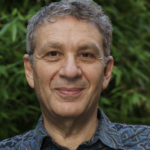 Dimitris Papadopoulos is Professor of History of Consciousness and Director of the Center for Cultural Studies at UC Santa Cruz.
María Puig de la Bellacasa is a Professor at UC Santa Cruz, researching ecological cultures and care practices at the intersection of the environmental humanities, social studies of science and technology, and feminist theory.
Mark Nash: Field Notes
Felix Guattari’s 1989 text The Three Ecologies develops the concept of an ecologically focussed philosophy – eco-sophy. Building on Gregory Bateson’s ‘ecology of mind’, Guattari proposes three ecological registers which have to be brought into alignment: that of the environment, of social relations and of human subjectivity. Guattari insists that the ecology of the subject has to address questions of desire and affect, if there is any prospect of controlling the ever-worsening prospects for humanity and ecosystems globally. Guattari also argues that art and curatorial practice offers modes of singularisation which can be apprehended through aesthetics. In my talk I want explore artists’ projects which respond most productively to Guattari’s tripartite schema. We also hope to establish if Guattari’s ideas are still compatible with contemporary notions of worldmaking and the posthuman.
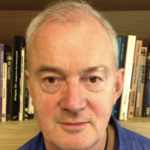 Mark Nash is an independent curator, writer and Professor Emeritus in the History of Consciousness Department and Arts Division at UC Santa Cruz. He has curated and written extensively on art, film and installation. Exhibitions he has curated/co-curated include Documenta11 (2002), One Sixth of the Earth (2011), The Das Kapital Oratorio (2015) and Grief and Grievance (2022). His collection of essays Curating the Moving Image was published in 2024.
Kriti Sharma: Making, Ourselves, At Home — or, How Big is a Microcosm?
Here, I discuss my experiments in building tiny homes for microbes, reflecting on what they may reveal about relations between words and worlds, giving and receiving, thinking and making, being at home and being lost. I wonder aloud whether the unruly (perhaps boundless and immeasurable) consequences of tiny lives may unclench closely held presuppositions about time, size, and scale.
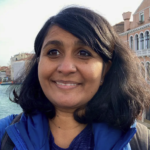 Kriti Sharma is Associate Professor of Critical Race Science and Technology Studies in CRES at UCSC. She is a microbial ecologist, author of Interdependence: Biology and Beyond (2015), and co-author with Arturo Escobar and Michal Osterweil of Relationality: An Emergent Politics of Life Beyond the Human.
Karolina Karlic: Field Notes: Photography, Place, and the Practice of Attention
What does it mean to approach photography as a form of field research grounded in sustained attention to place? Drawing on Unseen California and field-based teaching across California’s lands, I will consider photography as a relational practice shaped by observation, time, collaboration, and direct engagement with the more-than-human world. Through collaborations among artists, scientists, land stewards, educators, and communities, this work asks how creative, place-based inquiry can expand how we come to know and understand a place and how photographs might function not simply as representations of landscape, but as traces of relationships formed through being present within it.
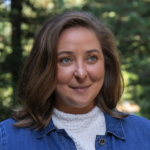 Karolina Karlic is an artist, photographer, and Associate Professor of Art at UC Santa Cruz. Through photography, fieldwork, and archival research, she traces relationships among industry, landscape, and place. She is founding director of Unseen California, a collaborative, place-based research initiative grounded in sustained engagement with sites across UC Nature.
Donna Haraway: Lured by Post Human Exceptionalism
“Multispecies” and “human exceptionalism” are poor markers for the situated histories and accountabilities of the living and dying beings of Terra. So, what must post human exceptionalism be, when concrete worlding is at stake? Can Ecological Evolutionary Developmental Biology (EcoEvoDevo) be an ally?
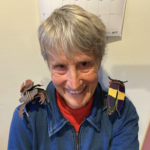 Donna Haraway is Distinguished Professor Emerita in the History of Consciousness Department. Her work centers around feminist theory, science studies, and the politics and scholarship committed to more-than-human worlding. Her latest book is Staying with the Trouble: Making Kin in the Chthulucene (Duke UP, 2016).
The Center for Cultural Studies hosts a weekly Wednesday colloquium featuring work by faculty and visitors. We gather at 12:00 PM, with presentations beginning at 12:15 PM. Staff assistance is provided by The Humanities Institute.
Co-sponsored by the Science and Justice Research Center