
Events

- This event has passed.
On the Canon of the History of Philosophy: Critique & Crisis
March 13 @ 9:45 am - 5:15 pm | Humanities 1, Room 320
Please join us for a day of presentations and conversation featuring:
 Silvestre Gristina (University of Padua / UC Santa Cruz)
Silvestre Gristina is a Marie Curie Postdoctoral Global Fellow between the University of Padua and the University of California, Santa Cruz. As part of his MSCA project, he will be spending a two-year research period at the History of Consciousness Department at UCSC. Silvestre received his PhD in Philosophy in June 2023 from the University of Padua. He carried out a one- year postdoctoral fellowship at the Italian Institute for Philosophical Studies in Naples, then completed a twenty-month postdoctoral fellowship at the Department of Humanities of the University of Ferrara. His research interests include the history of German Classical Philosophy, the philosophies of the Young Hegelians and Marx, the history of twentieth-century Marxism, and the development of twentieth-century French philosophy. He is currently engaged with methodological questions concerning the history of philosophy and the history of political thought. His research project, “Temporalities, Histories, and Methods of Philosophy”, intends to contribute to the studies on the critique of the Western Canon, through specific reflection on the History of Philosophy and its political nature.
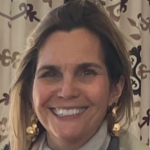 Elizabeth Millán Brusslan (DePaul University) presenting “Surprises and Hermeneutical Blindness: Elements of Philosophy’s Imperfect Canon”
Elizabeth Millán Brusslan is Chair and Professor in the Department of Philosophy at DePaul University. She works on aesthetics, German Idealism/Romanticism and Latin American Philosophy. She is the author of Friedrich Schlegel and the Emergence of Romantic Philosophy (SUNY, 2007) and several edited volumes on early German Romanticism and Latin American philosophy. She recently edited with Jimena Solé, Fichte in the Americas, a volume in the Fichte Studien Series (Leiden: Brill, 2023) and is currently working on The Routledge Handbook of Latin American Philosophy, which will be an inter-American collection of essays from scholars in the United States, Canada, and Latin America. She also recently completed an essay, “Fichte’s Wissenschaftslehre as Bildung The Tale of a Working Class Hero for Freedom” for Fichte’s Wissenschaftslehre: A Critical Guide, edited by Jeffery Kinlaw (Cambridge: Cambridge University Press, forthcoming) and an essay, “Walter Benjamin and Romantic Critique” for The Palgrave Handbook to Walter Benjamin, edited by Nathan Ross (New York: Palgrave, 2025). In 2004-5, she was awarded an Alexander von Humboldt Fellowship for a project on Humboldt’s view of nature, and she has published several articles on that topic especially on Humboldt’s views of America and is finishing a book-length study on Alexander von Humboldt’s view of nature.
 Giulia Valpione (École Normale Supérieure / CNRS / DePaul University) presening “The Subversive Canon of Political Ecology. A fragmented History?”
Giulia Valpione is Marie Curie Fellow at the École Normale Supérieure (Paris) and Visiting Scholar at DePaul University (Chicago). She is the author of The Romantic Self. Sovereignty and the Politics of Nature (Cambridge University Press, July 2026). She has published extensively on German Romanticismand Idealism, environmental philosophy, the politics/nature relationship, and the history of women philosophers. She has worked and studied in Italy, Germany, France, Brazil, and the United States. Her texts have been published by, among others: Oxford University Press, Cambridge University Press, DeGruyter, the British Journal for the History of Philosophy, and the Hegel Bulletin. She served as co-manager of the European Teacher Training Program: “Green Europe: Active Citizenship and the Environment” and is the co-founder and former co-editor-in-chief of the peer-reviewed journal Symphilosophie. International Journal of Philosophical Romanticism.
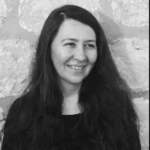 Banu Bargu (UC Santa Cruz) presenitng “On Sea-Rovers: Althusser’s Montesquieu and the Colonial Unconscious of Materialism”
Banu Bargu is Professor of History of Consciousness at the University of California, Santa Cruz. She is a political theorist, whose research also draws upon anthropology, philosophy, global history, and Middle East studies around questions of the body, power, violence, resistance practices, authoritarianism and exceptional regimes, carcerality and democracy. She is the author of two books: Disembodiment: Corporeal Politics of Radical Refusal (Oxford UP, 2024), which is the recipient of the 2025 David Easton Award, and Starve and Immolate: The Politics of Human Weapons (Columbia UP, 2014), which was the recipient of the 2015 First Book Award, both given by APSA’s Foundations of Political Theory section. Bargu’s curated collections include Turkey’s Necropolitical Laboratory (Edinburgh UP, 2019), “The Political Encounter with Althusser” (2019 special issue of Rethinking Marxism, co-edited with Robyn Marasco), and Feminism, Capitalism, and Critique (Palgrave, 2017, co-edited with Chiara Bottici). Bargu has previously taught at The New School for Social Research, New York City, and SOAS, University of London. Her scholarship has been recognized by a number of fellowships, including the Mercator fellowship, ACLS fellowship, and a residential fellowship at the Institute for Advanced Study in Princeton, NJ. Bargu currently serves as the editor of Political Theory.
 Robert Nichols (UC Santa Cruz) presenting “Political Philosophy and /as Reception Theory”
Robert Nichols is Professor of History of Consciousness at the University of California, Santa Cruz. His work in social and political thought takes up questions of power, sovereignty, property, and historical consciousness, especially as they inform and animate struggles at the intersection of anti-capitalism and anti-colonialism. Nichols has published several books and journal articles on these topics, including Theft is Property! Dispossession and Critical Theory (2020); The Dispossessed: Karl Marx’s Debates on Wood Theft and the Right of the Poor, ed. and trans., (2021); and The World of Freedom: Heidegger, Foucault, and the Politics of Historical Ontology (2014). Before joining UCSC, Nichols held faculty posts at the University of Minnesota (Twin Cities) and the University of Alberta (Canada), and visiting scholar positions at the Humboldt Universität zu Berlin (Germany); École des Hautes Études en Sciences Sociales (Paris, France); Columbia University (NYC); and the University of Cambridge (UK). He is the recipient of awards and fellowships from the Fulbright, Humboldt, Killiam, McKnight and Trudeau Foundations, as well as the National Endowment for the Humanities and the Social Sciences and Humanities Research Council of Canada.
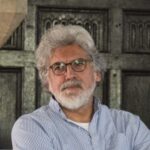 Massimiliano Tomba (UC Santa Cruz)
Massimiliano Tomba (Ph.D. in Political Philosophy at the University of Pisa) taught Political Philosophy at the University of Padova (Italy). He specialized in German classical philosophy during his stay in Germany (University of Würzburg, Münich, and Hamburg). Since 2012, he has been acting as co-director of an international project whose aim is to rethink the predominant schemes of interpretation of global society to overcome the prevailing Eurocentrism in conceptions of universalism, space, and time. Among his publications is Krise und Kritik bei Bruno Bauer. Kategorien des Politischen im nachhegelschen Denken, Peter Lang, 2005; La vera politica. Kant e Benjamin: la possibilità della giustizia, Quodlibet, 2006; Marx’s Temporalities, Brill, 2013; Attraverso la piccolo porta. Quattro studi su Walter Benjamin, Mimesis, 2017: Insurgent Universality. An Alternative Legacy of Modernity, New York, Oxford University Press, 2019, Co-winner of the 2021 David and Elaine Spitz Prize for the best book in liberal and/or democratic theory published in 2019.
For more information please contact Silvestre Gristina at silvestre.gristina@unipd.it
This event is Organized by University of Padua & UC Santa Cruz and Co-Funded by the European Union. This event is co-sponsored by The Humanities Institute and the History of Consciousness Department.