
Graduate Profile: Carla Suarez Soto
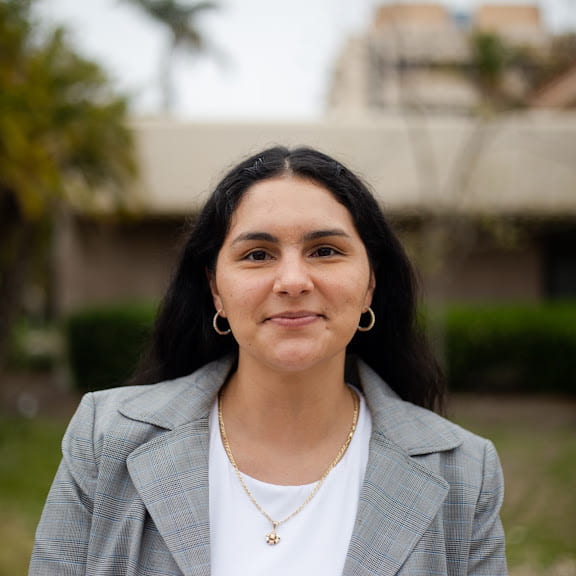
Carla Suarez Soto is a 3rd-year Ph.D. student in the Education Department and a 2025-26 Oaxacan Languages Public Fellow at The Humanities Institute. Carla’s research examines language ideologies amongst Indigenous and non-Indigenous Latinx adults and youth, as well as how language shapes identity for Latinx communities, particularly those who are both Latinx and Indigenous. As a THI Public Fellow, Carla is working with Senderos to conduct research on how language and cultural practice shape the way young people navigate being both Latinx and Indigenous, especially when these are often treated as separate identities. This research will culminate in a community-led exhibition at the Santa Cruz Museum of Art and History (MAH) as part of a larger three-year initiative around Oaxacan Languages of the Transnational Central Coast. We recently caught up with Carla to learn more about her research and collaboration with Senderos, as well as her hopes for the exhibition next year.
Hi Carla! Thanks for chatting with us. To begin, can you give us a general overview of your current research interests?
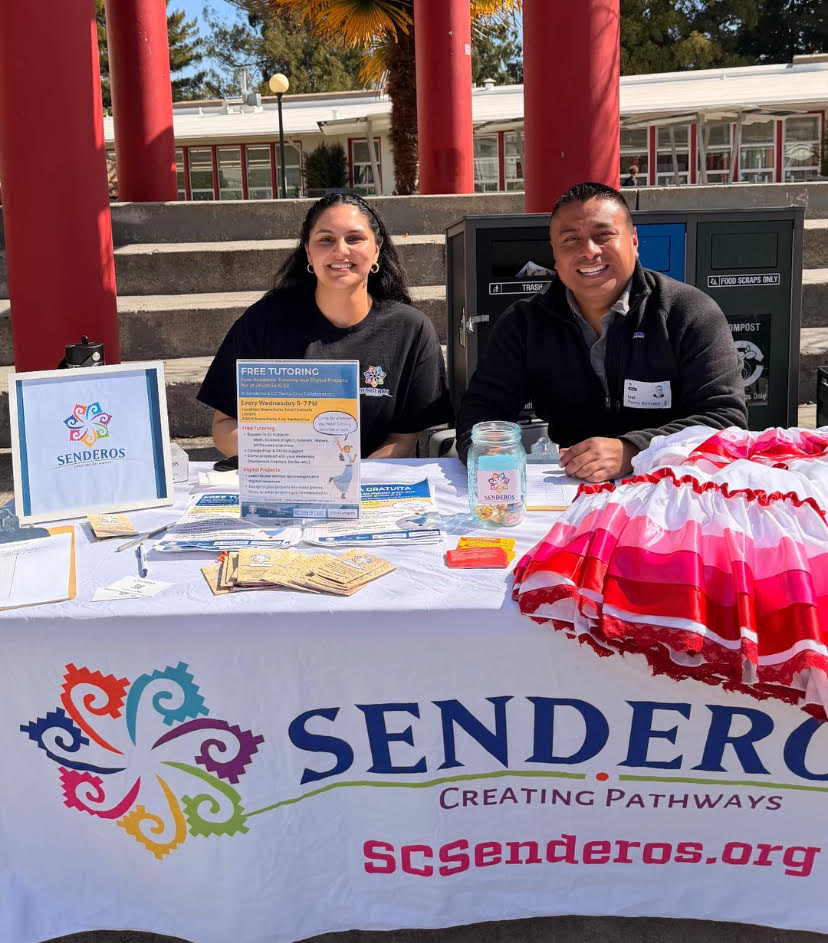
My research interests are language ideologies among Indigenous and non-Indigenous Latinx adults and youth, as well as the impact of culturally sustaining community spaces for Latinx communities. I’m interested in how language shapes identity for Latinx communities, particularly for people who are both Latinx and Indigenous. Often, when we think of multilingual Latinxs, we think of English and Spanish speakers, which excludes the various Indigenous languages of Indigenous Latinxs. While Indigenous Latinx people in the U.S. might share some experiences with non-Indigenous Latinx people in the U.S., they also face unique challenges that need to be acknowledged and addressed. Within the Latinx community, there tends to be a lot of discrimination against Indigenous Latinxs, and Indigenous language practices are often criticized and devalued. I am interested in exploring how these language-based judgments affect how people see themselves and how they navigate different spaces. I’m also really interested in community spaces like Senderos that create spaces that encourage people to celebrate their languages and cultures.
Tell us a little bit about the Oaxacan Languages of the Transnational Central Coast project. What drew you to join this project, and how have you been partnering with Senderos?
The Oaxacan Languages of the Transnational Central Coast fellowship allowed me to work directly with Santa Cruz’s Oaxacan community through Senderos, a nonprofit that serves Latinx families through music, dance, and language programming. I wanted to understand how Indigenous Oaxacans’ experiences with language might be different than those of non-Indigenous Latinx people and the unique challenges they face. But I wanted to make sure to approach this kind of research in a way that would actually benefit the community rather than just extracting from the community for academic purposes.
This fellowship has allowed me to start building relationships with the community and collaborating with them on research that benefits them. Through Senderos, I’ve been able to build genuine relationships with families and staff. I’ve helped coordinate a tutoring program connecting Senderos youth with UCSC students, supported community events like Día de los Muertos, Diciembre en México, Diosa Centéotl (a cultural contest to select the corn goddess) and Guelaguetza. What drew me most to this project was the chance to do community-engaged work from the start and to learn what the community needs and wants, and to make sure my research serves those needs. The fellowship has given me time and support to do this work thoughtfully and build trust, which can’t be rushed.
This project brings together a wide range of collaborators, including library and museum professionals, local transnational Indigenous activists and scholars, the team at The Humanities Institute, and faculty and students across disciplines such as Linguistics and Literature. What has it been like working in this interdisciplinary and community-engaged environment? What have you learned from collaborating with these different groups?
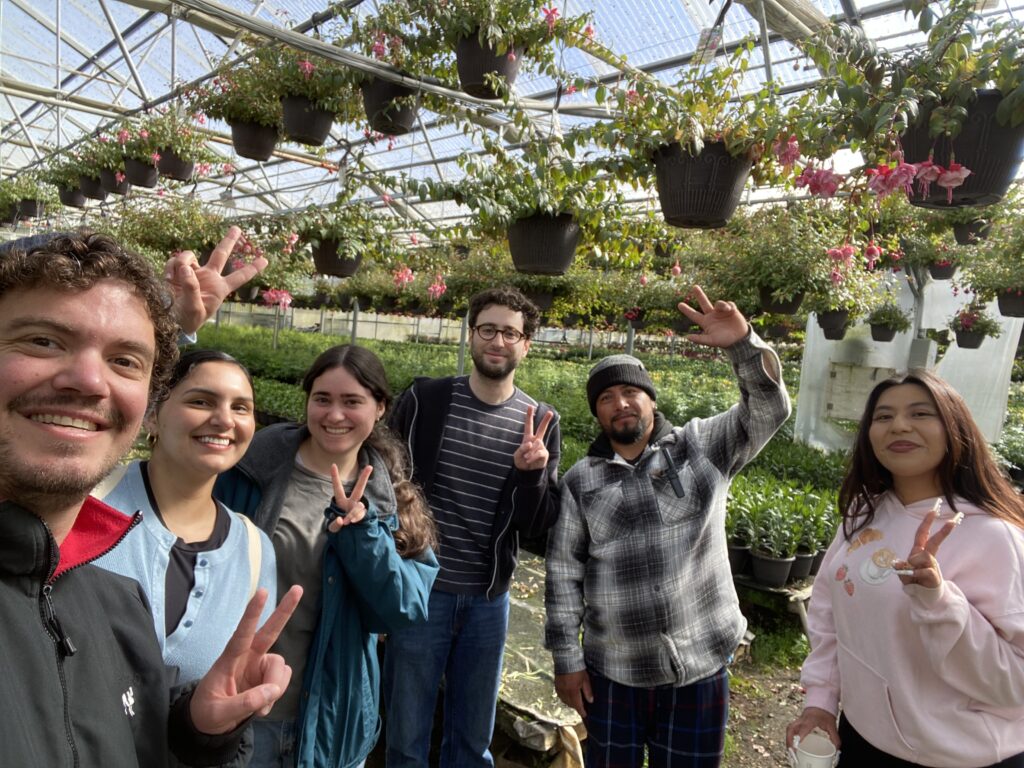
Working across disciplines and with community partners has been one of the most valuable parts of this fellowship. The linguistics faculty and students have been generous in sharing their connections to Indigenous language speakers in Santa Cruz and helping me understand what has worked in their research and what approaches have helped them build trust. At the same time, my background in education brings a different lens since I’m interested in understanding how language shapes young people’s experiences and identities, and how spaces like Senderos create opportunities that schools often don’t. I think everyone on the team brings different background knowledge, perspectives, and connections that make this a really positive and fruitful collaboration. The Humanities Institute team has provided incredible support throughout, and they’ve created space for us to develop our work thoughtfully, connect, and really prioritize the community relationships at the heart of this project. That commitment to community engagement is built into the fellowship, and we’re not being rushed to extract data. Instead, we’re given time to build genuine, reciprocal relationships with the organization and community members, listen to what they want and need, and develop research that serves the community. Working with Senderos staff and families has been an extremely rewarding experience, and I feel that this fellowship opened the door to continued collaboration.
As a THI Oaxacan Languages Public Fellow, you are conducting research on Indigenous and non-Indigenous Latine youth in Santa Cruz and their understandings of Latine identity within school contexts. What are some of the questions guiding your research, and what do you hope to learn? How does this research build on your previous work?
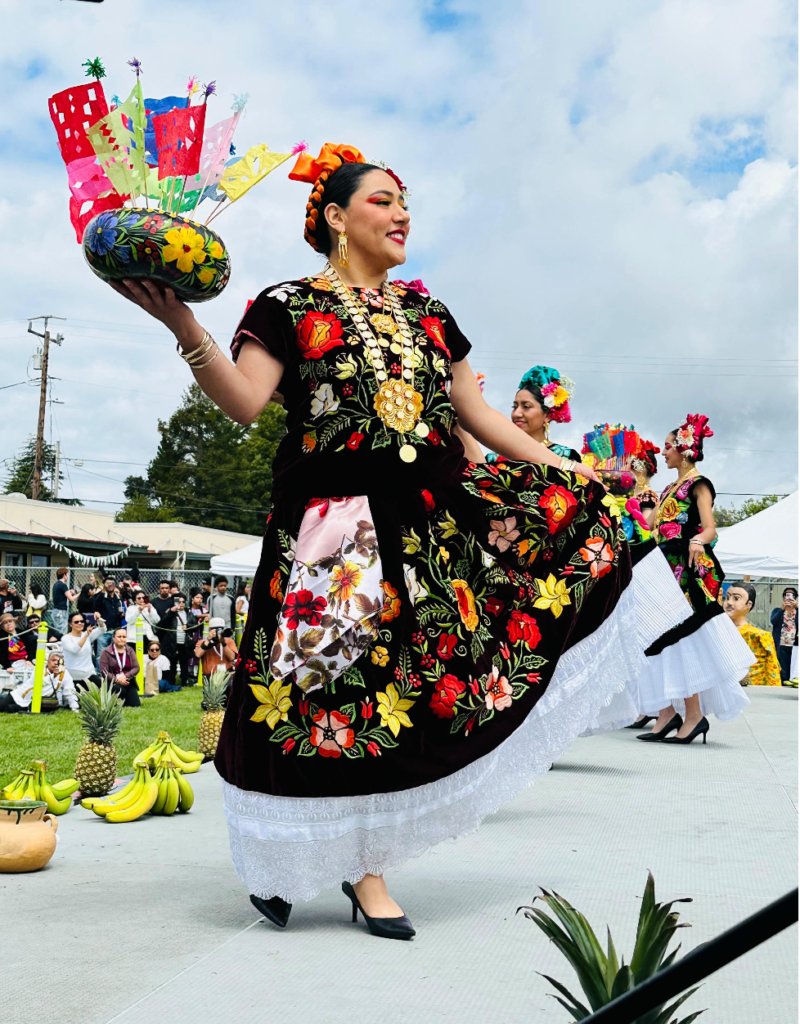
When I started planning this research, I thought I’d work in a school context, but once I began partnering with Senderos, I realized that a community context might offer different insights than a classroom. At Senderos, youth can participate in activities such as dance and band, they can speak languages they want to speak, and engage with traditions that matter to them. That creates a different kind of space for exploring language and identity. My research questions center on understanding how young people navigate being both Latinx and Indigenous when these are often treated as separate identities:
How do Indigenous Oaxacan youth describe their own identities? What languages and cultural practices matter to them, and why?
What do Indigenous Oaxacan community members, both youth and adults, want to share about their culture through creative expression like art, music, and storytelling?
How do non-Indigenous Latinx youth understand indigenous identity and languages? What assumptions or knowledge do they bring?
This builds on my previous research in university-community partnership programs. As an undergraduate student at UC Santa Barbara, I worked with the School Kids Investigate Language in Life and Society (SKILLS), where I researched asset-based programming for multilingual English Learner (EL) and Advancement Via Individual Determination (AVID) students. Here at UCSC, I worked with Corre La Voz, an after-school program for elementary and middle school students, where I studied how Latinx UCSC undergraduate mentors supported middle school students while challenging deficit views about multilingual learners. In this work, I focused on the mentors’ perspectives, and in both projects, I focused primarily on Spanish-English bilinguals. This fellowship allows me to focus on Indigenous languages, which are often erased from conversations about Latinx multilingualism. Indigenous language speakers face unique challenges that Spanish-English bilinguals don’t, and we need to prioritize understanding and exploring these.
We would love to hear more about what you have been working on so far. What has your role in the project looked like during the first half of the academic year? Among other things, could you tell us about the launch of the tutoring program and how it connects to the larger goals of the project?
Over the past months, I’ve really focused on getting to know Senderos as an organization and building trust with the community. That has meant showing up and helping with cultural events like Día de los Muertos and Guelaguetza, attending organization meetings, sitting in on classes, and being present. One of the fellowship’s goals is to provide support to the organization to help meet community needs.
In conversations with Isaí Pazos, Senderos’ executive director and my mentor for this project, he identified a need for academic support for youth in the community. We decided to pilot a tutoring program this winter quarter on Wednesday evenings, recruiting about 15 UCSC undergraduates as volunteer tutors. We initially tailored the tutoring to high school students, but when we opened the doors, we had mostly elementary students and even some parents who showed up seeking support. So we adapted, which is central to community-engaged work.
We also partnered with UCSC’s Everett Program to create a digital arts and video game space during the second hour, which has been popular with both students and parents. The energy is amazing, and students are excited to come back each week, and the undergraduate tutors have been incredibly dedicated despite this being completely volunteer-based. I am super grateful to all the tutors who choose to show up and support students, because this would not have been possible without them. Based on community feedback, we’re thinking of expanding to add another day and we have added an English class to support adults who expressed interest in learning English.
As part of Senderos, I have also been helping Isaí with the Ventanilla de Atención Integral a Pueblos Originarios e Indígenas de México en el Exterior (VAIOPIME). This is a new attention window at the Mexican Consulate in San Jose that provides support to Indigenous Mexicans in the U.S., primarily by providing interpretation and translation services for speakers of Indigenous Languages. Isaí has worked closely with the consulate to start this window, which opened in March, and I have been able to support by being at the window weekly and sharing information.
I’ve also been collaborating with the other graduate and undergraduate fellows to design a series of community conversations with Indigenous Oaxacan community members. Support from the co-founders of Senderos, Dr. Nereida Robles and her sister Fe Silva-Robles, has been essential for us to be able to connect with these community members. These conversations will explore language, Indigeneity, and transnational identity, and will also be centered around creating art materials for the MAH exhibit. We really want community members to have control over how their experiences are represented. We hope to have group discussions and arts-based activities where participants can express their cultural identities, stories, and values through visual art, storytelling, music, and other creative forms. We would like the museum exhibit to be a way to create a platform for the community to represent themselves on their own terms.
The Oaxacan Languages team also includes undergraduate researchers, and you are the primary mentor for one of the students. What has that mentorship experience been like? How are undergraduate researchers contributing to the project?
Mentoring undergraduates has been a rewarding part of this fellowship. While we’re each assigned one primary mentee, through our group meetings, I’ve gotten to know all the undergraduate fellows, and they each bring incredible skills, creativity, and perspective to the project.
As a first-generation college student, mentorship is deeply important to me. I had faculty and graduate student mentors during my undergraduate years who opened doors to research and believed in me, which made a big difference in my path to graduate school. Now being in a position to offer that support to others feels like a privilege, and I take it seriously.

I’ve been working primarily with Valeria Hernandez-Melchor, a Computer Science major who is also Oaxacan. While we come from different fields, as first-generation bilingual Latina students, we share similar backgrounds, and both appreciate community-oriented work. Our pairing works well because we can combine our different strengths towards a shared goal of doing research that genuinely serves the community. Valeria brings a unique and valuable perspective as she’s part of both the UCSC community and the Oaxacan community, so she can speak to experiences and challenges that those of us who are not Oaxacan might not immediately consider. She has helped shape how we’re approaching our work with community members to make sure it’s genuinely respectful and responsive.
Valeria also has previous experience working with a nonprofit organization, so she brings practical knowledge about community outreach, building trust, and what actually works when partnering with community organizations. Valeria has also been really involved in Senderos events, meetings, the consulate attention window, and she has helped a lot with coordinating the tutoring program. The undergraduate fellows are really valuable to this work since they aren’t just helping with tasks, but also shaping the direction of the project with their insights, connections, and commitment to doing this work.
Lastly, part of your fellowship will include translating your research into materials for an exhibition at the Santa Cruz Museum of Art and History. As you begin imagining that exhibition, what do you hope this project will contribute — both to the communities whose languages and histories it highlights and to broader conversations about language, migration, and identity?
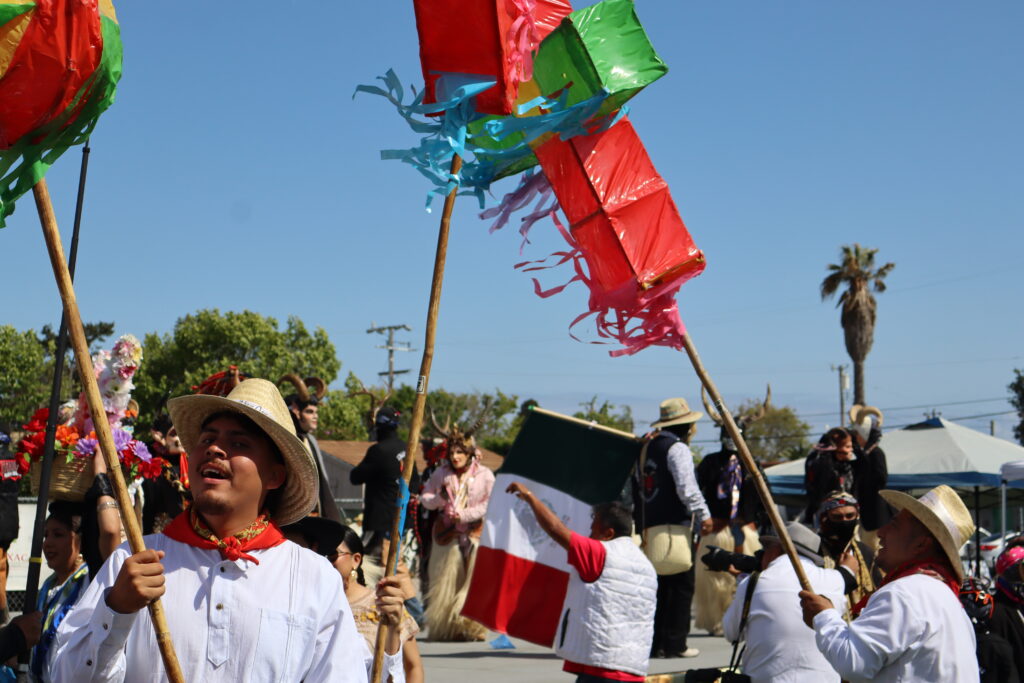
Something that we have tried to prioritize as we start to think more about the exhibition is that we would like for the community to represent themselves as part of the exhibition, rather than us telling their stories. Through the community conversations we’re planning, Indigenous Oaxacan community members will have the opportunity to share what they want to share, what matters to them, and how they want to be seen. I hope this exhibition creates something they can feel proud of, and that they are excited to see, and that Indigenous community members feel represented. I also hope that it helps young people in the community feel that their languages and cultures are valued and worth celebrating. This exhibition can be a way to uplift Oaxacan culture and community and challenge assumptions about Latinx multilingualism. It can also contribute to larger conversations about language and belonging. While there is growing awareness of the various Indigenous languages in Mexico, there are still many who view speakers of these languages through a deficit lens and don’t consider these languages to be “real” languages. These beliefs have real consequences for how young people see themselves and their futures. I hope this exhibition will help uplift the Indigenous Oaxacan community and the ways they sustain their cultures and languages.
Banner: Wednesday K–12 tutoring at Branciforte Small Schools. Photograph by Carla.