
Graduate Profile: Kiley McLaughlin
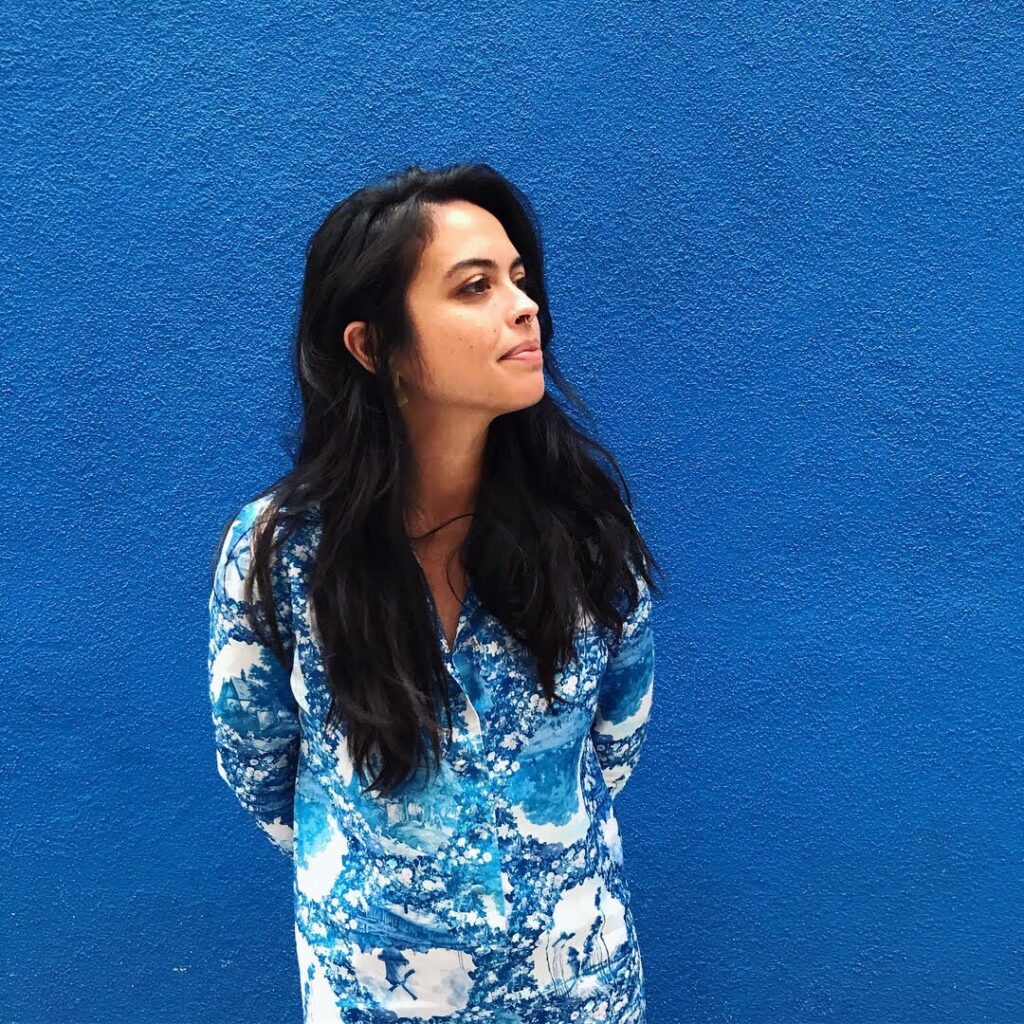
Kiley McLaughlin is a Ph.D. Candidate in Literature with designated emphases in Critical Race and Ethnic Studies and Feminist Studies. She was a 2025-26 THI Summer Dissertation Fellow. Kiley’s dissertation project, “Mamaw: Unruly Imaginings in the Undercurrents of Empire,” pairs an experimental novel with a collection of three critical essays that seeks to grapple with her mother’s absence and how it has been shaped by empire, race, gender, and labor. Her literary work for this project has been recognized and facilitated through fellowships from the San Francisco-based arts collective The Ruby and the highly selective Asian-American writers’ organization Kundiman. An excerpt from the novel manuscript was also selected by author K-Ming Chang to receive the 2022 Gold Line Chapbook Prize in Fiction. We recently caught up with Kiley to learn more about her work.
Hi Kiley. Thanks for chatting with us! Could you start off by giving us a brief overview of your research interests, as well as your creative and literary practice?
I study diasporic cultural production under US empire, with a focus on formal experimentation grounded in anti-imperial politics. I work in poetry, experimental fiction, hybrid scholarly prose, as well as some visual (video, fiber) art. My dissertation project considers my own Filipina mother, the way she takes up space in my own and the wider American imaginary, to ask: why can’t we see her?
Your dissertation project, titled “Mamaw: Unruly Imaginings in the Undercurrents of Empire,” couples an experimental novel with a collection of three critical essays. Could you talk a little bit about the term “Mamaw,” in particular where it comes from and what it means to you, and how it operates across both the creative and critical components of your project?
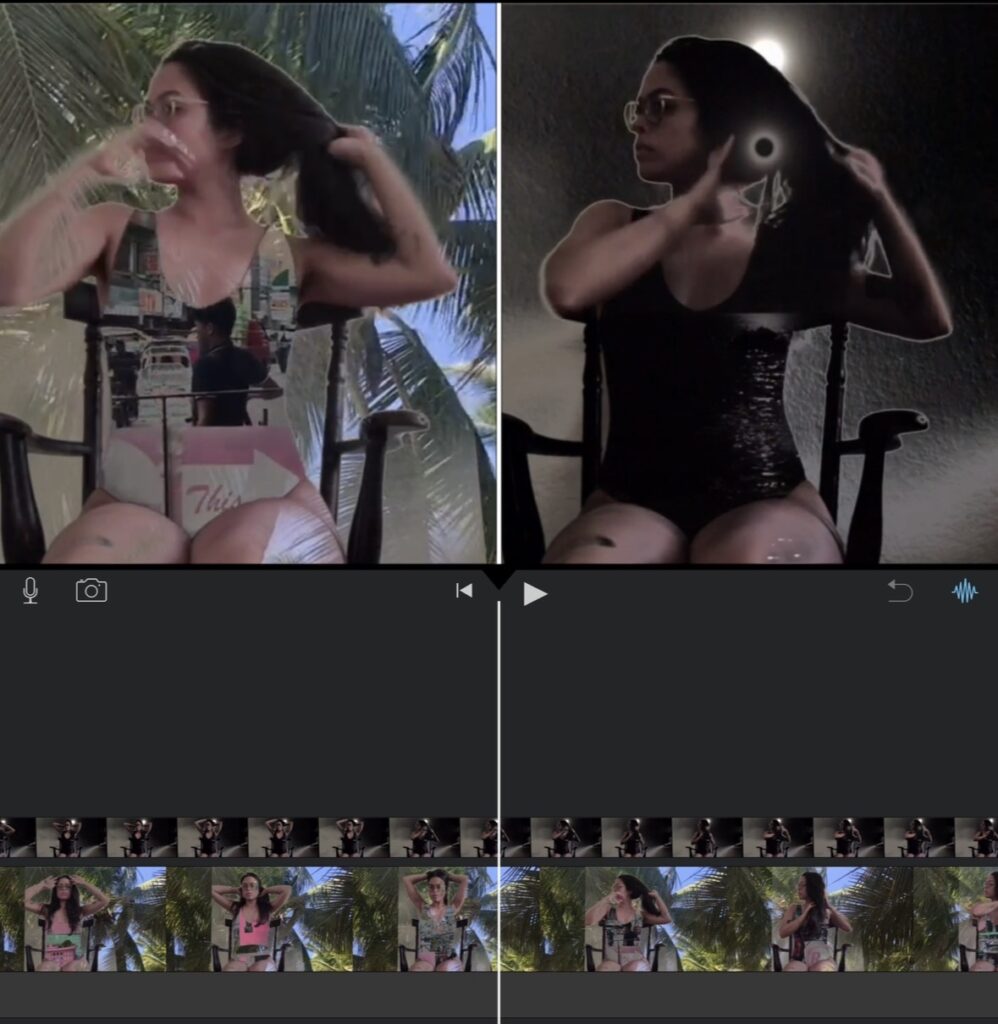
Thank you for these deeply thoughtful questions! My knowledge of Filipino is really basic, so with that disclaimer I’ll say that I understand mamaw as a noun to refer to a monster or ghoul, and as an adjective to mean both monstrous/scary and brilliant. Like in English if you say someone is a monster or a beast at something, to mean they are so skilled or brilliant that it’s scary, that’s mamaw. I think a lot about a silly Tiktok I came across, made by a teenage girl in the Philippines (I wish I had the link), in which the girl is narrowing her eyes and just barely grinning, expressing the specific playful/threatening potency that makes teenage girls (in my opinion) uniquely powerful, with a caption like “when I become mamaw in geometry class.”
In the creative manuscript as well as the critical essays, I invoke the valences of this term, mamaw, to describe a kind of narrative/formal unruliness or evasiveness that can slip through the cracks of imperial control, which exist in what scholar Harrod Suarez calls empire’s undercurrents.
A character named “maw” cropped up in poems I was writing before I started this project (or before I knew I had started this project), as an unruly figure through which I was channeling playful/defiant/violent/mournful affects related to embodied girlhood, daughterhood, motherhood. A few years later while studying Filipino as part of my research, it felt like a cosmic or pre-cognitive resonance or something when I came across the term mamaw and realized it speaks to the slippery, defiant, uncontainable nature of maw that I’d been working with. Maw is the name I give in my novel to a shapeshifting and multi-bodied creature that is the embodiment of my/the narrator’s mother’s absence.
I’m curious about how these two different modes of writing speak to one another. How does working on your novel shape the theoretical work in your critical essays, and vice versa?
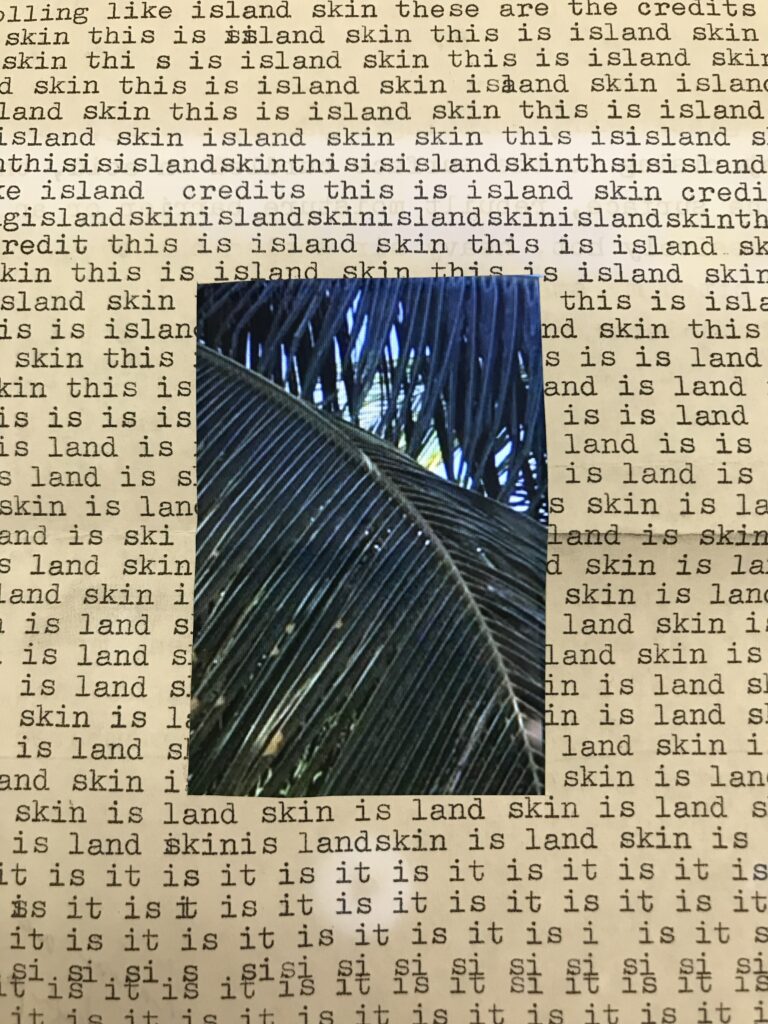
The two modes are in close dialogue and have overlapped. The creative work preceded and gave rise to the critical essays, and there are passages that appear in both. To drastically simplify her story, my mother immigrated from the Philippines as a young woman, worked as a domestic laborer on a US military base, and entered into what turned out to be an abusive marriage with my father, a US Navy serviceman. I was removed from her custody after their relationship ended. Once I decided that this project would engage the story of our separation, I came up against some sticky challenges related to imagining and rendering her from my position as her estranged daughter, writing in English, in the literary and artistic milieu of the US imperial core. Persistent gaps in ‘the archive’ that I encountered around stories relating to her or anyone like her led me to examine the sparseness of my own informal archive relating to her (photos/letters/stories/gossip) and ultimately to read unassuming materials from my paternal family home as reflective of the violent sexual politics of U.S. empire, which is the basis of the first critical chapter in my dissertation.
Could you describe your experimentation with form and genre for your novel? What do you find productive or generative about it for your interests in how US empire structures, in your words, “our most intimate modes of memory, narration, and imagination?”
While doing coursework in postcolonial literature, Ethnic Studies, and Feminist Studies, I started to understand that something I’m describing in my critical essays as the imperial imaginary has a really powerful impact on what we can and can’t imagine– basically, there is no way for me to write my mother as a Filipina and by extension myself as a mixed-race Filipino-American without confronting a representational structure that produces not just erasure but conditional legibility, in the service of ongoing US imperialism, racism, and gendered labor exploitation. From this perspective, things traditionally presented in fiction-writing pedagogy as neutral elements of form (like the unmarked, singular “I”) or craft (such as “relatability”) started to look like exploitative technologies when applied to my mother specifically and colonized people more generally. I mean, we literally talk about capturing a character or truth, dissecting, mining, drilling down. (Michael Salesses’ book Craft in the Real World offers some fruitful ways to think and teach through this problem.)
Because my background is in poetry (I did an MFA in poetry before starting at UCSC), I think my instinct is to experiment with language, so “breaking” form/genre became the way to navigate these obstacles. One result is that the central figure of my novel, Maw, has an indeterminate form and manifests as multiple women who exist simultaneously and in conflict. Whether creative decisions like this translate to the reader as an impactful critique remains to be seen, but that’s where they come from.
I understand that your work engages with your family’s archives — photographs, government records, letters, as well as immaterial forms of record-keeping like gossip and rumor. In closing, can you share what has it been like to work with these intimate materials? Are there any particular documents, stories, or narratives that have left a strong impression on you? And further, how do you approach reading the silences, gaps, and contradictions within those archives?
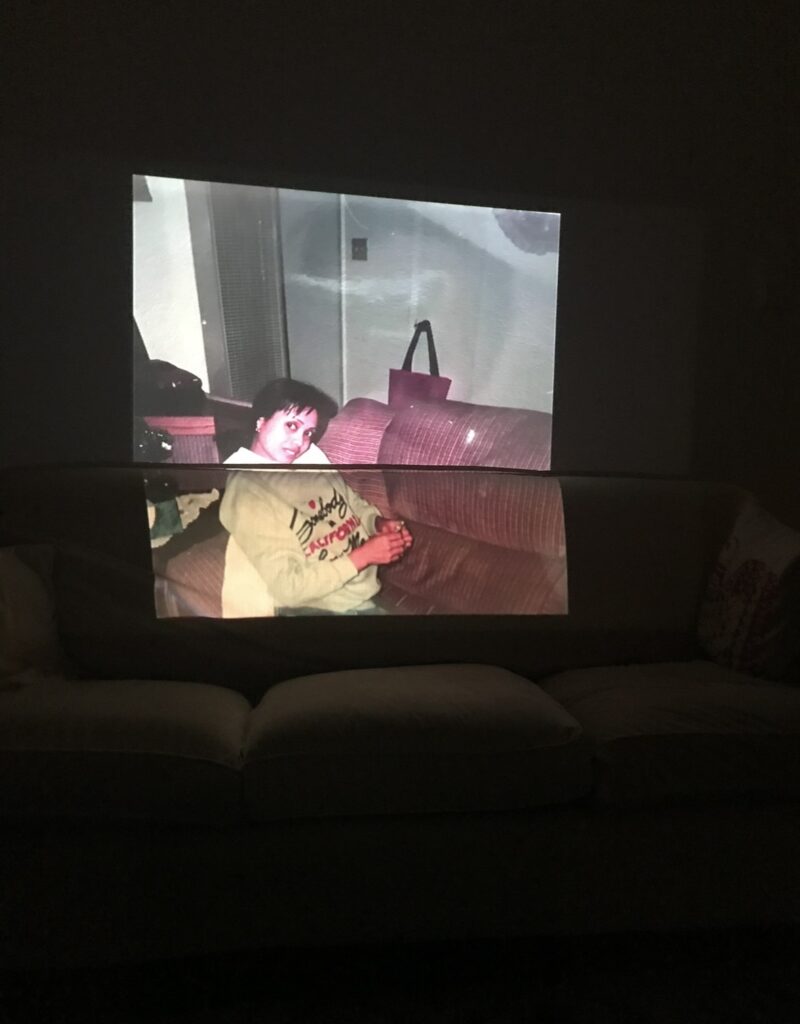
Studying and writing about my own family through a critical anti-imperial lens surfaces a lot of tricky emotions to navigate, for me and for some members of my family. It can be really heavy, for example, to sit with people’s conflicting accounts of domestic abuse.
But that entanglement with the material is also a gift, which shapes my approach to the work and makes it what it is. It’s not feasible for me to perform the kind of neutral separation from my topic which is customary in academia, and I’m glad that that kind of compartmentalization is off the table for me. The intimate nature of the project means that I am really wary of participating in an extractive relationship to “my” archive and the people connected to it. For that reason, interrogating the social and political valences of how archives are constituted and how knowledge is produced are key concerns of my research.
I have treated silences and contradictions as invitations to speculation and formal invention. Because many of these gaps and silences are the result of structural and/or interpersonal violence, my speculative work/acts of invention need to be informed by rigorous and ongoing social-historical learning, and grounded in an ethic of solidarity. I have to do my best to tend to my relationships with the living people who co-produce these archives and stories with me. This requires a lot of self-reflection and discomfort, and I fall short regularly.
Banner image taken by Frames For Your Heart.