
Undergraduate Profile: Grace Menagh

Grace Menagh is a senior majoring in History and Literature at UC Santa Cruz and a 2025–26 THI Undergraduate Research Fellow. Her research focuses on the history of French North America, the United States, global Catholicism, and the British Empire, with particular focus on how identity relates to conceptions of nation and empire. Grace’s project for her THI Fellowship examines how understandings of race and culture shaped Montrealers’ understandings of their place in the British Empire in the mid-19th century. Over the spring break, Grace visited Canada to conduct archival research at a number of archives, including the Library and Archives Canada in Ottawa. We recently chatted with Grace to learn more about her scholarship and her time conducting archival research in Canada.

Hi Grace! Thanks for taking the time to talk with us. To begin, could you please tell us a little bit about yourself and your academic interests?
Hello! Happy to chat. I will be graduating from UCSC with degrees in literature and history in June. In the fall, I will begin a Master of Religious Studies program at New York University. I am passionate about the humanities and often work interdisciplinarily. My work engages with sources in both French and English, and I typically focus on the history of French North America, the United States, global Catholicism, and the British Empire. Generally, I am interested in how identity relates to concepts of nation and empire.
We’d love to hear more about your THI Undergraduate Research Fellowship project. What is your project about and what inspired you to pursue this research?
The thesis project I received a THI Undergraduate Research Fellowship for focuses on how understandings of race and culture shaped Montrealers’ understandings of their place in the British Empire in the mid-19th century. My research follows several case studies of influential Montrealers in the mid-19th century who were not culturally or ethnically British but, nonetheless, expressed loyalty to the British Empire and often played important roles in Canada’s relationship with Great Britain. My research and coursework while studying abroad in Montreal sparked my interest in this topic.
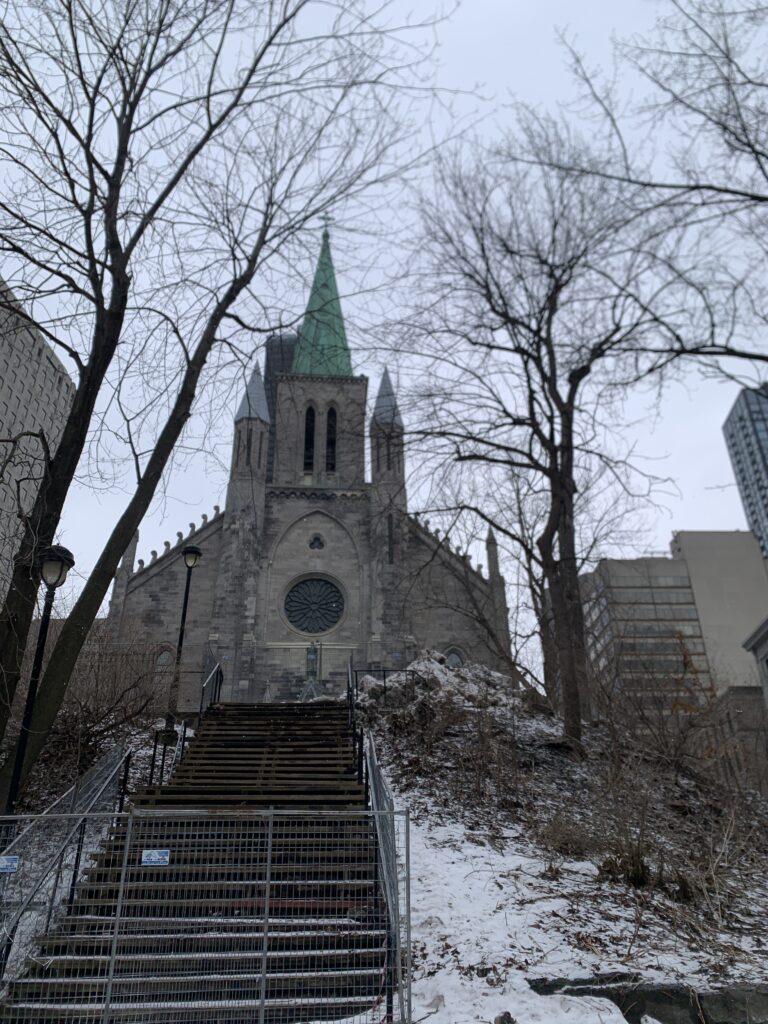
Can you share a little bit about your experience in Montreal? What was that like? How do they inform your current research project?
Yes! My time studying abroad definitely informs my current research. I studied at McGill during the previous academic year. In my time there, I became interested in studying the Irish in 19th Century Montreal through reading historical newspapers and correspondences alongside the papers of the Saint Patrick’s Society of Montreal. Over the course of this project, I started to see that researching the Irish, or any group on their own, neglected the intercultural connections that existed in Montreal in this period. I also gained a curiosity about the frequent references I observed to Montreal’s place in the British Empire, especially in reference to the ethnic, racial, and cultural makeup of the city. When I returned to UC Santa Cruz in the fall, I met my advisor, Dr. Marc Matera, who has been a fantastic guide in expanding and clarifying my earlier questions about race and empire in Montreal into the thesis I am now writing. My project has developed considerably since last year but certainly has roots in my McGill coursework and the early archival research I completed in Montreal.
I understand that you recently returned to Canada to conduct archival research at The Library and Archives Canada in Ottawa, The McCord Stewart Museum in Montreal, and Concordia University. What was it like to be back? What kinds of materials were you looking at? Did your time in the archives change, complicate, or confirm your initial ideas?
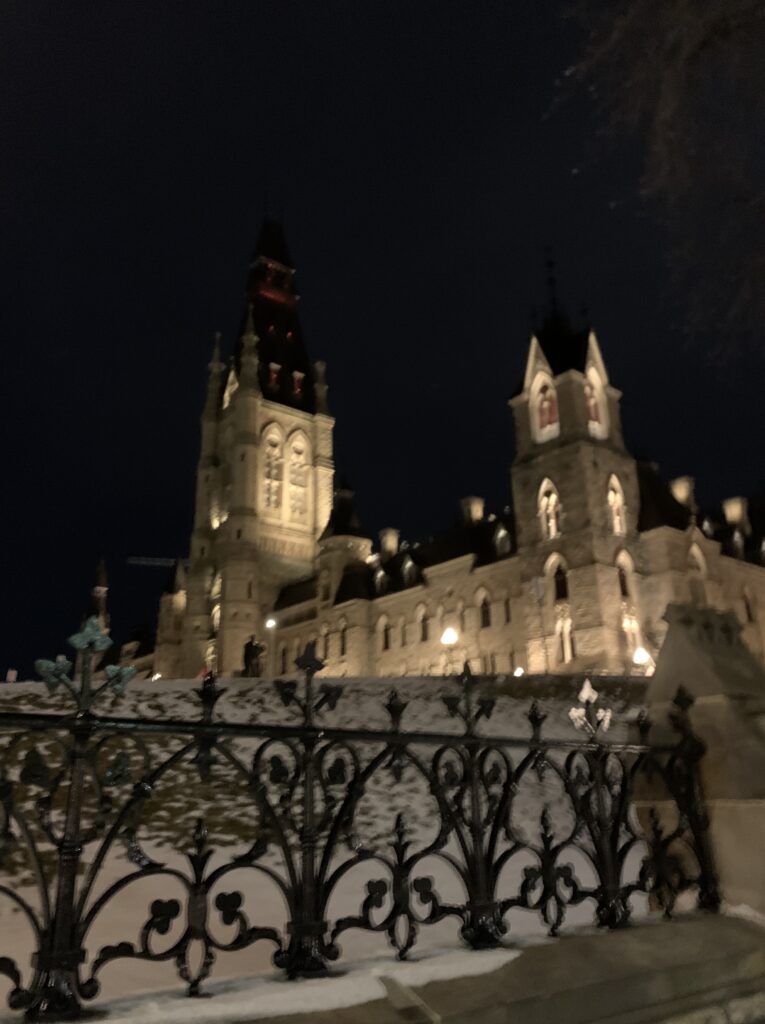
Over spring break, I returned to Montreal to conduct research at the Concordia University and McCord Stewart Museum archives and visited Ottawa for the first time to work with archival materials at Library and Archives Canada. I primarily worked with letters written by or to the subjects of this research, supplemented with publications by or about them. In addition to this, I worked with the digital newspaper records of the Bibliothèques et Archives nationales du Quebec. I was so happy to be back in Canada and have the opportunity to work in some of my favorite archives again. My experience in the archives both confirmed and complicated my ideas, adding to the depth of my research and bringing up new questions.
Alongside your research, you are a Humanities EXCEL Fellow working with the Santa Cruz Poet Laureate. Could you tell us more about that partnership and the kinds of projects you’ve been involved in within the Santa Cruz community?
Since September, I have had the privilege of working with Nancy Miller Gomez, the Santa Cruz Poet Laureate. As a part of my EXCEL Fellowship, I have facilitated poetry readings, taught workshops, and encouraged community members to express themselves through poetry. By far my favorite project is our Youth Poetry Collective, a club for high school students in Santa Cruz County. I greatly enjoy working with the kids and teaching them about writing and performing poetry, but the best part is learning from them as they explore the joy and catharsis of poetic voice.
Finally, congratulations on receiving both the Dean’s and the Chancellor’s Undergraduate Research Awards. That’s a wonderful accomplishment! As you prepare to graduate this spring, what has been most meaningful about your experiences in the Humanities Division?
Thank you! I am so honored and grateful to have received the Dean’s and Chancellor’s Undergraduate Research Awards for my senior seminar paper, which focused on gay independent Catholic movements in 1970s Quebec and New York. As I wrap up my degree programs at UCSC, I am so grateful to the incredible professors I have had in the Humanities Division. For me, the most meaningful part has been the interesting and challenging conversations I have had with peers and professors. The Humanities Division provided so many wonderful opportunities for me to enrich my learning. I am so grateful that I was able to study abroad and for all of the support I have received in completing original research and working to promote poetry in the community.
Banner image: Bibliothèques et Archives nationales du Québec, courtesy of Wikimedia Commons. All other photographs taken by Grace.

The Humanities Institute funds and leads the THI Undergraduate Research Fellowship program.
The Humanities EXCEL program is led by the Humanities Division with strategic support from the Humanities Institute, and is funded by the Mellon Foundation, The Helen and Will Webster Foundation, the Humanities Division, The Humanities Institute, and private donors.